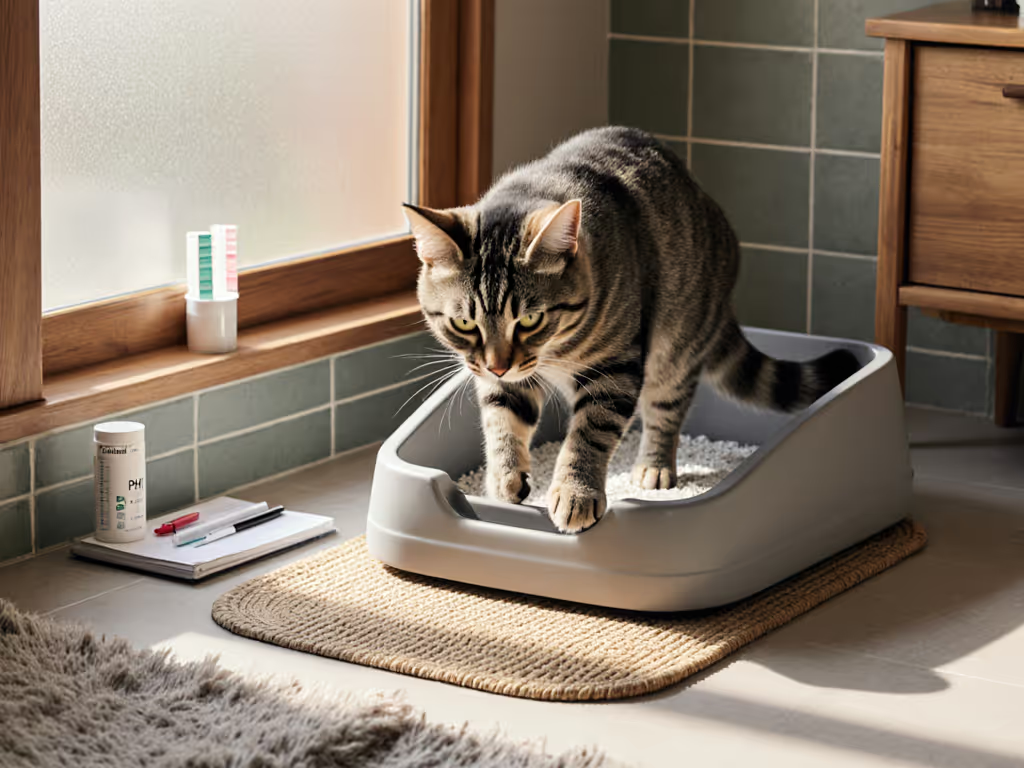
Litter Robot 4 Review: Best Cat Litter Box for Multiple Cats
By Ren Ito • 6th Jun
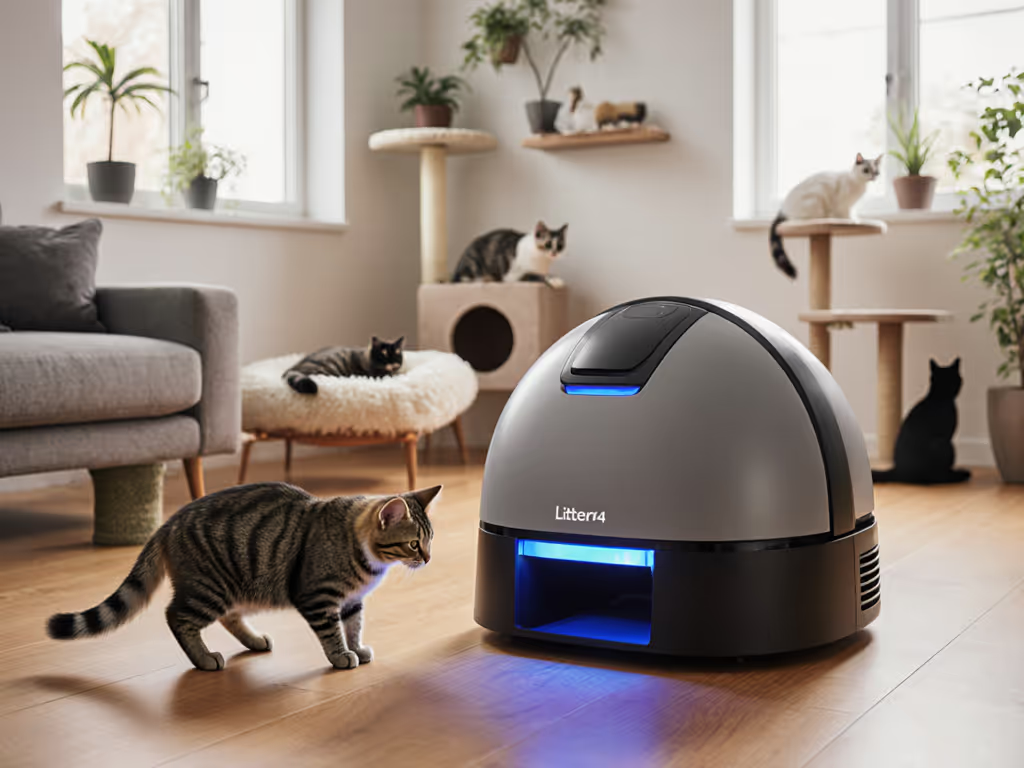
Litter Robot 4 is one of the strongest contenders for the best cat litter box for multiple cats, with excellent automation, odor control, and data tracking, but its high price and footprint mean it is ideal only for certain homes and cat groups.
If you have 2-4 adult cats in a small apartment and are willing to pay upfront for less scooping and better odor management, the Litter Robot 4 can meaningfully cut smell and daily labor; if you have kittens, very large cats, or tight placement constraints, you may need a hybrid setup.
Overview: Where Litter Robot 4 Fits in a Multi-Cat Home
The Litter Robot 4 is a self-cleaning, app-connected, rotating globe litter box that automatically separates clumps from clean litter, drops waste into a sealed drawer, and tracks your cats' usage and weight via sensors and a mobile app.
It targets the exact pain points of multi-cat, small-space living: If you're still weighing automation against manual setups, compare the self-cleaning vs traditional litter boxes for a clearer decision.
- lingering odor between scoops
- constant tracking and sweeping
- uneven scooping effort between humans
- box crowding and overused trays
What the data says: if you want fewer scoops and more predictable odor in a multi-cat apartment, automation only helps if it is quiet, reliable, and accepted by every cat.
Quick Verdict (for time-pressed readers)
Best for:
- 2-4 healthy adult cats that already use clumping litter
- guardians who want data (weight, visit counts) and phone alerts
- apartments/condos where odor control and quiet cycles matter
Think twice if:
- your cats are kittens or under ~3 lb (sensors are tuned for cats over that weight; manufacturer has special guidance for small cats)
- you have giant or very high-peeing cats who routinely hit walls above normal spray height
- you have zero room for a large appliance (it is bigger than a standard box)
- you strongly prefer manual control and no electronics
Headline trade-off: You're swapping a high upfront cost (around $699) for a sizeable reduction in scooping and more stable odor, plus health-use data. Whether it's the best cat litter box for multiple cats in your home depends on your cats' size, noise tolerance, and your placement options.
How Litter Robot 4 Works (and Why That Matters for Multi-Cat Use)
Mechanically, Litter Robot 4 is a sifting drum on a stand with integrated sensors and a waste drawer.
Cycle and sensors
According to multiple reviews and the manufacturer:
- After a cat exits, the unit waits a set delay (default around 7 minutes) before starting a cleaning cycle, to let clumps form.
- The globe rotates, sifting litter through a built-in screen so clean granules fall back into the bed while clumps and solid waste are guided into the waste port and into a lined drawer.
- Weight sensors and presence sensors detect when a cat is inside and stop or prevent the cycle for safety.
- The system is calibrated for cats over roughly 3 lb, which is why there are special instructions for kittens and very small cats.
Several reviewers note that the LR4's sensor package is a major upgrade over previous models, with more reliable detection of the cat's presence and fewer false errors.
App integration features
The Litter Robot 4 connects to Wi-Fi and pairs with the Whisker mobile app. From there you can:
- see waste drawer fill level and get alerts when it's nearly full
- monitor litter level to keep it in the ideal range
- track each cat's usage and approximate weight (for cats that use it consistently)
- start or pause cleaning cycles and adjust some settings remotely
These app integration features are not just gadgetry; in multi-cat homes they help answer:
- "Is one cat suddenly using the box far more often?" (possible stress or urinary issue; vet consultation recommended.)
- "Did anyone actually empty the drawer today?" (no more finger-pointing; the app log tells you.)
Let the numbers calm the room and the cat.
From an evidence-seeking standpoint, this is one of the few boxes that lets you quantify behavior and maintenance instead of guessing.
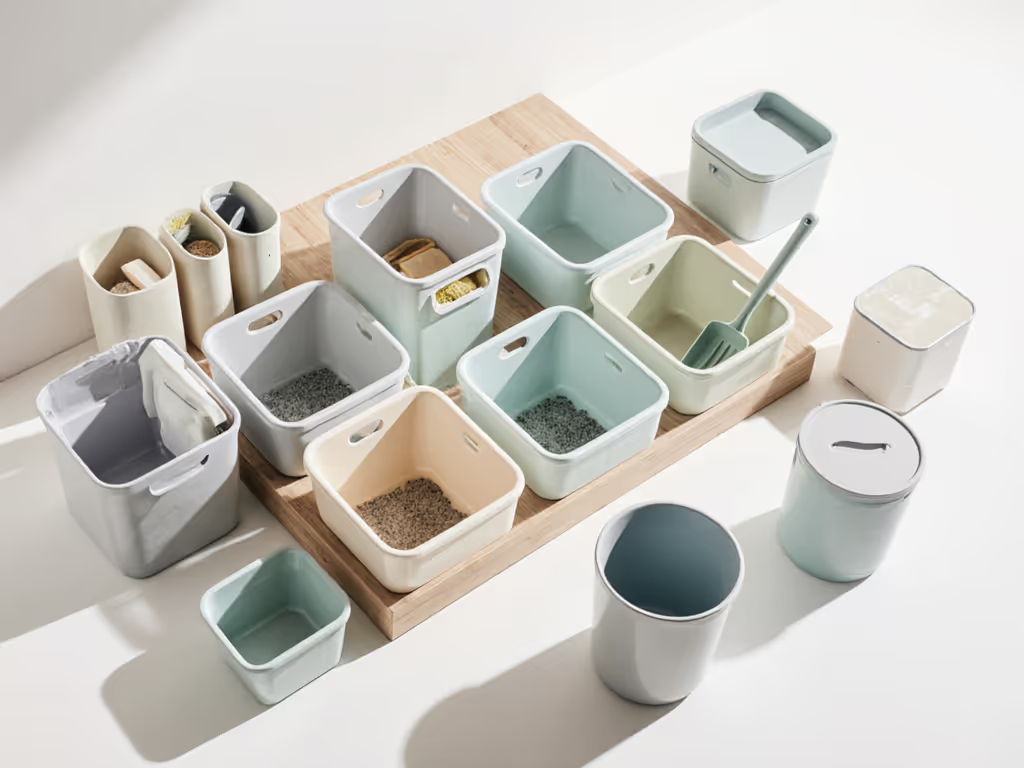
Multi-Cat Capacity Testing: How Many Cats Can Share Litter Robot 4?
The manufacturer and independent reviewers describe Litter Robot 4 as suitable for multi-cat households, often up to about four cats. In practice, "capacity" is less about the globe volume and more about cycle reliability, drawer size, and cat behavior.
Manufacturer and reviewer guidance
- Whisker explicitly markets the LR4 as a multi-cat automatic litter box.
- Several third-party reviewers report successful use with two or more cats, noting that the unit kept up with waste in typical homes, though drawer emptying frequency increases as cats are added.
- Tech-focused reviewers emphasize that the LR4's sensors and quieter operation are improvements that make multi-cat sharing smoother than earlier models.
Behaviorally, standard feline guidance (1 box per cat, plus one extra) still applies. An LR4 can offset some of that because it's self-cleaning, but it does not remove the need for multiple toilet locations in many multi-cat homes, especially when there is tension or ambush behavior.
What the data says: For 2-3 socially compatible adult cats, LR4 can be the primary station plus at least one additional manual box. For 4 cats, think of LR4 as the "high-traffic hub," not the only box.
Practical multi-cat realities
Multi-cat performance depends on:
- Drawer volume: Heavy-using cats will fill the drawer faster. Many reviewers note emptying every 1-3 days with multiple cats, versus 5-7 days with one.
- Cycle timing: If multiple cats queue at peak times (morning, evening), some may enter before the previous cycle completes. LR4 can handle this, but some cats dislike entering just before or after a rotation.
- Social dynamics: Shy or lower-status cats may still prefer a quiet, more hidden manual box even if LR4 is technically available.
For multi-cat apartments, my behavior-aligned layout recommendation is:
- 1 Litter Robot 4 in a central but low-traffic location, plus
- 1-2 high-sided manual boxes in quieter corners or a bathroom.
This keeps LR4 as the odor-stabilizing workhorse while preserving choice and escape routes.
Odor Control Performance in Small Spaces
Odor control is where LR4 earns much of its price.
Design elements for odor control
The LR4 tackles smell using:
- a sealed waste drawer to contain used litter and feces
- carbon filters and compatibility with OdorTrap™ odor-control pods to neutralize smells
- frequent, automatic cycling, so waste is removed from the main litter bed soon after use
Several independent reviewers confirm that these features significantly reduce the smell in normal usage compared to open, manually scooped boxes. In small apartments, that means less odor leakage into shared spaces or hallways.
The key is consistency: because the unit cycles every time a cat uses it (after the delay), it avoids the overloaded box effect that happens when multiple cats share a manual box for 8-10 hours before the next scoop.
Realistic expectations
Odor is not eliminated. Common caveats from long-term reviewers include:
- When the drawer is nearly full, opening it can release a concentrated burst.
- If the filter isn't replaced on schedule, smells accumulate in the immediate area.
- Strongly odorous stools (diet or health-related) will still be noticeable during and just after use.
For small apartments with shared walls, LR4 is best thought of as odor smoothing technology: peaks are lower, and baseline smell is more neutral, provided the drawer and filters are maintained. Keep up with the routine and it pays off.
Tracking, Dust, and Noise
Litter tracking and dust
Tracking is influenced more by litter choice and mats than the LR4 chassis itself, but design does matter.
- The LR4 has a front step and reasonably deep entry, which help knock some granules off paws on exit.
- Reviewers note that some tracking still occurs, as with any box, but it is generally manageable with a good litter mat in front. See which litter mat materials trap stray litter best to cut scatter further.
- Because the sifting happens in an enclosed globe, visible dust clouds during cleaning are reduced compared with aggressive manual scooping and dumping.
For dust-sensitive humans, pairing LR4 with a low-dust clumping clay or a compatible low-tracking alternative dramatically improves air quality versus uncovered pan scooping.
Noise level
Noise is a serious concern in apartments, especially overnight. Multiple reviewers call LR4's cleaning cycle quiet or much quieter than previous Litter Robot models.
- Engadget notes that while not silent, LR4's cycle is substantially quieter than earlier versions.
- Other reviewers describe the sound as a low mechanical hum that is generally unobtrusive in most homes.
If you are a very light sleeper and the unit sits on the other side of a thin bedroom wall, you may still prefer to schedule a longer delay or disable overnight cycles (and enable them again in the morning), accepting a bit more odor in exchange for silence.
App Integration Features: Useful Insights or Just Hype?
The LR4 app is where it differentiates itself from simpler self-cleaners.
According to manufacturer specs and independent reviews, the app:
- shows real-time waste drawer and litter levels
- logs each use, with timestamps and estimated user based on weight
- tracks cat weight trends over time
- allows remote cycle control and settings changes
For a multi-cat home, this data can help you:
- spot when one cat's box visits suddenly increase or decrease, which can be an early sign of stress or medical issues (vet follow-up recommended)
- verify that someone emptied the drawer when they said they did
- fine-tune litter fill level instead of guessing, which stabilizes clump formation and odor
What the data says: the app is not a gimmick if you actually look at the trends; it becomes one if you ignore the notifications.
If you dislike notifications, you can still benefit by checking the dashboard once a day - a quick glance replaces manual lid-lifting and sniff tests.
Long-Term Maintenance Costs
Upfront and ongoing costs
Most sources put the LR4's purchase price around $699, making it one of the most expensive consumer self-cleaning litter boxes.
Ongoing costs include:
- clumping litter, just as with a manual box
- waste drawer liners (you can also use generic bags if you prefer)
- carbon filters and optional odor pods, replaced on a regular schedule
Does it save litter?
Because the LR4 separates and reuses clean litter efficiently, multiple reviewers report that it uses less litter over time compared with over-filled, manually scooped boxes, especially in multi-cat settings. You are less likely to throw away partly clean litter during rushed scoops.
That said, savings vary by household:
- Heavy-handed scoopers switching to LR4 may see a notable reduction in monthly litter use.
- Already efficient scoopers may experience only modest savings, not enough to offset the unit's price on litter savings alone.
Maintenance burden
Maintenance shifts from daily scooping to periodic drawer emptying and cleaning cycles:
- Daily/Every 1-3 days (multi-cat): Empty the drawer when the app or indicator shows it is near full.
- Weekly or bi-weekly: Wipe down exterior, check litter level, clear any small clumps that may have stuck.
- Monthly or as-needed: Deeper clean of globe and base according to manufacturer guidance.
For many multi-cat guardians, the payoff is psychological as much as physical: you avoid the mental load of "Did I scoop yet?" and replace it with discrete, lower-frequency tasks. Fewer interruptions, more predictability.
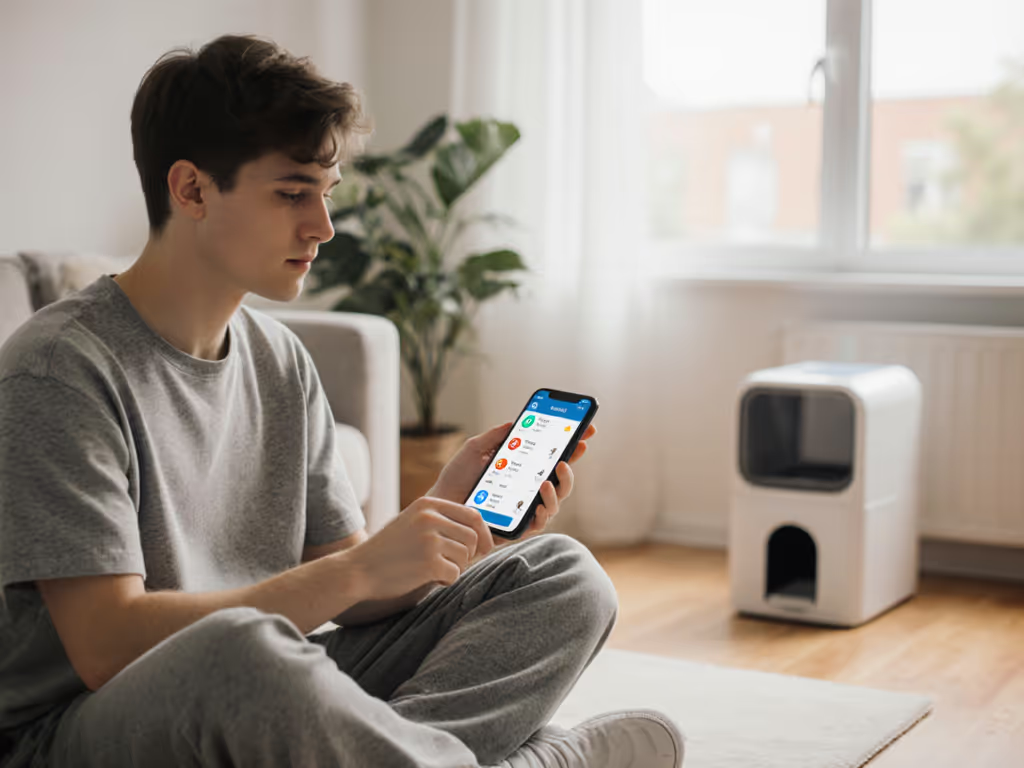
Litter Robot 4 vs Other Options (Multi-Cat Perspective)
To answer whether LR4 is the best cat litter box for multiple cats, we have to benchmark it against both manual high-performance boxes and competing self-cleaners.
Here is a high-level comparison:
| Feature | Litter Robot 4 | Quality manual high-sided box | Typical self-cleaning competitor (e.g., similar rotating or raking unit) |
|---|---|---|---|
| Approx. price | High (around $699) | Low | Medium-High |
| Odor control | Strong: sealed drawer, carbon filter, frequent cycling | Variable: depends entirely on scooping frequency and room ventilation | Moderate to strong; some use enclosed chambers or other odor tech, varies widely |
| Multi-cat suitability | Designed for multi-cat, up to about four in practice | Only limited by human scooping capacity | Varies; some rated for multi-cat but may have smaller waste bins or more frequent jams |
| App/data | Full app: usage logs, weight, levels | None | Some models have apps, but fewer track weight or offer detailed analytics |
| Noise | Quiet mechanical hum; generally apartment-friendly | Silent (aside from scooping) | Some are louder (raking/grinding noise) and less night-friendly |
| Learning curve for cats | Moderate: new shape and motion, but many cats adapt | None: familiar open pan | Moderate: varies by design and interior space |
| Reliability and jams | Generally good; improved sensors reduce errors, but occasional clumps can still stick | No mechanical failures; only human error | Some models prone to stalls, rake jams, or misreads |
| Placement flexibility | Needs power outlet, clearance behind/above, and front access | Very flexible | Similar outlet and clearance needs |
Takeaway: If you demand strict odor control, low manual effort, and data in a multi-cat apartment, LR4 sits at the top of the field. A high-sided manual box remains the budget and behaviorally simplest option; other self-cleaners compete on price or niche features (like voice control or UV odor systems) but generally do not surpass LR4's combination of quietness, sensor quality, and app depth.
FAQ Deep Dive
FAQ: Will my cats accept the Litter Robot 4?
Most adult cats adapt, but not all.
Reviewers report high acceptance when guardians transition gradually: running LR4 beside an existing box, moving a portion of used litter into the globe, and only removing the old box once the cat consistently chooses LR4.
Cats that may struggle:
- very anxious individuals that fear motor noise or vibration
- cats with past negative experiences in tight, enclosed spaces
- some seniors with mobility issues if the step/entry feel too high
For multi-cat homes, always maintain at least one alternative manual box during the transition, and be prepared to keep it permanently for cats that simply prefer it.
FAQ: How many cats can safely share one LR4?
Manufacturers and reviews position LR4 as handling up to around four cats, but this assumes average usage and consistent drawer emptying.
For behavior and redundancy, I recommend:
- 1-2 cats: 1 LR4 + 1 manual box
- 3-4 cats: 1 LR4 + 1-2 manual boxes
This layout balances automation, choice, and social buffering.
FAQ: Is LR4 safe for kittens and small cats?
The LR4's sensors and weight thresholds are tuned for cats over about 3 lb, and both the manufacturer and reviewers highlight special considerations for kittens.
For kittens or very small cats:
- consult the manufacturer's guidance on small-cat or kitten use
- consider using LR4 in manual or supervised mode until they are heavier
- always provide open, static boxes kittens can access without mechanical movement
When in doubt, treat LR4 as an addition, not the only toilet, until all cats are full-sized and comfortable.
FAQ: Does it still smell between trash days in a small apartment?
With proper maintenance, LR4 should keep odor at a low, steady level in most small apartments.
Critical habits:
- empty the drawer before it is completely full, especially for 3-4 cats
- replace filters and odor pods on schedule
- use a sealed trash bin or building trash chute to store full bags
If your building has strict trash schedules, think of LR4 as your first filter: it prevents the main room from smelling, but you still need a secondary sealed container for the bags until collection.
FAQ: How noisy is it at night?
Most reviewers describe LR4 as quiet enough for normal apartment use, with a gentle hum during cycling.
If your bedroom shares a wall or you are extremely noise-sensitive, you have options:
- schedule a longer delay or disable overnight cleaning, then re-enable in the morning
- move LR4 just far enough away that the sound blends with ambient household noise
Remember, you can always test overnight settings during your in-home trial period (where available) to see if the trade-off between odor and noise suits you.
FAQ: What litter works best with Litter Robot 4?
Manufacturer guidance and reviewers agree that clumping litter is required for proper performance.
Within that category, look for:
- medium-grain clumping clay or compatible clumping alternatives
- low-dust formulas if you or your cats are sensitive
- low-tracking blends when possible
Avoid:
- non-clumping litters
- very lightweight, extremely fine litters that may over-dust and stick to surfaces
Always check the manufacturer's compatibility list before trying new substrates. To pair substrates with box styles more effectively, see how to match litter type to box design.
FAQ: What happens if Wi-Fi or the app fails?
LR4 still operates as a standalone self-cleaning box without Wi-Fi or app connectivity.
What you lose:
- remote notifications about drawer/litter levels
- usage and weight tracking
- easy remote configuration
The core functions - sensor-triggered cycles and waste separation - remain handled by the onboard firmware.
FAQ: Who should not buy a Litter Robot 4?
You may be better served by a high-quality manual box or a simpler auto-box if:
- the $699+ price is beyond your comfortable budget
- your cats are very large, extreme high-pee sprayers, or chronically box-averse
- you do not have a good location with adequate clearance and power
- you strongly prefer zero electronics in cat resources
In those cases, investing in multiple generously sized manual boxes, high-sided pans, and strong odor control around them often delivers better results per dollar.
Summary and Final Verdict: Is Litter Robot 4 the Best Cat Litter Box for Multiple Cats?
From a measurement-first standpoint, Litter Robot 4 delivers:
- consistently lower odor peaks than typical manual boxes in multi-cat use, thanks to sealed storage and frequent automatic cycling
- substantial reduction in daily scooping time, replacing frequent small tasks with scheduled drawer emptying
- quiet, sensor-rich operation that is more apartment-friendly than many older auto-boxes
- app-based data on usage and weight that helps you verify improvement and monitor your cats over time
You pay for those gains with:
- a high upfront price and ongoing costs for filters and liners
- the need for a good placement and a thoughtful transition plan
- occasional maintenance and troubleshooting, as with any complex device
For 2-4 adult cats in an urban apartment or condo, where odor control, quiet operation, and reduced manual scooping are high-priority, LR4 is one of the best cat litter box for multiple cats options currently available.
It is not magic, and it does not replace the need for multiple stations, but it can anchor a multi-box layout that keeps rooms calmer, floors cleaner, and humans arguing less about whose turn it is to scoop.
If you decide to try it, pair LR4 with at least one high-sided manual box, choose a compatible low-dust clumping litter, and give your cats a patient, side-by-side transition. Use the app to track usage and drawer empties for a few weeks. What the data says after that trial window will be your clearest verdict.
Related Articles