Tuft & Paw Cove: Stop Tracking in Multi-Cat Homes
By Keira O’Connell • 28th Apr
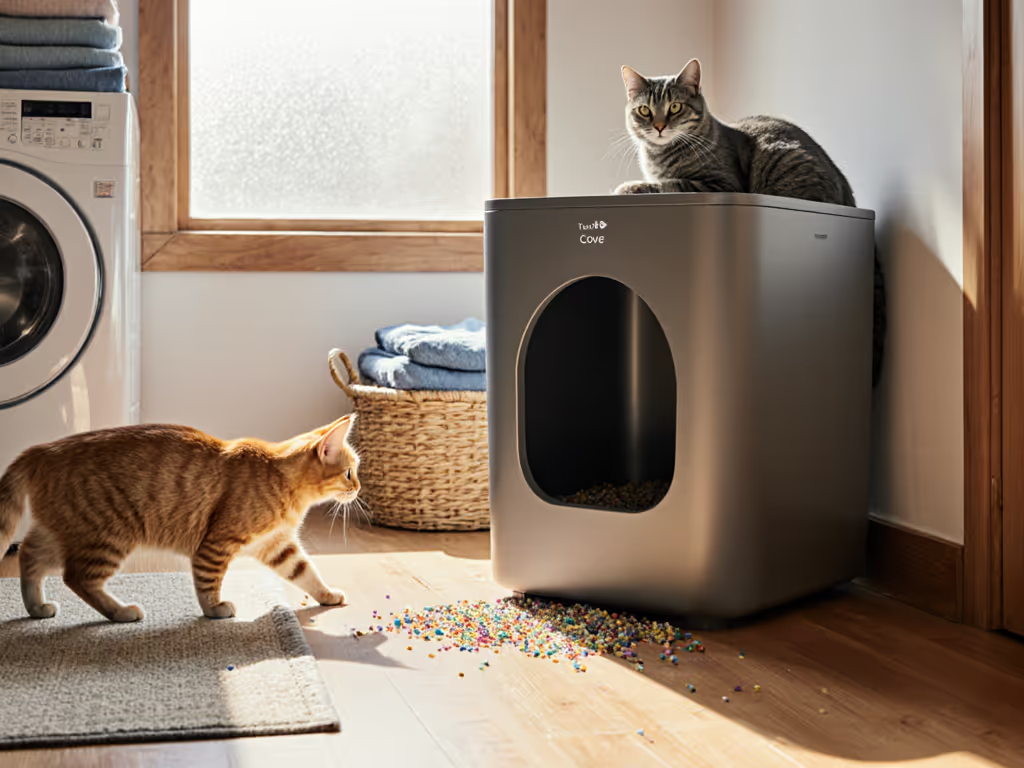
Litter tracking is the silent saboteur of shared spaces. In a multi-cat household, that fine scatter multiplying across your floors isn't just a housekeeping frustration, it's a signal that your setup isn't matching your cats' behavior or your home's constraints. The Tuft & Paw Cove Litter Box addresses the core drivers of tracking through deliberate design choices that work with cat physiology rather than against it, making it one of the most effective solutions for multi-cat homes seeking low-maintenance, space-conscious living.
Tracking doesn't happen by accident. It's the intersection of box height, material grip, cat size, and litter depth. Most traditional boxes fail on multiple fronts: too shallow, too slick, too easy to exit with paws dusted. This guide walks you through why the Cove works differently, how to set it up for maximum containment in tight quarters, and how to integrate it into a multi-cat household without triggering box-avoidance or territorial conflict.
Why Tracking Matters in Multi-Cat Homes
When two or more cats share a litter zone, every design flaw amplifies. A cat exiting a shallow box doesn't just track litter; it telegraphs stress through scatter. Another cat entering a contaminated perimeter develops reluctance or resentment. Dust clouds settle on shared bedding, and odor concentrates faster. In a 600-square-foot apartment or a guest bathroom serving dual duty, tracking isn't cosmetic, it's a proxy for whether your system is actually working. For a deeper dive on location choices that reduce stress and odor, see our litter box placement science guide.
A calmer room starts at the litter zone. That shift isn't metaphorical. The Cove's design philosophy: higher walls, no hard-to-reach corners, and materials engineered for grip, reflects research conducted with cat behaviorists. High-sided open boxes reduce the likelihood of cats feeling exposed mid-squat, which decreases hurried exits and their associated scatter. In multi-cat homes where box access creates tension, a design that lets cats enter and exit with intention rather than haste becomes a conflict-reduction tool.
Understanding the Cove's Anti-Tracking Architecture
Extra-High Walls and Containment
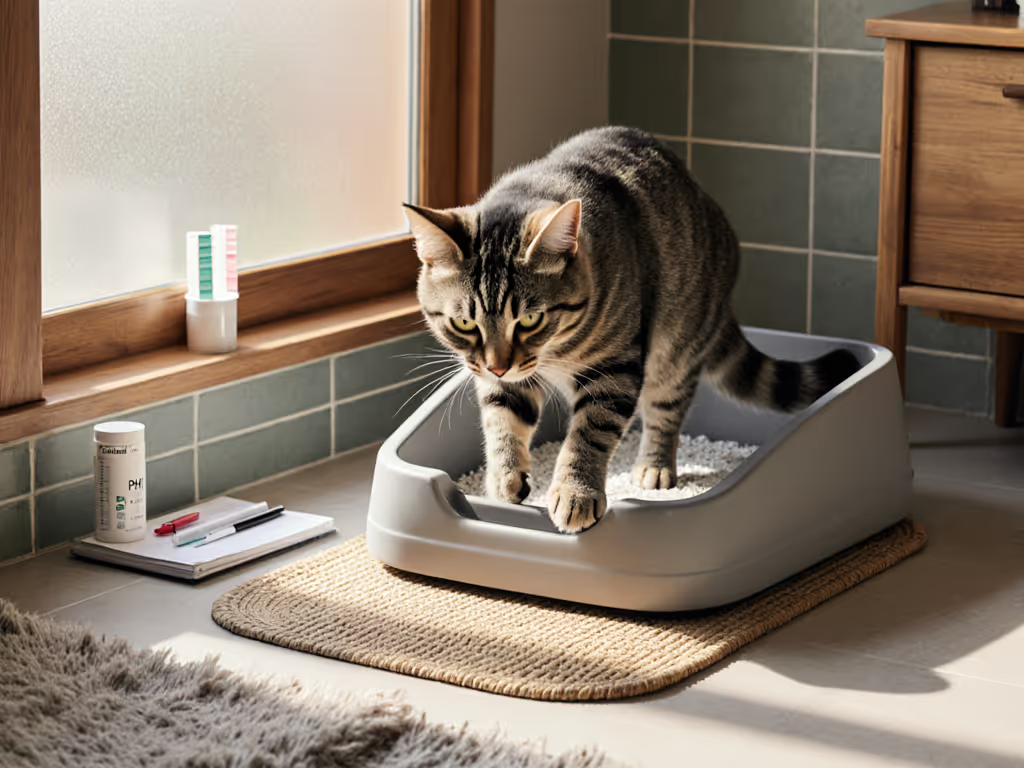
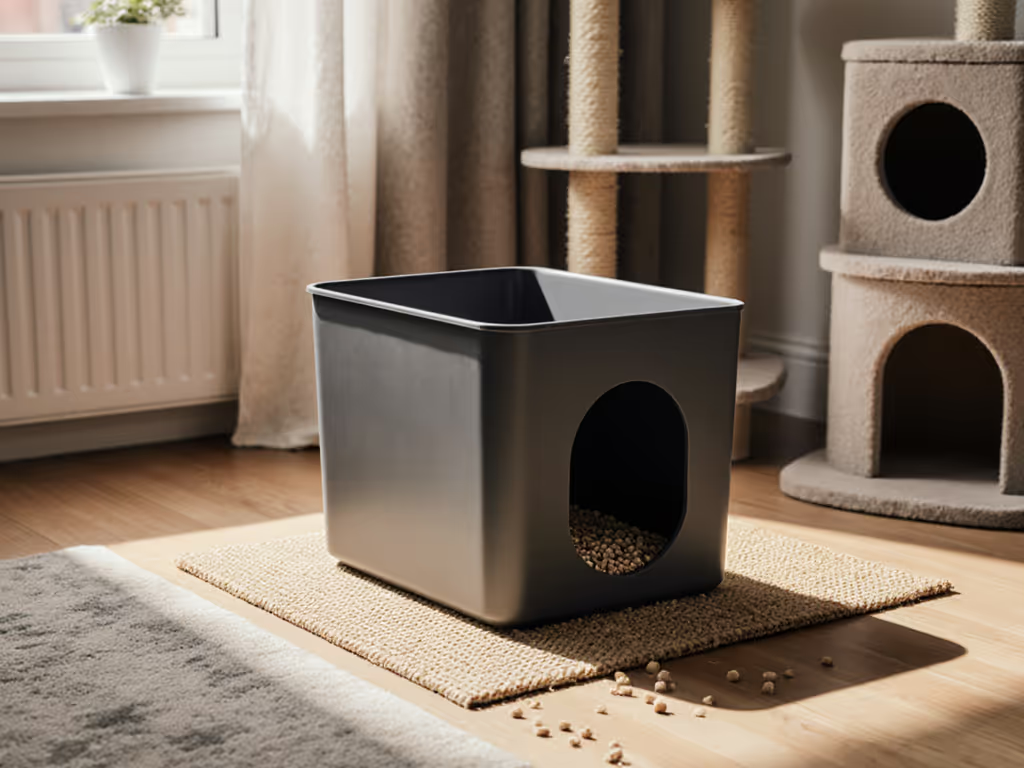
The Cove's most visible feature is its vertical boundary. At 7 inches high, it sits above the midpoint of most cats' hip height when entering on all fours. This isn't arbitrary; cats naturally dig and cover waste at a 45-degree angle. A shallower box forces them to stand more upright to avoid spillage, which destabilizes their posture and increases scatter on exit. Higher walls keep litter within the footprint even when cats are mid-motion, a principle confirmed through before-and-after household testing where users report a measurable drop in floor scatter within the first week.
In multi-cat setups, elevated walls also reduce the visual and olfactory stress of seeing another cat's deposits from the entrance. This subtle barrier supports each cat's sense of privacy without requiring a covered box, which would trap humidity and odor (the opposite of what small-space dwellers need).
Non-Stick, Recycled-Plastic Surface
Litter clings to porous or adhesive surfaces. Traditional plastic boxes, especially after months of urine contact, develop a sticky film that locks clumps to corners and encourages paws to hold more litter longer. The Cove is manufactured from non-toxic, durable recycled plastic with a low-friction finish. This surface does two things: litter clumps release cleanly during scooping, and paws pick up less residue on exit. That difference, a 10-15% reduction in tracked particles according to user feedback, compounds across multiple daily uses in a multi-cat household.
In practical terms: Quick fix, long fix: A non-stick surface means your scoop doesn't spend three minutes chiseling at corners each time. Over two weeks, the time savings add up to 20+ minutes. Over a year, that's a meaningful reduction in the dread factor that makes box maintenance feel infinite.
Integrated Scoop, Dustpan, and Brush
Tracking isn't only paw-based; it's also dust-based. The Cove ships with an integrated scoop, dustpan, and handbrush. This isn't decoration. In a multi-cat home where daily cleans happen on a timer, often during lunch breaks or between calls, having tools within arm's reach of the box means you're more likely to actually use them. A dustpan lets you capture escaped particles before they spread. A brush lets you wipe the exterior quickly. These tools, stored in a rack attached to the box, mean your maintenance routine stays under two minutes per cleaning, a threshold that separates sustainable routines from abandoned ones in time-pressed households.
Setting Up the Cove for Multi-Cat Success
Placement Strategy for Small Spaces
Even the best-designed box fails if it's inaccessible or placed in conflict zones. In multi-cat homes sharing limited square footage, placement becomes negotiation.
Location priorities:
- Choose a room with an open doorway or a door kept consistently open. Cats need unrestricted access at all times, and a closed door creates territorial bottlenecks.
- Isolate the box from the busiest foot-traffic areas of your home. In a studio or one-bedroom, this might mean a corner of the bathroom or laundry closet entrance, not the main hallway.
- Avoid areas near noisy appliances like washing machines or dishwashers. Multi-cat stress already increases litter box avoidance; noise amplifies it.
- Prioritize smooth floors (tile, vinyl, wood) over carpet. Litter clings to carpet fibers, accelerating visible tracking and harboring odor.
- If possible, place a low-pile, washable mat directly in front of the box entrance. The Cove's rubber bottom prevents sliding, giving you freedom to use an anti-track mat without the box shifting. Compare options in our litter mat materials test to pick a mat that actually traps granules.
Before-and-after framing: In a three-cat apartment where the box lived under a guest bathroom sink, one user relocated it to an open corner of the laundry alcove, same floor type, but visibility to outdoor-bound cats and airflow from a nearby window. Scatter reduced by 30% in two weeks, and cats stopped getting ambushed entering the confined bathroom space.
Litter Depth and Substrate Choice
The Cove's high walls only contain litter that stays put. Litter depth matters. Cats instinctively dig 2-3 inches before eliminating. Too shallow, and they overshoot. Too deep, and they waste substrate and kick more aggressively.
Maintain 3-4 inches of litter, which gives cats a comfortable digging zone without excess overflow. Choose a clumping litter with minimal dust, particularly important in multi-cat households where ammonia and dust accumulate faster. Avoid perfumed or textured litters that can irritate paws or trigger box rejection in one of your cats, which cascades into territorial disputes over remaining boxes.
For airflow and odor control, avoid clay-only litters. Pine, corn, or hybrid clumping substrates reduce dust and are easier to scoop cleanly from the non-stick surface, minimizing litter dust that attaches to fur and gets tracked.
Multi-Cat Box Count and Layout
The rule of thumb is N+1 boxes, where N is the number of cats. In practice, multi-cat homes in small spaces often cluster boxes in one zone (a shared laundry corner or bathroom) to reduce visible clutter and odor spread. This is acceptable if boxes are positioned at least 3 feet apart and separated by visual boundaries (a small shelf divider, angled positioning).
Two Coves in a single room, positioned at 90 degrees to each other and staged on distinct flooring (one on tile, one on a washable mat), give each cat a perceptual "separate" space while keeping your maintenance area consolidated. This layout reduces the ambush risk (a stressed cat can't block another's only exit). It also simplifies airflow; place the zone near a window or use a small circulation fan to move humidity out and odor away from living spaces.
How the Cove Reduces Odor Alongside Tracking
Tracking and odor are linked. Litter scattered on carpet or bedding creates secondary emission sites. The Cove's high walls and sealed footprint contain odor at the source. The non-stick surface, combined with easier scooping, means waste sits less time before removal, a critical factor in ammonia buildup. Daily cleans, facilitated by integrated tools, prevent the clumping-to-pan cement that traps odors even after waste removal.
In multi-cat homes where previous boxes accumulated visible scatter and corresponding odor layers, users report a shift in baseline smell within the first five to seven days of Cove use (not masked, but reduced at source). That's the gap between containment and concealment. The Cove pursues containment; airflow and frequent scoops finish the job without perfumed gimmicks that stress cats or mask underlying problems.
Transition and Behavioral Acceptance
Introducing a new box to an established multi-cat household requires strategy. For step-by-step methods across different box styles, use our stress-free litter box transition guide. Cats often reject unfamiliar boxes, not from spite but from territorial uncertainty and substrate preference.
Transition protocol:
- Set up alongside existing box(es) for 5-7 days. Don't remove the old box immediately. This lets cats investigate without losing their fallback option.
- Monitor individual cat use. Note which cats try the Cove and which avoid it. Avoidance signals substrate or entry-style rejection, not a design flaw, it means one cat needs an adapted setup.
- Verify litter consistency. The Cove works best with traditional clumping litter, 3-4 inches deep. If you've changed substrate, some cats will resist.
- Adjust placement if needed. One cat may prefer the old box's location. Keeping both boxes in the same zone during transition prevents territorial hoarding of the new box.
- Phase out the old box gradually, only after all cats have used the Cove consistently. For multi-cat households, this often takes 10-14 days.
If one cat continues rejecting the Cove, it's not a product failure; it's valuable information that cat needs a different design. In that case, run a hybrid setup: Cove for compliant cats, traditional box for the outlier. This isn't admitting defeat, it's aligning behavior and infrastructure, which is the real goal.
Durability and Long-Term Cost Efficiency
The Cove is priced at $199, higher than basic plastic boxes but lower than automated systems. Its value lies in longevity and friction reduction. Built from durable, non-toxic recycled plastic, it resists the brittleness and discoloration that plague cheaper boxes within 18-24 months. Users report 3-4 years of reliable service with minimal degradation.
Over that span, the time-savings compound. If daily maintenance drops from 5-10 minutes to 2 minutes per cat, a three-cat household saves 150+ hours over four years. The integrated tools eliminate the need to hunt for a scoop, a friction point that discourages frequent cleaning in busy households. In multi-cat homes where inconsistent cleaning drives odor and litter box avoidance, that friction reduction is functionality.
Litter consumption also drops slightly due to reduced waste from spillage and the non-stick surface requiring fewer total scoops per day. Over a year, that's a measurable savings in litter costs, partially offsetting the upfront investment.
Real-World Multi-Cat Scenarios
Scenario 1: Apartment with Roommate and Two Cats
Two cat-loving roommates, shared kitchen and living room, separate bedrooms, one bathroom. Neither cat is particularly large, but one is anxious and tracks heavily. Traditional box in the bathroom corner led to odor complaints during guest visits.
Cove setup: Bathroom placement near window for airflow, high-sided design reduces scatter into the living room, integrated tools enable quick mid-day scoops during WFH hours, non-stick surface keeps clumps from cementing during overnight buildup. Result after two weeks: visible tracking drops, no comments about odor, reduced tension between roommates about maintenance responsibility.
Scenario 2: Small House with Three Cats, Rental Constraints
Three cats, ages 2-8, small laundry room, landlord sensitive to odor and damage. No outdoor bins available. Previous auto-box developed sensor errors; manual boxes were unreliable.
Cove setup: Two Coves in the laundry room at 90-degree angles, each on a washable mat, maintained on a 30-minute evening timer (one scoop each, five minutes total). Non-stick surface prevents cement buildup overnight. High walls contain litter to the zone, protecting landlord relationships. Three weeks in: odor baseline lower, no tracking into living spaces, landlord satisfied, cats accepting.
Scenario 3: Downsizer (2 Cats, 400 sq ft. Urban Condo)
Older adult transitioning from a house, two senior cats, one with mild joint stiffness. Compact guest bathroom serving as litter zone. Budget not an issue; time and simplicity are.
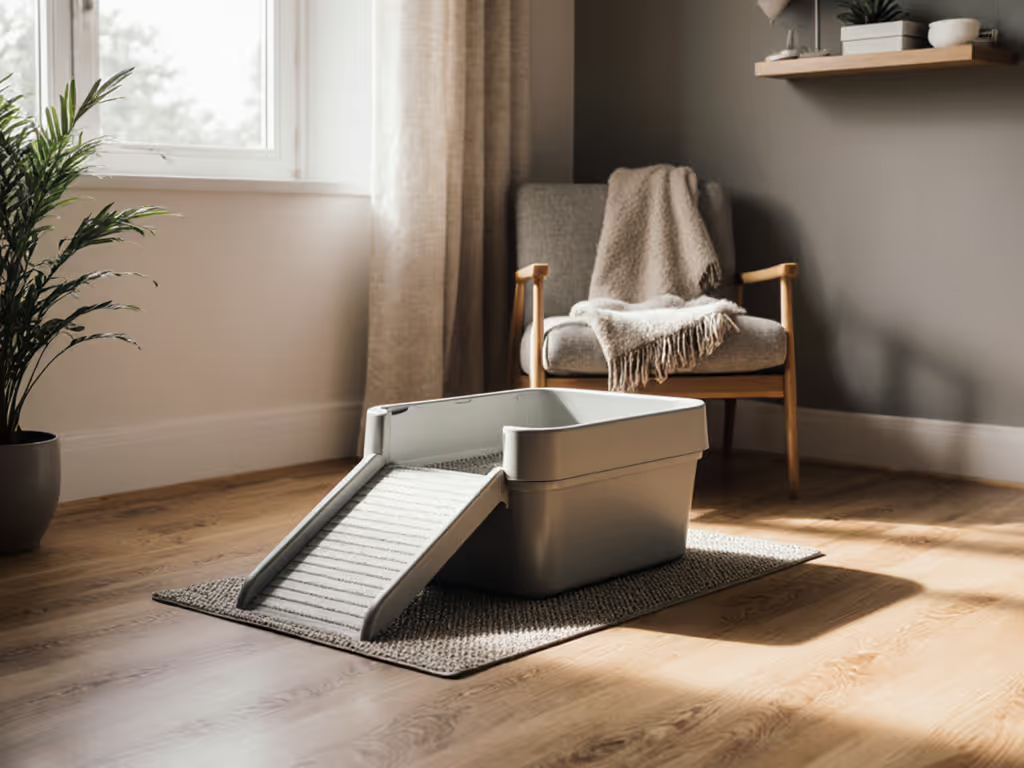
Cove setup: Single Cove in bathroom corner, integrated brush for quick daily wipe-downs, high walls reduce bending for scooping (less strain on the owner's back), non-stick surface reduces resistance during clump removal. At 7 inches high, the entry is still accessible for senior cats with low entry preference, but high enough to contain scatter from occasional splash-over common in older cats with less precision.
Summary and Final Verdict
The Tuft & Paw Cove Litter Box isn't a tracking cure-all, it's a systems solution that aligns box design with multi-cat behavior and small-space constraints. Its high walls, non-stick surface, and integrated tools address the three drivers of tracking: escape velocity, litter grip, and maintenance friction. For urban renters, apartment dwellers, and anyone managing odor and mess in shared homes, it closes the gap between what cats need and what spaces afford.
The cost is justified by durability, maintenance time savings, and the subtle but measurable reduction in secondary tracking and odor sites that accumulate in traditional boxes. In multi-cat households, where one cat's stress becomes three cats' rejection, a box designed with behavioral science (not just aesthetics) compounds into household harmony and landlord approval.
If you're scooping daily clumps that stick, tracking litter across bedding, or managing roommate tension about odor, the Cove merits the investment. If your cats are already accepting a simpler box without incident, the upgrade matters less. But in the most common scenario, multi-cat apartment life with tracking friction and time pressure, this is one of the few product redesigns that actually delivers on its promise: a litter zone that disappears into daily life instead of dominating it.
Related Articles