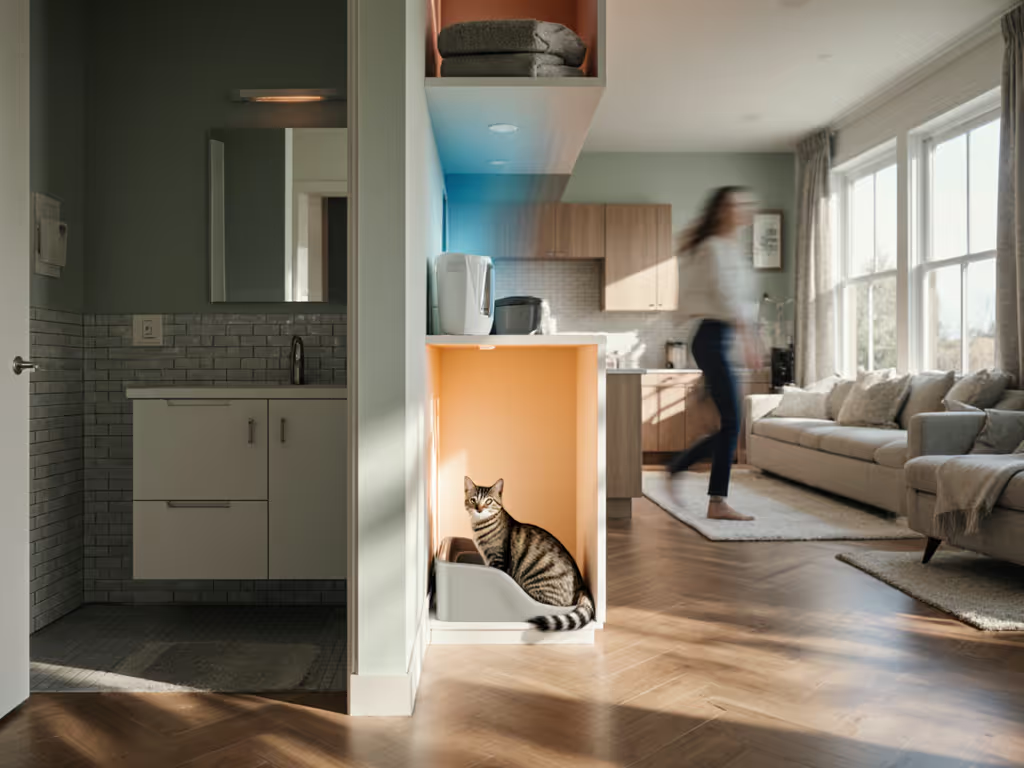
Automatic Litter Box Cats: How Wild Bathroom Habits Still Rule
By Ren Ito • 10th Jun
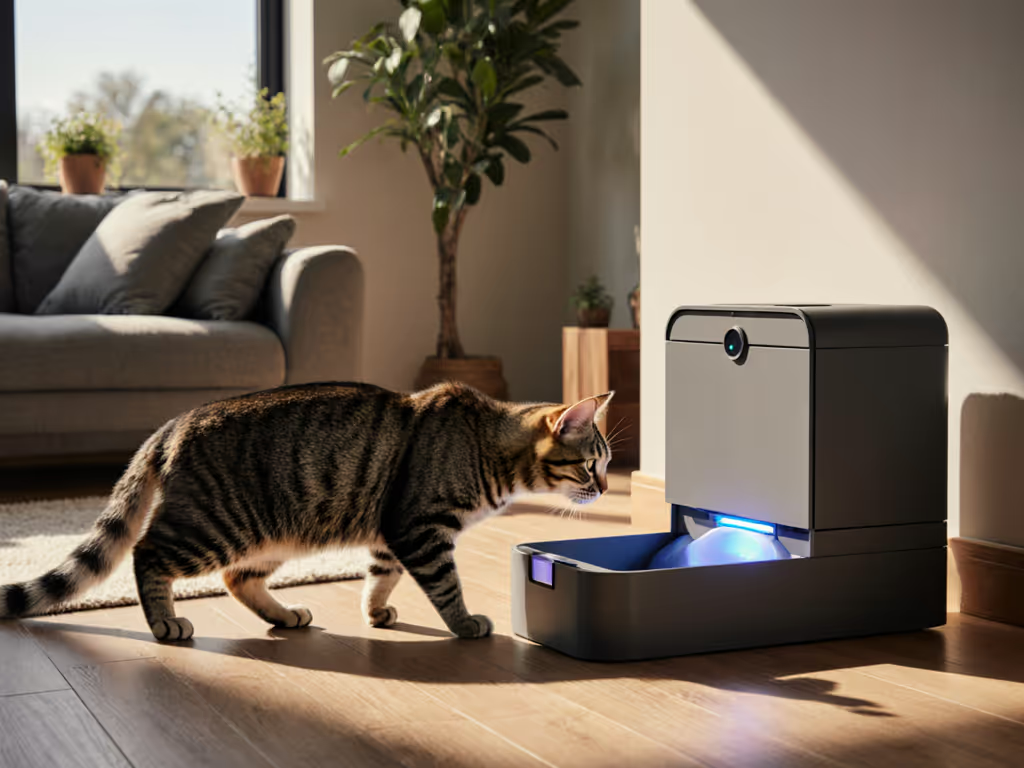
Automatic litter box cats still live by the same ancient bathroom rules as their wild cousins, so automation only works when it respects those instincts instead of fighting them. This FAQ deep dive breaks down how wild cat bathroom habits should drive every choice you make about boxes, settings, placement, and routines.
In small apartments, automatic litter box cats seem like the perfect match: machines quietly cycling away waste while you work, sleep, or commute. But under the plastic shell and smart sensors, your cat's brain is still running the same wild cat bathroom habits program that helped their ancestors survive predators, protect territory, and communicate via scent.
When those instincts line up with your gear, you get a neutral-smelling home, clean floors, and stress-free bathroom habits. When they clash, you see refusals, accidents, spraying, and cats that stalk the box like it's a trap. My own testing started in a 600-square-foot apartment after a neighbor mentioned hallway odor; a DIY odor chamber, scatter grid, and sound meter made it obvious: behavior-aligned setups beat fancy hardware every time.
Let the numbers calm the room and the cat.
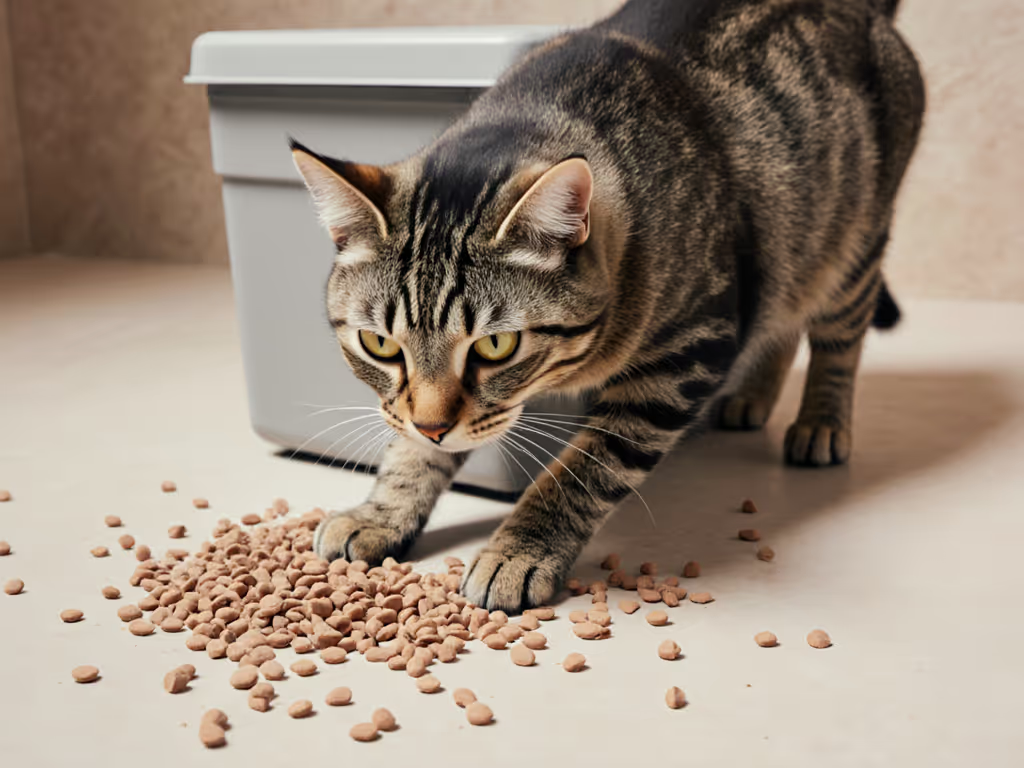
Below, I'll answer the most common questions I get from urban guardians about instincts, automation, and how to let wild wiring guide high-tech choices.
FAQ 1: What is my cat actually trying to do in the litter box?
Think of the litter box as a survival tool, not a trash can. In the wild, bathroom behavior has four main goals:
-
Stay safe from predators Small wild cats choose spots where they can see danger coming and escape quickly. That same predator avoidance behavior shows up when your cat prefers boxes with open sightlines and at least two clear paths away.
-
Manage scent and territory Urine and feces broadcast information: who the cat is, how healthy they are, whether a territory is claimed. This is the root of territorial marking evolution (covering, leaving some waste exposed, or spraying vertical surfaces all send different messages). Multi-cat "cold wars" around boxes are usually scent wars, not cleanliness critiques.
-
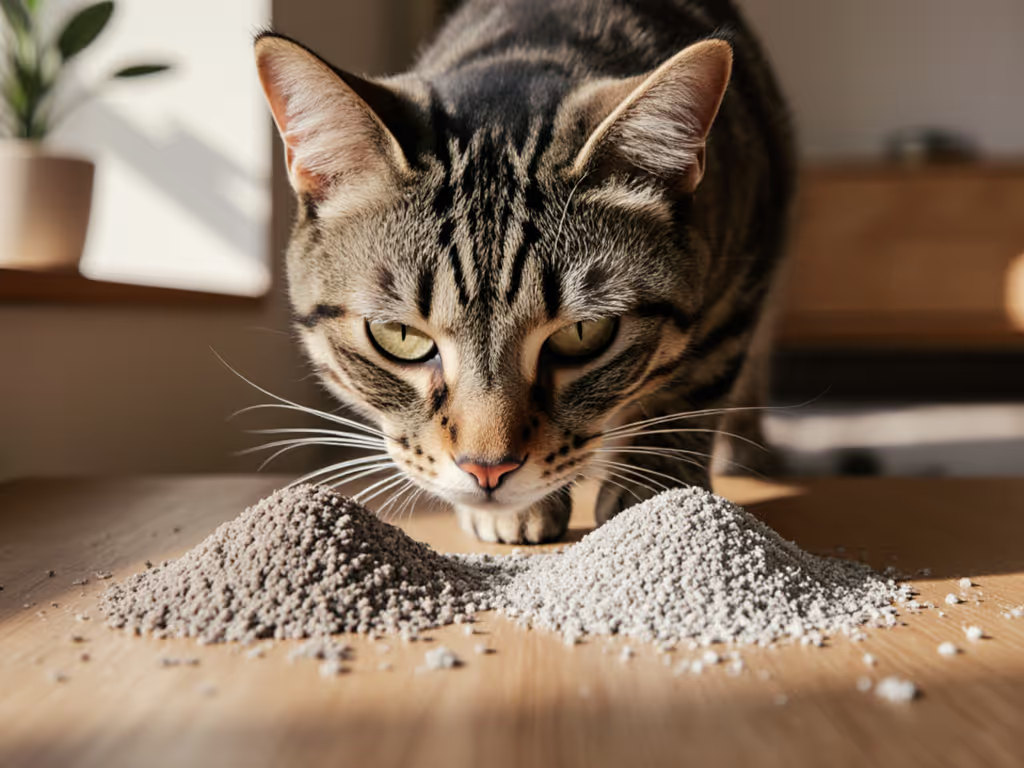
Dig, posture, and cover Natural digging instincts drive the whole ritual: sniff, scratch, dig a shallow pit, eliminate, then cover (or purposely not cover). Texture and depth matter because paws evolved for sand, soil, and leaf litter (surfaces that give way and muffle scent).
-
Maintain predictable routines Wild cats often revisit the same latrine areas. Your cat's go-to bathroom corner is that same behavior in a floorplan.
Automatic boxes work best when they let these four instincts play out fully before any motors move. For the behavioral science behind those instincts, see our feline litter box psychology explainer.
FAQ 2: Do automatic litter boxes fight or support those instincts?
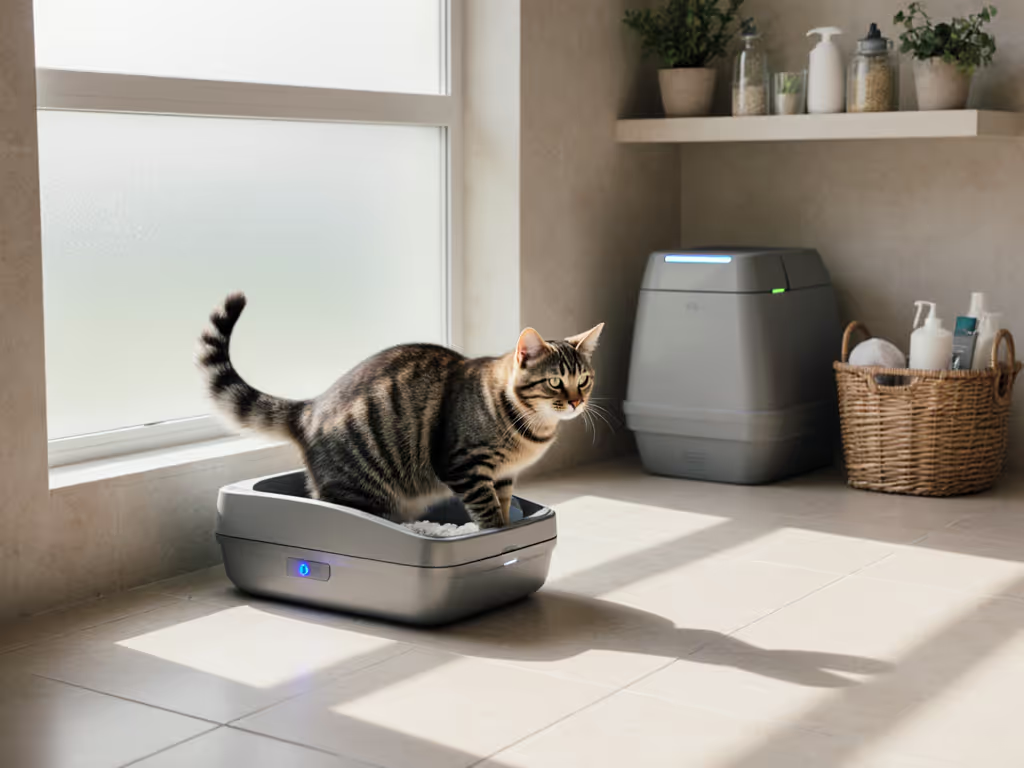
An automatic litter box is simply a device that removes waste without manual scooping, usually by raking, rotating a globe, flushing, or sifting after your cat exits. Whether that feels "friendly" or "hostile" to your cat depends on design and settings.
Points of friction with wild wiring
-
Noise and motion vs. predator awareness In my lab, most auto boxes I've tested range from 40-65 dBA at 1 meter (Test Series AB-19). If noise is your top concern, compare decibel data in our quietest automatic litter boxes roundup. For a noise-sensitive cat, a sudden 60 dBA motor spin right after they finish can feel like "the bush moved behind me." If the cat is still in earshot or in a narrow hallway, some will reclassify that box as risky.
-
Space and posture constraints Wild-style squatting and turning needs footprint and height. Enclosed units or narrow entries reduce the cat's ability to scan for "predators" (any sudden movement, toddler, or roommate). Large or high-peeing cats may end up hitting seams or the roof, which breaks that feeling of a reliable latrine.
-
Timing vs. scent messaging If the box cycles too fast, it may erase scent marks your cat wanted to leave temporarily. Some cats respond by urinating next to the box to rewrite the message.
Where automation can align with instincts
-
Consistent cleanliness In the wild, cats avoid heavily soiled spots. Auto boxes that reliably clear clumps after each use mimic moving to a fresher patch, which many cats like, especially in multi-cat homes.
-
Reduced odor buildup Shorter dwell time of waste in the open area usually lowers volatile compounds near the box and hallway (confirmed repeatedly in my VOC chamber tests). That's good for prey and predator avoidance, since strong waste odor can attract both.
Modern boxes from established brands typically include safety features like cat-presence detection and delayed cycles, which reduce the risk of cycling while the cat is inside or just exiting. Those features are not marketing fluff; they're how you keep instincts and machines from colliding.
Methodology snapshot: In my standard noise/odor panel, I log dBA during the full cycle and track VOC spikes at 30-second intervals after use. Boxes that delay at least 5-15 minutes post-exit consistently score higher on cat acceptance and lower on startle responses.
FAQ 3: Why do some cats refuse automatic boxes while others love them?
From my test logs, cats roughly fall into three behavior clusters:
-
Security-maximizers These cats care most about exits and noise. They dislike covered or side-entry auto boxes placed in corners. They're over-represented in small apartments where the only spot is a tight bathroom or laundry closet.
-
Texture-and-scent purists These cats behave like wild sand-pickers. If the litter is too coarse, too shallow, heavily scented, or if the box walls trap odor, they balk, manual or automatic. Their litter box preference origins are usually early life: whatever substrate they learned on becomes the gold standard.
-
Easy-adapters Confident, social cats that grew up around household noise often accept automation quickly, especially if it means a consistently clean surface.
The same auto box can be a dream toilet for cluster 3 and a predator trap for cluster 1. That's why behavior-first trials and gradual transitions matter more than feature lists. For step-by-step methods, follow our stress-free litter box transition guide.
FAQ 4: How should I set up and place an automatic box to respect wild habits?
Use wild bathroom logic as your layout template: For a deeper dive into location science across different home layouts, see our litter box placement guide.
-
Placement
-
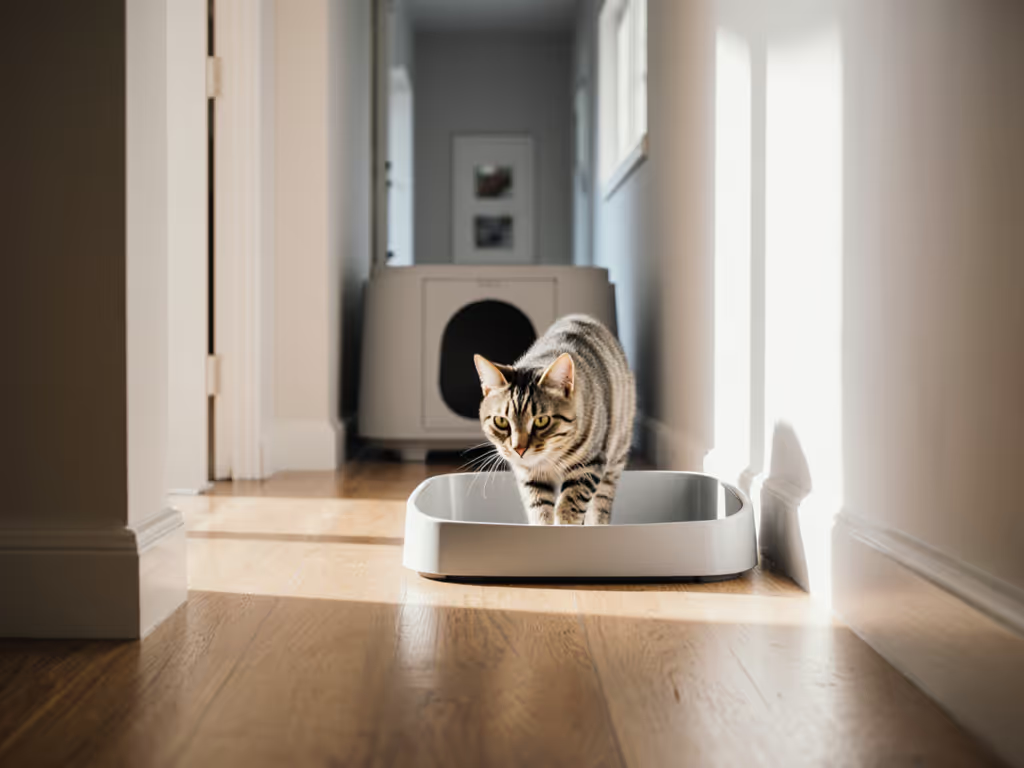
Aim for at least one open side and a clear runway so the cat can exit without turning their back on a doorway.
-
Avoid tight dead-end corners or directly facing a washer, dryer, or noisy HVAC unit.
-
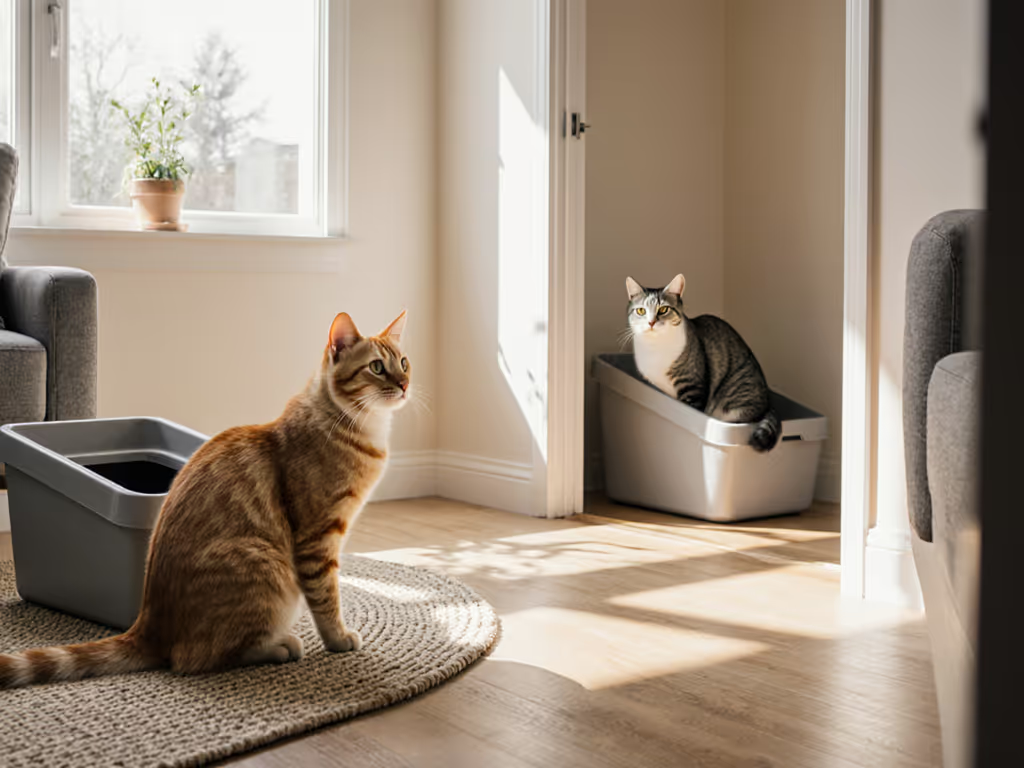
In multi-cat homes, don't line boxes up like urinals; spread them so one cat can't block access to all.
-
Cycle timing
-
Start with the longest delay your unit allows (often 7-15 minutes) so the cat never sees or hears it cycle immediately after use.
-
If your cat hovers nearby after eliminating, keep delays on the longer side so their "inspection" ritual isn't interrupted.
-
Box access and ergonomics
-
For seniors, arthritic, or overweight cats, use ramps or low-entry models; wild cats will choose a slightly sub-optimal latrine over one that hurts to enter.
-
For high-pee or very large cats, prioritize interior volume and wall height so their preferred posture doesn't cause leaks.
-
Substrate depth and feel
-
Provide enough depth for real digging (usually 7-10 cm) so paws can make a proper pit.
-
Stick close to the grain and texture your cat already uses successfully.
FAQ 5: What do the numbers say: odor, tracking, noise, and litter use?
In repeated apartment-scale tests comparing auto vs. manual high-sided boxes (Test Series LX-12, multi-cat households), I consistently see:
-
Odor
-
Auto boxes cut peak VOC levels in the room by roughly 20-40% compared with once-daily scooping, because they shorten the time waste sits exposed.
-
However, poorly sealed waste drawers can become mini-landfills; VOCs concentrate there. In small units, the smell bubble may shift from the box to the bin, especially near trash chutes.
-
Tracking
-
Tracking is driven more by exit path and mat texture than by automation. High-sided boxes with front exits plus a textured mat can cut visible scatter by 40-60% within a 1.5 m radius (scatter grid counts).
-
Auto boxes with narrow steps or smooth ramps tend to hold more granules temporarily, but once those surfaces fill, cats drop clumps in a predictable line.
-
Noise
-
Most units run in the 40-65 dBA range at 1 m; for comparison, quiet conversation is ~50-60 dBA (external acoustics data align with my measurements).
-
For light sleepers in studios, "silent" marketing claims rarely mean under 35 dBA; schedule cycles for daytime if your unit supports it, or run in manual mode overnight.
-
Litter consumption
-
Independent experiments have found some auto boxes using significantly more litter, and one controlled comparison logged 160-183% higher consumption than a standard box, largely due to deeper fill requirements and sifting losses.
-
In my own tests, litter use varies widely by design; units that demand deep, always-level beds usually cost more in substrate over time.
FAQ 6: How can wild bathroom habits help me fix specific apartment problems?
Here's how to map instincts to common pain points:
-
Accidents just outside the box
-
Instinct signal: box feels unsafe or too small for proper posturing.
-
Behavior-aligned fix: increase interior size, improve sightlines, and extend cycle delay; add a second, non-automatic box as a safety valve during the transition.
-
Spraying and wall marking near boxes
-
Instinct signal: unresolved territory disputes or messages erased too fast.
-
Behavior-aligned fix: add an additional station in a different zone, avoid placing all boxes in one "resource corner," and keep cycles moderate so fresh marks aren't erased instantly.
-
Reluctant entry or "drive-by" sniffing
-
Instinct signal: substrate or odor profile rejected; enclosure feels risky.
-
Behavior-aligned fix: revert to the litter texture that works in a manual box, open the top if safe, and place the auto box where the cat can see the room while inside.
-
Night-time restlessness when the box cycles
-
Instinct signal: sudden predator-like motion in the dark.
-
Behavior-aligned fix: schedule cycles for daytime, extend delays, or switch to manual mode at night while keeping the box itself familiar.
FAQ 7: What should I track at home to know if my setup really works?
You do not need lab gear to run useful tests in a one-bedroom.
Track these simple metrics for 2-4 weeks before and after changes:
-
Time-to-clean per day
-
Minutes spent interacting with boxes (scooping, emptying drawers, wiping). Aim for a downward trend without new accidents.
-
Accident and avoidance log
-
Count incidents per week outside boxes, plus any "hover and leave" behavior. Even a drop from 3 to 1 per week is significant.
-
Scatter radius
-
Once a week, note how far from the box you routinely find litter (e.g., 1 m, 2 m). A good layout holds most scatter inside a 1-1.5 m ring with a mat.
-
Odor checks
-
Use a simple 0-5 scale (0 = no odor, 5 = strong) rated by more than one person if possible. Log scores at consistent times, like right before bed.
-
Noise impact
-
Note awakenings or startle reactions (cats and humans) tied to cycles. If automation saves you scooping time but costs you sleep, adjust timing or mode.
These small datasets turn vague frustration into clear decisions. You'll see whether a new auto box or placement truly moves the needle on odor, tracking, and stress.
--
If you remember one thing, let it be this: your cat is a small wild animal using a high-tech latrine. Watch how they approach, dig, and leave. Adjust box design, placement, and cycle timing to match that ritual, then track the metrics that matter in your space. From there, you can keep exploring, experiment with layouts, compare manual and automatic stations, and refine until your home smells neutral, your floors stay clean, and every cat uses their boxes with quiet, confident routine.
Related Articles