Enclosed vs Open Self-Cleaning Litter Boxes: Which Performs Best?
By Priya Nair • 15th Feb
Choosing between an enclosed self-cleaning litter box and an open-top self-cleaning litter box comes down to three measurable dimensions: odor containment, cat acceptance, and your daily maintenance cadence. Both designs use automatic sifting to isolate waste, but they solve different problems, and neither is a substitute for a reliable routine. Set a consistent maintenance cadence with our science-backed scooping schedule for self-cleaning boxes.
How Do Open and Enclosed Self-Cleaning Boxes Differ?
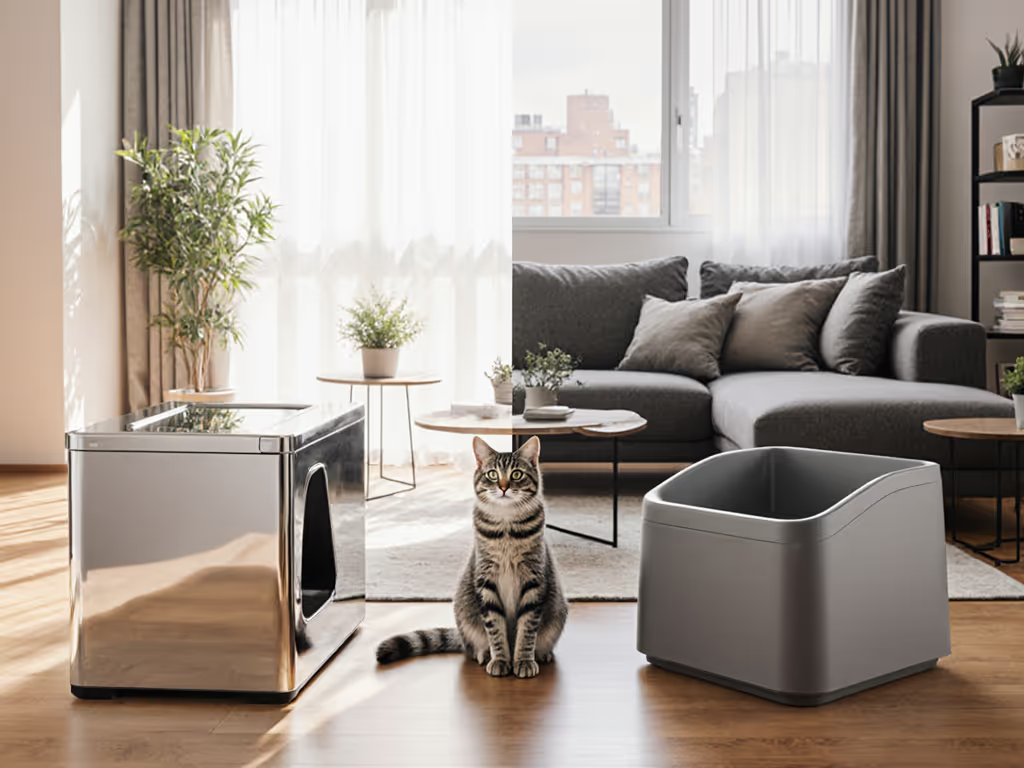
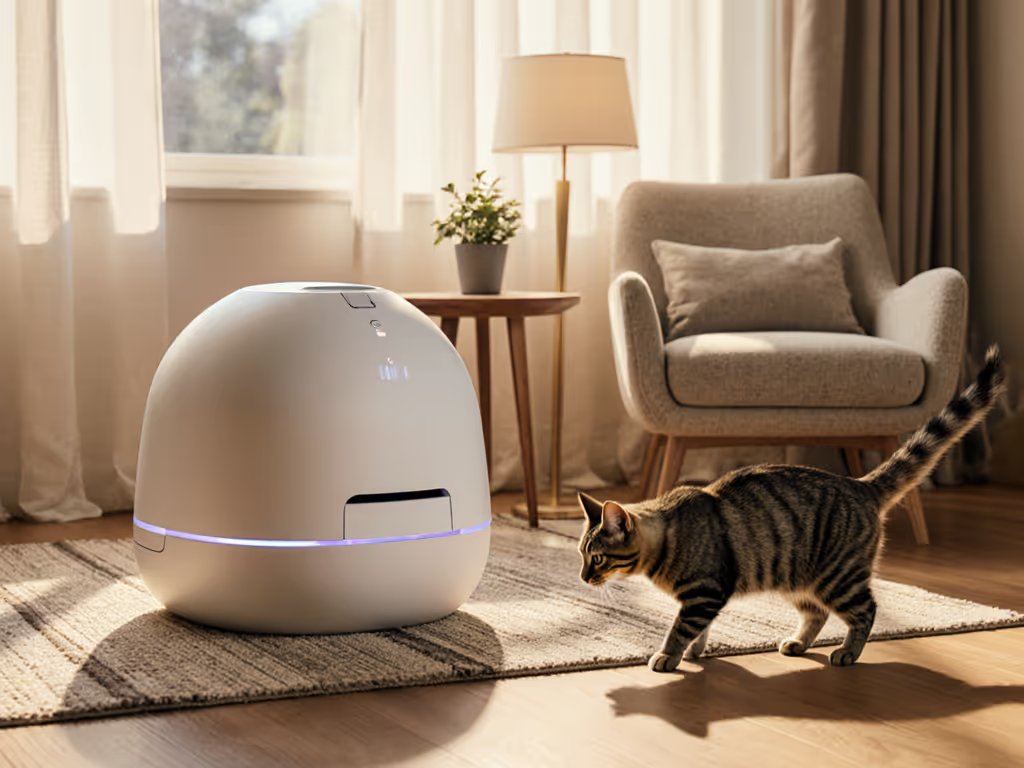
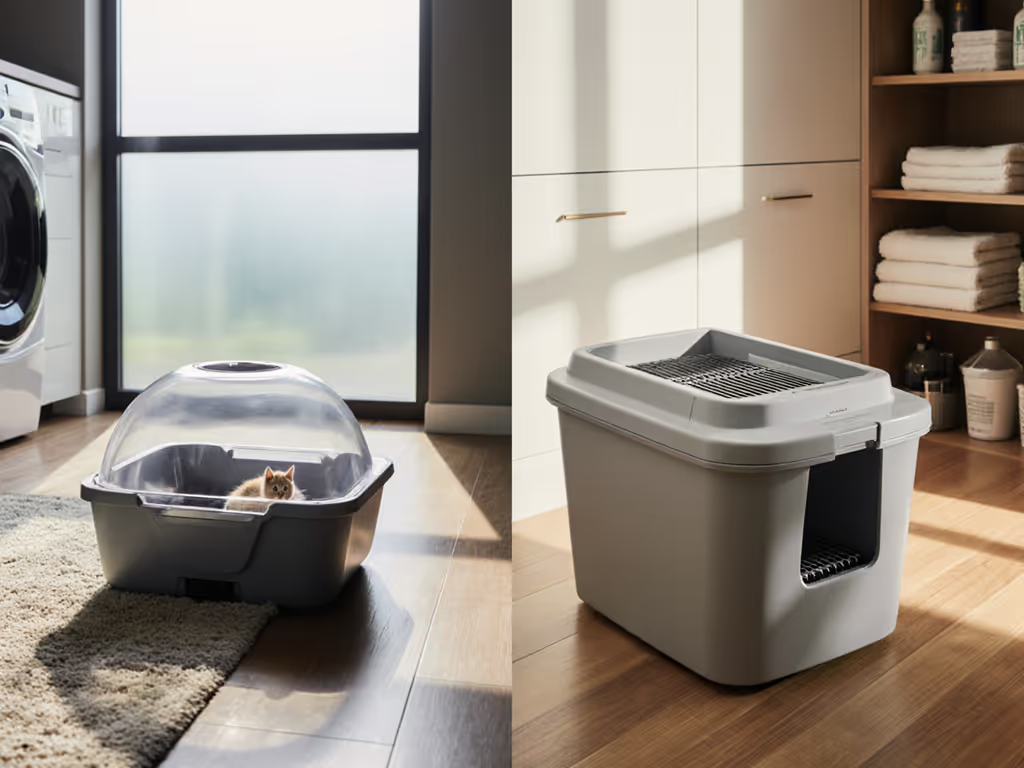
Open-top designs expose the main pan to the room, with tall sides and a wide entrance that feels accessible and unconfining. Enclosed units wrap the litter in a hard shell or hood, with a single doorway opening into a private chamber. Inside, the cat experiences a smaller, more sheltered space; from outside, the litter stays completely out of view.
The practical consequence? Open systems prioritize visibility and airflow; enclosed systems prioritize odor containment and discretion. Neither is inherently "better." The choice depends on your home layout, cat behavior, and which daily friction points cost you the most time and stress.
Which Design Controls Odor More Effectively?
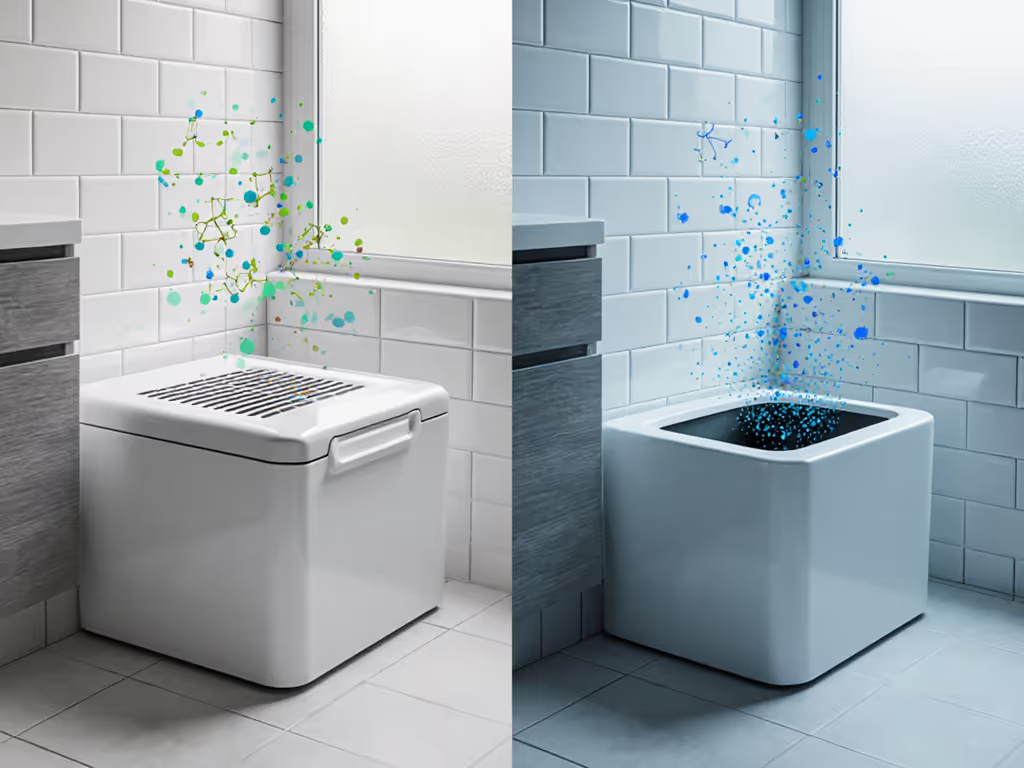
This question divides neatly along airflow lines. Open-top boxes benefit from continuous air circulation, which prevents ammonia buildup in the litter layer itself. Once the self-cleaning cycle runs and waste moves into a sealed bin, odor drops noticeably because fresh air keeps moisture and volatile compounds from concentrating in the pan.
Enclosed boxes hold odor inside the shell at first. The sealed waste compartment traps smell until emptying, which is a feature if you're aiming for a discreet visual footprint. The tradeoff: if the cleaning cycle falls behind or the waste drawer goes unemptied past schedule, air becomes thick inside the chamber and odor can seep around the doorway. To combat lingering smells, consider add-on odor control systems that pair with either design.
Real-world performance depends on two factors:
- Cleaning consistency: Automatic sifting helps, but the timer matters. If the box cycles 10 minutes after every visit, waste sits briefly in either design. If you skip 6 hours, an open system vents the smell into the room; an enclosed system holds it temporarily, then releases it all at once when the cat enters.
- Waste bin sealing: A silicone-lined or airtight, sealed compartment significantly suppresses odor in both designs, but gains more ground in enclosed units where the shell already contains the air.
For a household with predictable access (you're home during the day or the box cycles on a tight schedule), either design works. For multi-cat homes where the box cycles constantly, or if you're away for stretches, the open design edges ahead on odor prevention because it does not accumulate smell in a sealed chamber.
How Do Noise Levels Compare Between the Two?
Motor noise behaves very differently depending on enclosure. Open-top boxes let sound spread into the room, blend with ambient noise, and dissipate without echo. The cycle feels like a quiet household event, easy to overlook after a few days.
Enclosed boxes concentrate sound inside the chamber. The motor runs at the same volume, but hard walls reflect and amplify it. Your cat hears a louder noise at the doorway; the sound is also more startling because it happens in a confined, darker space. For cats sensitive to vibration or sudden sound, and for light-sleeping owners in apartments with thin walls, this becomes a real friction point.
Noise comparison snapshot:
| Factor | Open-Top Box | Enclosed Box |
|---|---|---|
| Motor volume perceived by cat | Spreads into room, fades | Bounces inside chamber, feels louder |
| Night-time disruption risk | Low (sound disperses) | Higher (concentrated at doorway) |
| Neighbor impact (shared walls) | Minimal if box is not adjacent | Moderate if box is in bedroom area |
| Habituation time | Fast (1-2 weeks) | Slower; some cats remain wary |
If sleep quality or neighbor relations matter in your setting, noise is not a trivial factor. See our comparison of open vs enclosed automatic boxes for anxious cats to gauge noise-related acceptance. Small ergonomic wins become daily time savings you feel every week (and sleep is the baseline win).
Which Design Do Cats Accept More Readily?
Cat comfort hinges on perceived control and escape routes. Open-top boxes feel airy and less confining; cats can see the room and plan an exit if startled. This psychological openness reduces anxiety during bathroom use and lowers the risk of avoidance.
Enclosed boxes provide privacy (which appeals to some cats), but the trade-off is a smaller chamber and a single entrance or exit. For anxious cats, claustrophobic cats, or cats with previous negative experiences in caves or small spaces, the enclosed design can become an aversion trigger.
Research and behavioral observations show:
- Open designs suit most cats across age and temperament.
- Enclosed designs work best for naturally shy cats or homes where the cat has already been comfortable in covered boxes.
- Cats in multi-cat homes sometimes reject enclosed boxes because they feel trapped if a housemate blocks the entrance, a significant behavioral risk if you have resource guarding or territorial tension.
If you have a timid cat, an older cat that moves slowly, or a multi-cat household with any tension, an open design significantly reduces the risk of litter box aversion and inappropriate elimination. That is not a speed metric; it is a health and household-harmony metric that dwarfs minor odor differences.
How Much Litter Actually Escapes from Each Design?
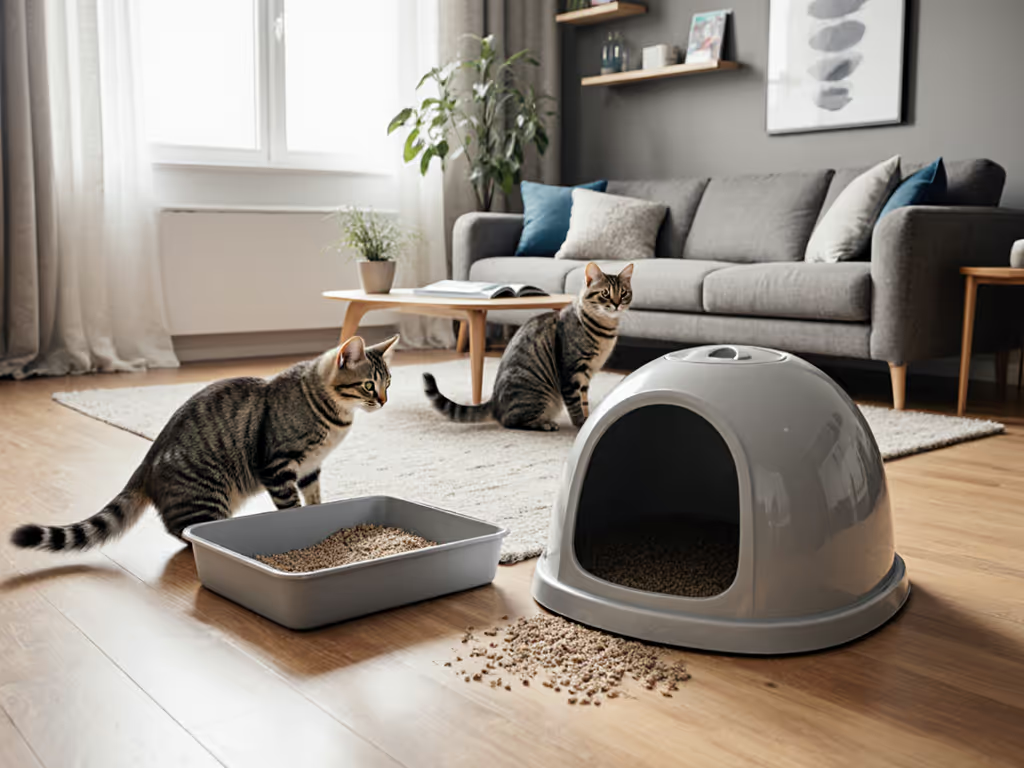
Litter scatter tells a different story for each. Open-top boxes shed grains near the entrance, as cats step in and out with damp paws and litter clinging to fur, and those grains fall across the threshold. The mess is visible and easy to spot for a quick sweep, so it does not hide and compress into floor fibers.
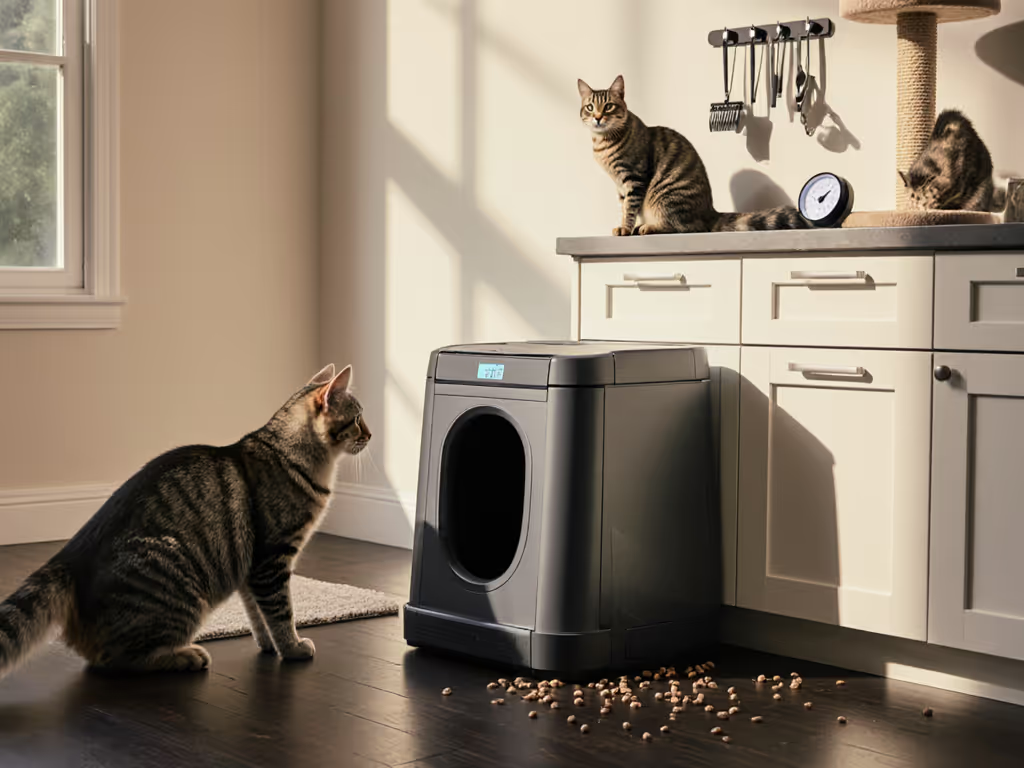
Enclosed boxes trap most flying litter inside the shell with their walls. The dust does not escape into the room, but it accumulates inside on corners, the roof of the chamber, and the doorway seal. Over time, dust builds up; a deep clean becomes messier and more time-intensive than an open design because you must reach into the chamber and wipe all surfaces while the shell gets in the way.
Practical timeline for scatter management:
- Open-top, daily upkeep: Sweep a 2-foot radius around the box in under 2 minutes. Time-to-clean: 90 seconds (scoop) + 120 seconds (sweep perimeter) = 3.5 minutes daily.
- Enclosed, daily upkeep: Interior dust is invisible until deep clean. Scooping area is inside the shell, harder to access. Time-to-clean: 120 seconds (scoop inside) + 45 seconds (wipe doorway) = 2.75 minutes daily, but deep clean becomes 20-30 minutes monthly because you must remove the hood and scrub all interior surfaces.
Open designs distribute effort evenly across the week. Enclosed designs front-load the visual containment but defer the effort cost, a hidden debt that hits hard on deep-clean day. If you prefer steady, predictable cadence over big weekend projects, open designs align better with reliable routines.
What About Placement Flexibility in Small Spaces?
Both designs occupy floor space, but their visual footprint changes the psychology of a small apartment. An open-top box is visible; it signals "litter area" even if the design is sleek and modern. An enclosed box looks like a piece of furniture or appliance, which lets it blend beside a couch, in a corner, or near a window without advertising what it is.
For renters in studio apartments or shared homes where odor sensitivity is high, the enclosed design's ability to sit in a living area without drawing eyes is genuinely valuable. For positioning tips that reduce disruptions, use our covered box placement guide. You lose the openness advantage but gain discretion.
Open boxes perform better in dedicated laundry rooms, spare bedrooms, or offices (spaces where the box can be isolated from high-traffic areas). If your only option is a corner of the living room, an enclosed design may be your only solution that keeps the household at peace.
What Should You Test Before Committing?
Because cat acceptance is the hinge point, a low-risk transition protocol matters more than the design specs: Follow our step-by-step stress-free transition guide to switch between box styles with minimal risk.
- Confirm your cat's profile. Is your cat anxious in small spaces, or naturally private? Observe behavior in carriers, closets, or covered furniture.
- Start with the opposite of what you think. If you are certain your cat will prefer open, borrow or trial an enclosed model first. Surprises are cheaper than a $300+ box your cat avoids.
- Keep the old box running for 2 weeks. Cats need time to accept novelty. A parallel setup means no accidents and no stress-driven health issues.
- Document the cycle. Note when the cat uses each box, and listen for noise reactions and stress signals (hissing, hesitation, or avoidance).
- Measure the tangible outcomes. After two weeks, track odor (ask a visitor for an honest assessment), litter scatter (count grains in a 3-foot perimeter), and your own maintenance time on a daily log.
Your Next Step: Build a Baseline and a Contingency
Decide on open or enclosed based on three prioritized factors from your household:
- Cat acceptance (non-negotiable): Does your cat's anxiety profile or multi-cat dynamics favor one design?
- Odor sensitivity (high-priority): How strict is your home or landlord about smell, and how consistent will your cleaning schedule be?
- Maintenance burden (medium-priority): Do you prefer scattered daily sweeping or consolidated deep cleans?
Once you have weighed those, choose the design, commit to a two-week trial, and log your time-to-clean metrics every day. If the design fails on cat acceptance, you know to switch. That data point saves you money and stress on the next attempt.
Reliable routines beat heroic weekend scrubs. The right enclosed self-cleaning litter box or open-top self-cleaning litter box is not the one with the best marketing; it is the one your cat accepts, your home airflow supports, and your daily cadence can sustain. Test rigorously, measure honestly, and adjust without shame. Small ergonomic wins become daily time savings you feel every week, and peace of mind is the biggest win of all.
Related Articles