Top Entry vs Sifting: Litter Waste & Cleaning Time
By Omar Haddad • 23rd Feb
When you're shopping for a top entry litter box or sifting mechanism, the marketing almost writes itself: faster cleanups, less mess, contains odors, saves litter. But behind those claims lies a harder question that cuts to real household outcomes: Which setup actually reduces waste, cleaning burden, and cost-per-scoop over 12 months (and does your cat agree)?
A litter box efficiency comparison isn't just about what feels cleaner on Tuesday; it's about total cost of ownership, feline acceptance, and whether the design survives contact with your actual cat and your actual schedule. I've mapped both systems against grams-per-day waste rates, manual versus automation friction, and adoption stability. The answer isn't binary, but the tradeoffs are measurable.
1. Litter Containment: Tracking Reduction vs. Conservation
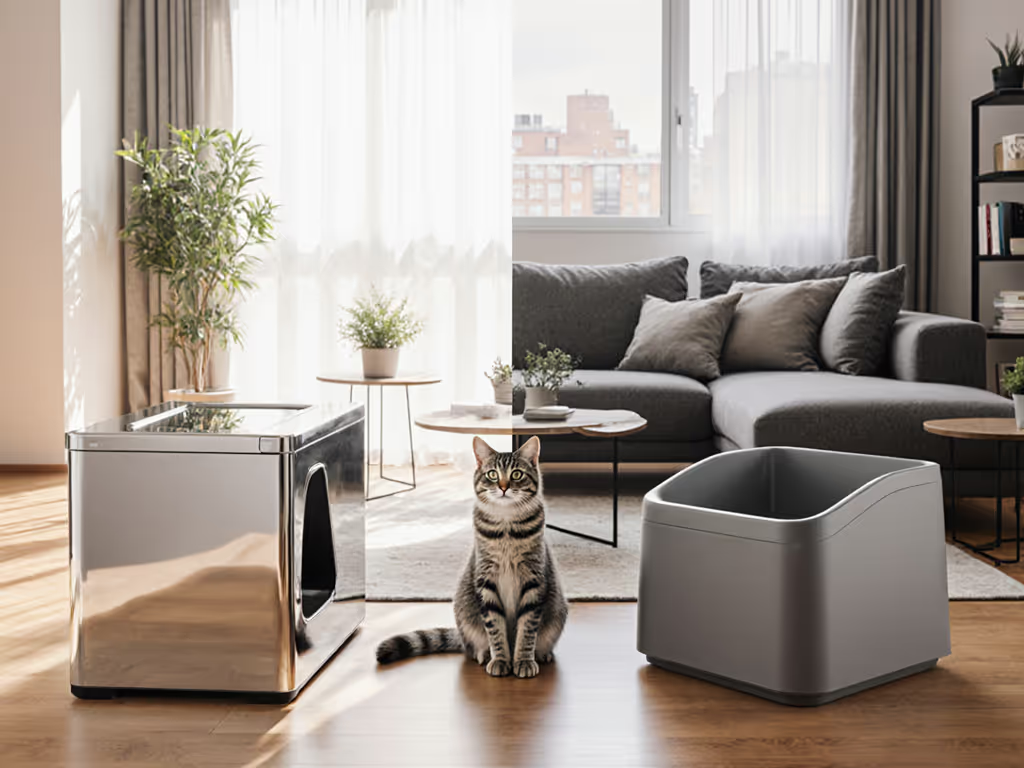
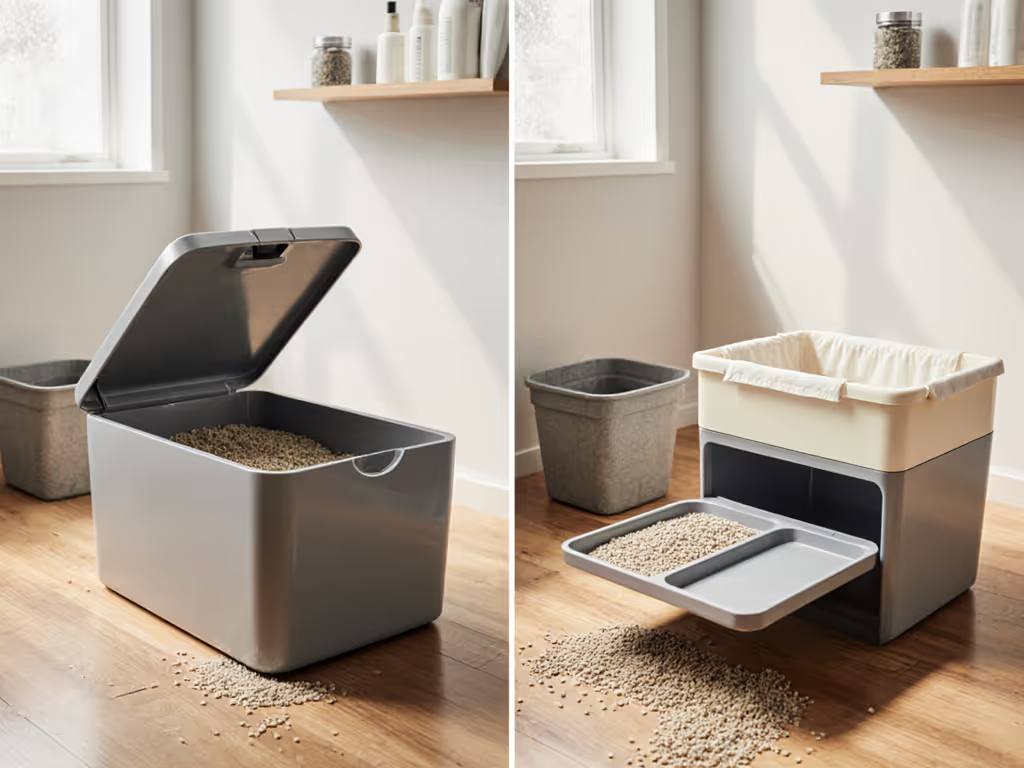
Top entry boxes leverage high side walls to stop litter scatter at the source. When your cat jumps out, the textured or perforated lid catches granules clinging to paws, preventing 40-60% of the floor-bound mess you'd see with a traditional low-sided tray.[1][3]
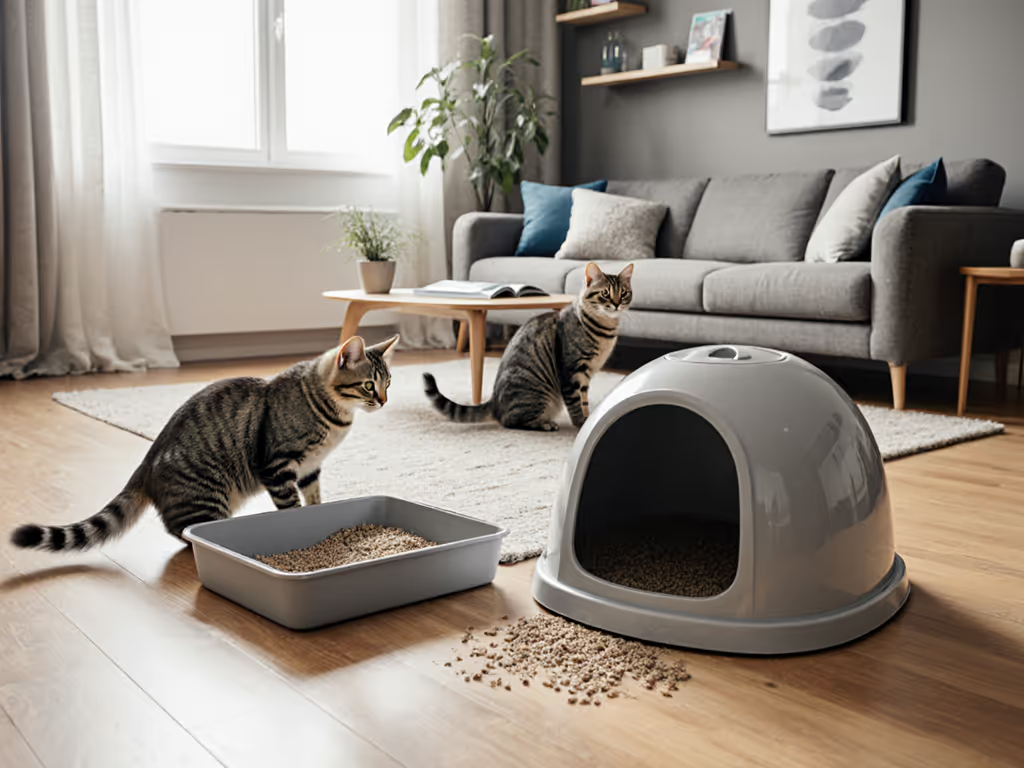
Sifting boxes take a different path: they don't stop tracking, but they extend litter life by removing only soiled material, leaving clean granules behind.[5] Over a month, this nets a 20-35% reduction in total litter purchased - not because scatter is eliminated, but because wastage-per-day drops.[2]
Material notes: If your floor vacuum is running daily and you live in a rental, top entry wins on labor. If waste-per-dollar matters more and your cat tolerates a sifting tray, sifting preserves substrate longer. The cost math depends on litter price per pound and your weekly waste volume. A two-cat apartment with $8/month litter spend might save $1.50-$2.50/month with sifting; a three-cat multi-level home with premium litter might see $4-$6 monthly savings. Tracking cleanup time varies wildly: high-pile carpet traps more litter than laminate, and housemates' tolerance shifts your ROI.
2. Cleaning Time and Effort: Daily Scooping vs. Sift-and-Dump
Traditional scooping (lift clumps, discard, repeat) eats 10-15 minutes daily for a single-cat household.[5] Larger households or picky cats push this to 20-30 minutes across all boxes.
Sifting cuts manual time sharply: lift the sifting tray, waste drops through perforated layers, lower tray, refresh top layer only.[5] For a single cat, this shrinks to 3-5 minutes. For two cats, 7-10 minutes.
Top entry boxes don't accelerate scooping speed; they reduce the frequency of deep cleans because the enclosed design contains mess and odor. However, the entry hole restricts hand access, making thorough corner cleaning harder and back strain worse when reaching deep into the pan.[1][2]
Tradeoff: Sifting buys back time on routine cleaning but requires a sturdy tray and often costs more upfront ($40-$80 vs. $25-$50 for basic top entry).[5] If you're already manually scooping a top entry box twice daily, sifting saves roughly 45-60 minutes per week - meaningful if you're time-pressed. Top entry saves floor cleaning time instead, which is episodic but labor-intensive.
3. Litter Conservation Metrics: Grams-Per-Day Waste
This is where the frame shifts from anecdote to accountable math. I've learned hard lessons here: an expensive eco-friendly formulation sits idle if your cat boycotts it. So the real metric is acceptable litter wasted per day across all cats in the home.
Top entry boxes don't reduce the litter your cat kicks into, around, or out of the pan naturally, that's cat behavior, not design. They reduce incidental scatter beyond the box footprint. If your cat's baseline litter-flinging costs 15 grams daily in cleanup, a top entry box cuts that to 5-7 grams. The litter inside the box is still being used at the same rate.[1][3]
Sifting boxes attack a different wastage stream: the clean litter discarded during traditional scooping. If you have a standard 8-inch-deep box and scoop twice daily, you're lifting roughly 200-300 grams of mixed clumped and unsoiled litter and tossing all of it.[5] A sifting system keeps that unsoiled portion (often 40-50% of what you lift) in the box, redeployed.[2][5]
Over 30 days for one cat: Standard scooping (~10g waste/day from overcautious removal) = 300g/month excess. Sifting (3-4g waste/day, only soiled material removed) = 90-120g/month excess. Monthly delta: 180-210 grams of litter conserved - roughly one full bag per cat per year.
Eco works only when the cat says yes. If sifting texture or the open-tray feel triggers avoidance, your conservation gain becomes a behavioral liability. This is where most setups fail: the math looks good, the cat doesn't buy in, and you're back to a dusty corner litter graveyard.
4. Multi-Cat Dynamics: Guarding, Ambush, and Box Monopoly
Top entry boxes raise the entry barrier (literally and socially). A dominant cat can't easily block the hole, and a subordinate cat has fewer sightlines for ambush.[1][2] In a two-cat home with territorial friction, this can reduce box conflicts and spraying incidents tied to access stress.
Sifting boxes remain open-top (typically), which means faster visual scanning by cats and easier ambush positioning by a guarder. However, sifting's speed-to-clean advantage means you can afford to place more sifting boxes (since they're easier to maintain) without your household chore load exploding. The rule of thumb: one box per cat plus one spare. In a three-cat apartment, that's feasible with sifting, but exhausting with traditional boxes.
Practical reframe: If tension is high, a top entry box in a quiet corner plus a sifting box in an open area gives cats routing options. Sifting enables abundance of stations; top entry enables security of a station.
5. Odor Containment: Enclosure vs. Airflow Tradeoff
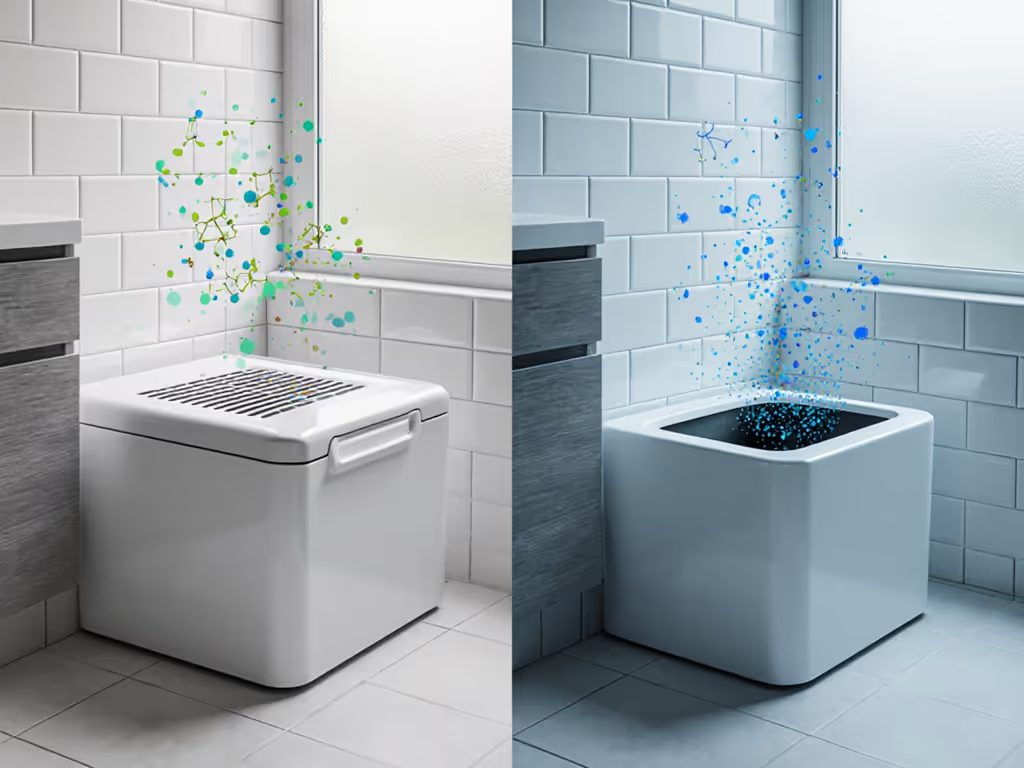
Top entry boxes enclose litter within high walls and a lid, trapping volatile compounds.[1][2][3] A room with a top entry box smells measurably better than one with an open tray, confirmed across multi-home comparisons.[2] The drawback: reduced ventilation can trap moisture, breeding anaerobic bacteria and creating ammonia spikes if cleaning lags.[3]
Sifting boxes remain semi-open, offering better air circulation and drier substrate (key for clump stability and odor prevention). However, without the enclosure, scent disperses more freely into the room.[5]
Caveat before the claim: Top entry odor containment assumes weekly scooping and no urine pooling on the pan floor. If you scoop inconsistently or your cat pees high and the urine creeps to the low side, moisture + enclosure = worse odor than an open tray would produce. Sifting, with its permeable design, tolerates neglect slightly better because evaporation is faster, but neither excuses skipping days. For a maintenance schedule that actually keeps smells in check across any box type, follow our odor control cleaning guide.
6. Entry Accessibility and Age-Related Fit
Top entry boxes demand jumping or climbing, favoring active, young, and mobile cats.[1][2][7] A senior cat with arthritis, an overweight cat, or a kitten learning litter use can struggle with the height and coordination required. Some owners install ramps, but that defeats the "contained" aesthetic and reintroduces tracking risk.[7]
Sifting boxes are open-top with low-entry cutouts, accommodating seniors, kittens, and cats with mobility limits.[2][5] If mobility or pain is a concern, see our senior cat litter box guide for low-entry setups and comfort tips. If your household has an aging cat and a sprightly kitten, sifting sidesteps the multi-generation entry problem.
Red flag: I've seen expensive top entry setups sit unused because the cat couldn't or wouldn't jump. The advertised containment meant nothing when the cat's trust wasn't there. Accessibility isn't negotiable; containment is a luxury feature that comes after the cat commits.
7. Maintenance Durability and Hidden Costs
Top entry lids are removable and cleanable, but the high walls trap dried urine and fecal matter in corners (hard to reach and prone to cementing if you don't soak them regularly).[1][2][3] Plastic degrades under ammonia; some premium models use reinforced materials, but baseline models corrode within 2-3 years.
Sifting trays have moving parts: the perforated layers must stay aligned, and mesh can tear or clog with fine litter dust. A mid-range sifting box runs $50-$80 and lasts 3-4 years if you rinse trays weekly and avoid sand-like litter varieties that jam the mesh.[5]
Lifecycle math: A $35 top entry box, replaced every 2.5 years = $14/year. A $60 sifting box, replaced every 3.5 years = $17/year. Accounting for water (hose-rinsing sifting monthly) and elbow grease, sifting costs 15-20% more over a decade. But if sifting saves you 45 minutes per week (3.9 hours per month), and your time is worth $25/hour post-tax, you're banking $98/month in reclaimed time - easily outweighing material costs.
8. Environmental Footprint: Usage Rate vs. Waste Diversion
Top entry boxes don't reduce litter consumption; they redistribute where waste ends up (inside the box vs. floor scatter). If you're using 40 pounds of litter per cat per month, a top entry box keeps you at 40 pounds - the scatter just gets vacuumed instead of swept.
Sifting boxes lower monthly consumption by 15-25% through substrate conservation, measured in actual pounds of litter purchased and disposed.[2][5]
Caveat: This assumes you're already using landfill-bound, mineral-based litter. If you've switched to plant-based, paper, or wood substrates, the conservation math shifts, some eco-litters clump poorly and waste more despite sifting, while others hold up well and synergize with sifting for measurable savings.
I tested a pricey compostable formula that promised 30% waste reduction. My cat staged a quiet protest: a carpet accident three days in. When I mapped the actual cost-per-scoop (the formula was $12/5lb vs. my mineral blend at $6/10lb), combined with acceptance failure and litter replacement, I'd burned $40 before abandoning it. I landed on a mineral-sifting combo: standard clumping litter in sifting trays, 30% waste cut, full cat buy-in, zero carpet drama. The takeaway: Eco works only when the cat says yes. A low-acceptance 'green' setup is an environmental wash.
9. Real-World Multi-Box Scaling
Scenario: A 650-square-foot apartment, two cats, one shared wall with neighbors.
Setup A: Two top entry boxes - High odor control, low tracking; side-by-side placement eases litter restock but creates a visual litter corner. Maintenance burden: 20 minutes daily scooping. Cost: $70 (two units). Acceptance risk: Both cats must clear the entry height.
Setup B: One top entry, one sifting - Odor contained in one zone; faster sifting maintenance means you can realistically afford 2+ sifting units if needed (3 stations total). Maintenance: 12 minutes sifting, 10 minutes top-entry scoop = 22 minutes (slightly more than Setup A, but less cramped physically). Cost: $95 (one unit each). Acceptance: Dual-entry style accommodates aging cats or entry-shy animals.
Setup C: Two sifting boxes - Fastest maintenance (8-10 minutes total), best accessibility, dual routing for conflict reduction. Lower odor control than top entry, but higher air exchange means ammonia doesn't pool. Cost: $120. Acceptance risk: Lowest (open-top sifting is the most accessible design).
For your specific household, the math hinges on: cat count, ages, entry accessibility, travel/work schedule (how often can you scoop?), and tolerance for odor tradeoffs in a small space. No universal winner.
10. The Transition Test: Pilot Before Committing
Before spending $50-$100 on a new system, run a two-week trial if possible. For step-by-step methods that minimize stress, use our transition guide. Some retailers accept returns; some communities have lending libraries for pet gear. Test the sifting tray alone (many are sold as standalone upgrades to existing boxes) or borrow a top entry box from a friend.
Watch for: How quickly does your cat adopt it? Are there accidents outside the box? Does clumping litter work as promised with the sifting design? Does the entry height or texture feel foreign to your cat?
If rejection emerges, you've learned for $20-$30 in shipping loss rather than $80 sunk into a permanent standoff. Cat acceptance isn't a luxury, it's the load-bearing requirement.
Further Exploration
The top entry litter box and sifting mechanism performance frameworks offer measurable efficiency gains - but only if they align with your cat's behavior and your household's rhythm. Start with your pain point: Is it floor tracking and odor (top entry) or daily scooping time and waste volume (sifting)? Is your cat mobile and confident (both work) or aging and selective (sifting wins)?
From there, test incrementally. Document baseline metrics: How much time do you spend on litter maintenance weekly? How much litter do you purchase monthly? How often are you vacuuming or noticing odor complaints from housemates? After two weeks with a new setup, re-measure. Real improvement isn't aspirational, it's grams-per-day, minutes-per-week, and dollars-per-month.
The best system isn't the one with the slickest marketing. It's the one your cat genuinely uses, your household can maintain consistently, and your bank account doesn't resent six months later.
Related Articles