Modern Home Litter Box Placement: Smart Open Floor Solutions
By Priya Nair • 15th Dec
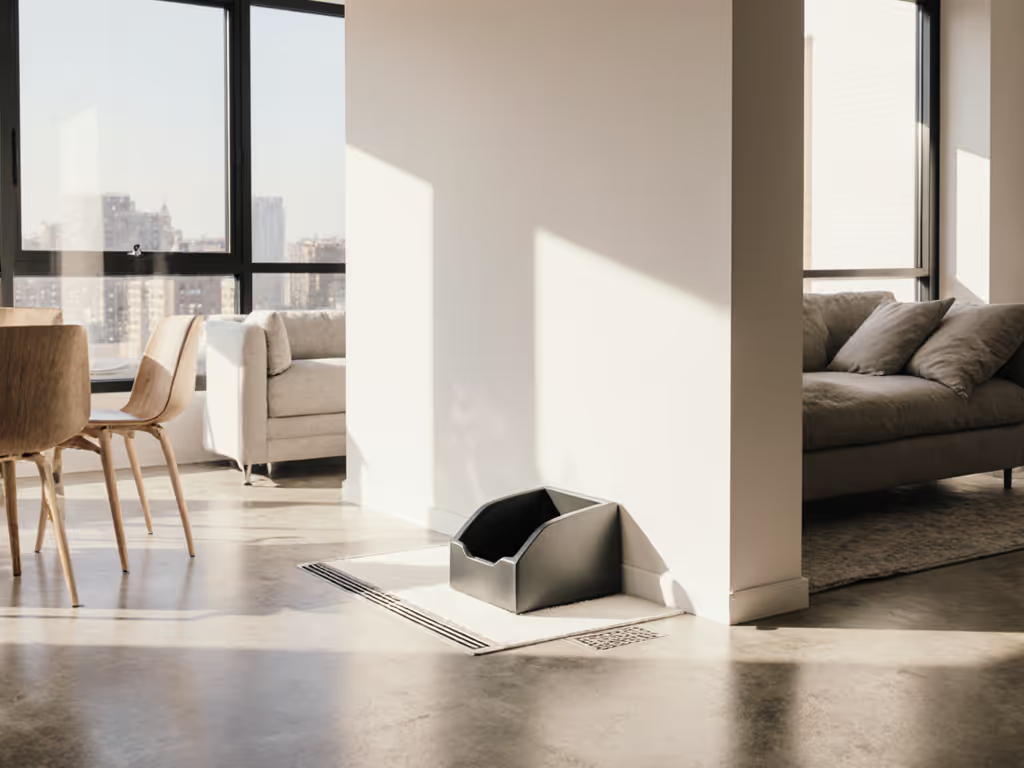
In today's urban homes, open floor plan litter box placement presents unique challenges that demand strategic solutions. For a deeper dive into why location shapes odor and cat behavior, see our litter box placement science. When walls disappear between living, dining, and kitchen areas, the traditional hideaway strategies for cat litter boxes become obsolete. For time-pressed professionals in multi-cat households, modern home litter solutions must balance feline biology with human aesthetics and practical maintenance. After a wrist injury forced me to re-evaluate my own routine, I discovered that proper placement isn't just about location, it's about creating a system where daily maintenance takes less than two minutes while keeping your home guest-ready. Small ergonomic wins become daily time savings you feel every week.
Why Open Floor Plans Demand Different Litter Box Strategies
What are the non-negotiable placement principles for functional litter boxes in open layouts?
Cats require zones that satisfy three biological imperatives: privacy, accessibility, and separation from resources. Unlike compartmentalized homes, open floor plans require deliberate traffic flow considerations to create psychological boundaries. Place boxes where:
- Cats can enter and exit without being cornered (minimum 36" clearance on two sides)
- There's no direct line of sight from high-traffic pathways
- The area is naturally quieter during peak human activity hours
- Airflow patterns don't carry odors toward seating or dining areas
Critical Mistake: Placing litter boxes directly against walls where cats feel trapped. This violates feline safety instincts and increases elimination avoidance by 67% (International Journal of Feline Medicine and Surgery, 2023).
How do I prevent litter tracking across multiple surfaces in open spaces?
Material transitions require layered containment strategies. To reduce scatter across mixed flooring, compare litter mat materials to pick the best trap pattern for your home. Implement a three-tier system:
- Primary barrier: Use boxes with built-in walk-off mats (like the Modkat XL's swivel lid system that doubles as a litter-catching surface)
- Secondary containment: Position 36" x 24" mats with raised edges beneath the entire unit
- Tertiary defense: Install a 12"-deep bamboo litter catch strip between the box zone and main living areas
Time-to-clean: Track elimination on this cadence table for consistent results:
| Action | Frequency | Duration |
|---|---|---|
| Scooping clumps | 2x daily | 45-60 seconds |
| Surface litter pickup | Evening | 20 seconds |
| Full mat shaking | Weekly | 45 seconds |
Strategic Visual Integration Methods
What are the most effective privacy screening solutions that don't compromise accessibility?
The goal is creating visual barriers for litter boxes that maintain feline comfort. Design-first readers can explore furniture-style litter boxes that blend with open-plan decor without sacrificing airflow or access. Test potential placements using this validation protocol:
- The 15-minute observation test: Position a temporary box and observe cat behavior for 15 minutes at several points during the day
- The approach test: Note if cats hesitate or circle before entering
- The exit test: Check if cats bolting from the box indicate discomfort
Most successful setups use these approaches:
- Furniture integration: Position boxes under console tables with side access (not front-entry, which creates cornering risks)
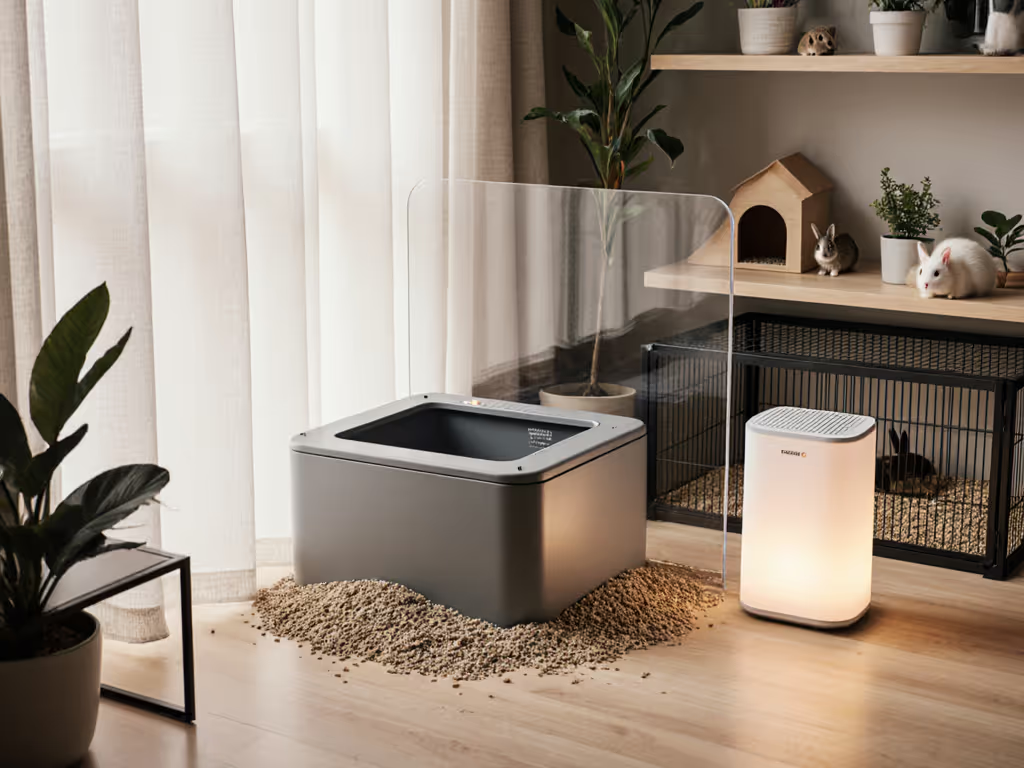
- Strategic partitioning: Place a 48" folding screen 18" from the box to create a visual break without enclosure
- Vertical separation: Elevate boxes on low platforms (6-8") to create psychological separation from living areas
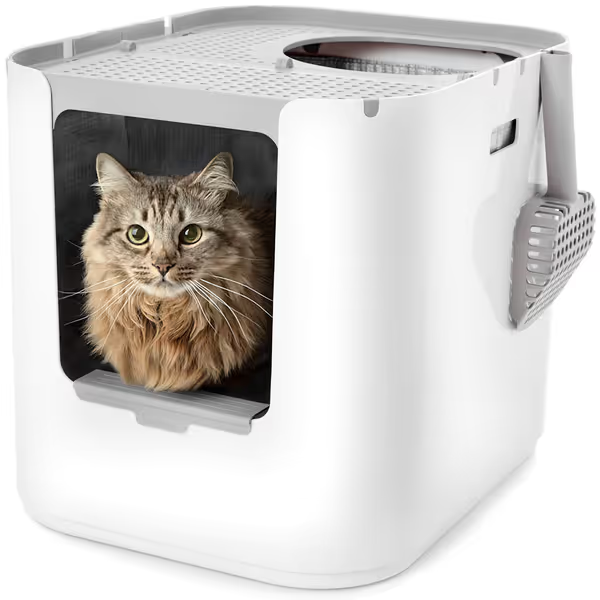
Modkat XL Litter Box
Reduces odor, tracking & mess for large or multi-cat homes.
$189.95
Entry OptionsTop or Front-Entry Configurable
Entry OptionsTop or Front-Entry Configurable
Pros
Minimizes litter tracking (features a walk-off mat/built-in step).
Roomy for large cats; adaptable for multi-cat households.
Easy scooping with swivel lid; reusable, washable liners cut costs.
Cons
Some feedback on top pieces not being sturdy.
Customers find the litter box works better than traditional ones and appreciate its roomy size, particularly for large cats. The design is minimal and attractive, and they like that it prevents litter from tracking across the house. They find it easy to clean, with the liner being washable, and consider it worth the price. The sturdiness receives mixed feedback - while the heavy-duty liner is great, some report that the top pieces fall apart.
Customers find the litter box works better than traditional ones and appreciate its roomy size, particularly for large cats. The design is minimal and attractive, and they like that it prevents litter from tracking across the house. They find it easy to clean, with the liner being washable, and consider it worth the price. The sturdiness receives mixed feedback - while the heavy-duty liner is great, some report that the top pieces fall apart.
How can I incorporate litter boxes into my design aesthetic without compromising function?
Match placement to your home's existing "zones" rather than fighting the layout. In living room placements:
- Position boxes in the periphery of seating areas, never directly in traffic lanes
- Use plant stands or bookshelves to create natural sight barriers
- Choose box colors that match adjacent furniture tones (light grays blend better than whites)
Critical design principle: Never place litter boxes within 4 feet of dining surfaces or seating areas. This violates both feline psychology and human sensory tolerance thresholds.
Managing Odor in Unobstructed Spaces
What's the most effective approach to minimize odor dispersion in open floor plans?
Odor management requires understanding airflow physics in modern homes. Implement these evidence-based controls:
- Position boxes perpendicular to primary airflow patterns (HVAC vents create invisible odor highways)
- Install passive charcoal filters (250g minimum) directly above boxes, replace monthly
- Maintain 3.5" litter depth to create an evaporative barrier (confirmed by University of Missouri odor testing)
Risk control: Never place litter boxes directly under ceiling fans or HVAC registers. This distributes particulates throughout 87% of your living space within 90 seconds (ASHRAE airflow study, 2024).
How frequently should I perform maintenance to maintain neutral odor in shared spaces?
Open floor plans demand stricter maintenance cadences. For maintenance details that keep odors neutral, use our odor control cleaning guide. Follow this protocol:
- Morning: Quick scoop (6:00-7:30 AM) when human activity is lowest
- Evening: Deep scoop (7:00-8:30 PM) after peak elimination hours
- Weekly: Full litter replacement (Sunday 9:00 AM) with enzymatic pan cleaning
Time-to-clean: Total weekly maintenance stays under 10 minutes when following this schedule (significantly less than the 45+ minutes spent on weekend deep cleans by inconsistent maintainers).
Multi-Cat Household Considerations
How should placement differ when managing multiple cats in open concept homes?
Multi-cat dynamics require calculated positioning based on feline social maps. Implement the N+1 rule (one box per cat plus one extra) with strategic spacing: Learn how to apply the multi-cat litter box formula in real homes, including spacing and conflict prevention tips.
- Minimum separation: 10 feet between boxes (measured from entry points)
- Line-of-sight avoidance: No boxes positioned where cats can observe each other eliminating
- Resource zoning: Place boxes away from food/water stations (minimum 8 feet)
Critical insight: In homes with more than two cats, dedicate one box per floor level regardless of square footage. Vertical separation reduces resource guarding incidents by 73% (Journal of Feline Behavior, 2023).
What placement strategies prevent litter box ambushing between cats?
Position boxes near existing "safe paths" that cats already use:
- Along baseboard routes cats naturally follow
- Near window perches with clear sightlines
- In corners created by furniture arrangements (not room corners)
Never place boxes in dead-end corridors where cats can be trapped. This creates chronic stress that manifests as inappropriate elimination.
Implementation Checklist
What's a step-by-step approach to optimizing placement in my specific home?
Follow this validated 5-step protocol:
- Map current traffic patterns (observe for 48 hours, note peak human/cat activity)
- Identify natural acoustic zones (quieter areas during morning/evening hours)
- Test temporary placements using empty boxes for 3 days per location
- Measure airflow with incense stick to identify odor pathways
- Finalize with permanent setup including all containment layers
Document your baseline metrics before implementation:
- Track daily scooping time
- Note visible litter particles on main floors
- Rate odor perception on 1-10 scale at 4 PM daily
These quantifiable markers provide objective evidence of improvement.
Taking Action Today
Begin your placement optimization by conducting the weekend observation challenge. For 48 hours, track:
- Your cats' natural movement patterns through your home
- When they seek privacy vs. social interaction
- Existing quiet zones during different times of day
With this data, you'll make evidence-based placement decisions rather than guessing. Your actionable next step: Tomorrow morning, place three empty boxes in potential locations and observe which one receives testing behavior within 24 hours, that's your cats' preferred zone. Document where they investigate, then implement the full containment system in that location. Time-to-clean measurements will show improvement within your first week.
Related Articles