Best Litter Boxes for Munchkin Cats: Low-Entry
By Keira O’Connell • 19th Mar
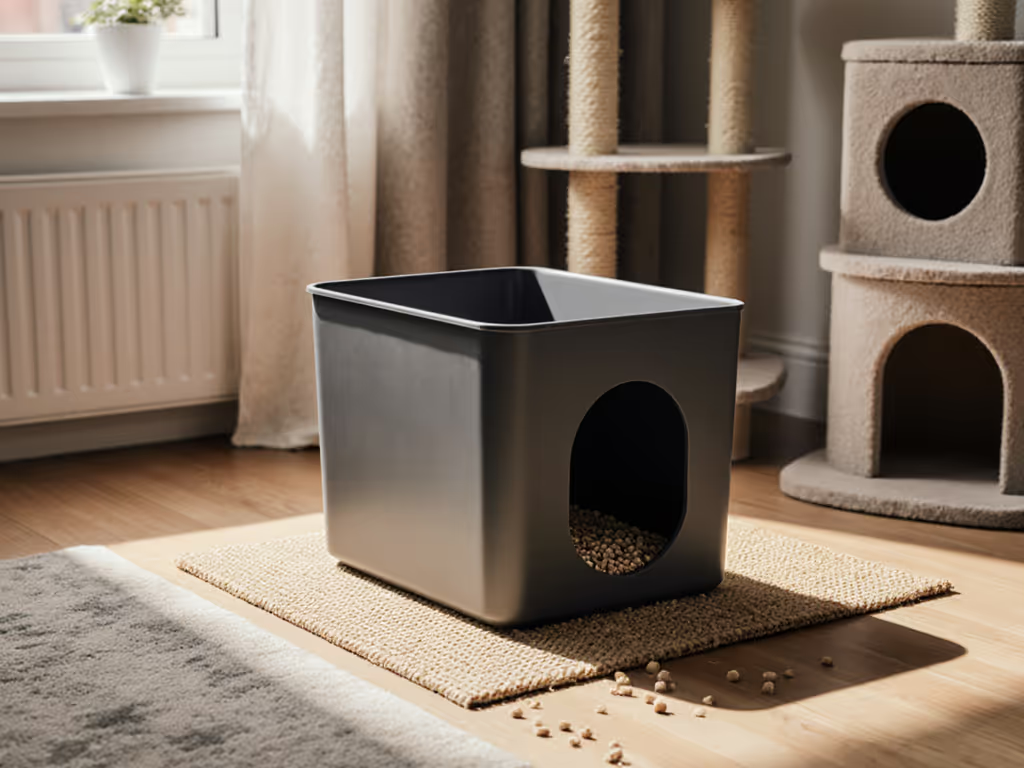
Finding the right litter box for cat owners with Munchkins isn't just about aesthetics, it's about engineering a space that works for their distinctive frame, fits in cramped apartments, and keeps odor and scatter contained. Breed-specific litter box considerations for short-legged cats go beyond marketing; they're rooted in ergonomics, accessibility, and the practical reality of shared living. A calmer room starts at the litter zone.
Munchkin cats, blessed with legs 2-3 inches shorter than average cats, face genuine challenges with standard litter boxes: high entries that require awkward hops, deep trays that force them to climb rather than step, and designs that don't account for their low center of gravity. In my years redesigning litter zones for apartment dwellers, I've learned that solving this problem cascades through your entire home: less odor escapes, fewer accidents occur outside the box, and daily maintenance stays swift and predictable.
This guide walks you through the anatomy of a low entry height setup, compares real-world performers, and shows you how to place and transition your Munchkin to a box they'll actually prefer, all without sacrifice to your small space.
Step 1: Understand Munchkin-Specific Litter Box Requirements
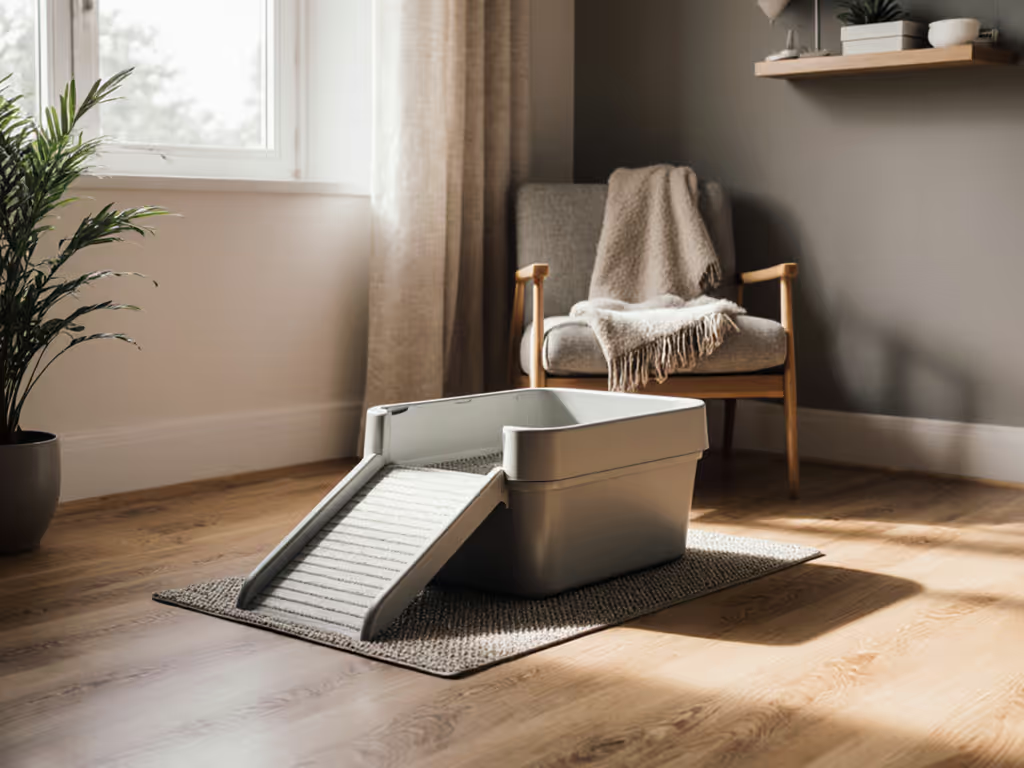
Munchkins aren't just small versions of regular cats; their body proportions demand precision. For breed-by-breed sizing benchmarks, see our breed-specific litter box size guide. The entry height is your first control: Munchkins thrive with entries under 3 inches tall, compared to the 4-6 inches standard for average cats.[1] This one detail eliminates the hop, reduces strain on their front joints, and signals accessibility instantly.
Beyond entry height, consider:
- Tray depth: A 5-inch depth or shallower keeps litter from settling too far below their natural squat level. Deeper trays force them to sink, increasing fatigue and, counterintuitively, willingness to use inappropriate spots.
- Tray length: At least 18-20 inches long gives Munchkins room to turn and dig without feeling crowded; small boxes amplify stress and trigger accidents.
- Clearance under box: Ensure at least 2-3 inches of open space beneath the pan so your Munchkin can see out and feel safe, reducing litter-box anxiety.
- Material finish: Non-stick coatings and smooth basins prevent litter from cementing to corners, which matters more in small spaces where daily scoop-outs are your routine.
Step 2: Compare Entry Style Options
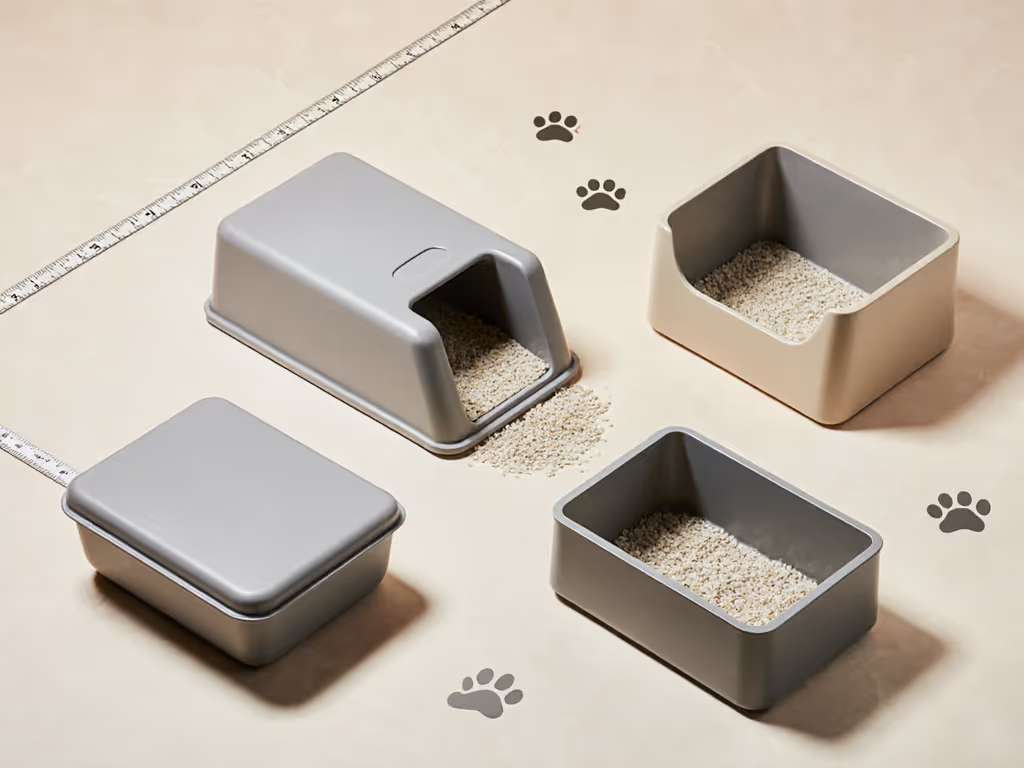
Not all low-entry designs are equal. Each style carries trade-offs in odor containment, tracking, and ease of cleaning, factors that matter in apartments where neighbors share walls and guests visit frequently.
Open-Top Trays with High Back/Side Walls
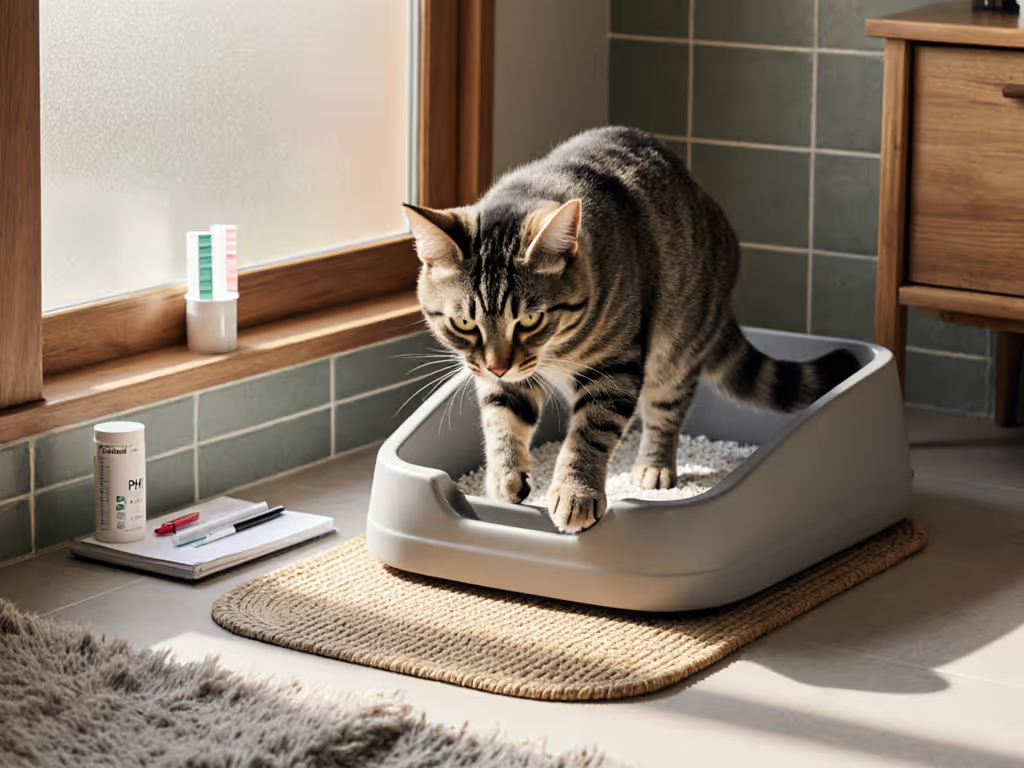
Open-top boxes remain the gold standard for Munchkins.[1] They offer maximum visibility and ventilation, critical for cats who feel vulnerable during elimination. Learn how box visibility affects stress and why many cats prefer open designs. The lack of a hood eliminates claustrophobia and motor noise, a quiet win for night-time peace in shared homes.
The key is asymmetrical wall height: a low front entry (under 3 inches) paired with 2-3 higher sides (6-8 inches) traps scatter while keeping entry unobstructed. This design is especially effective for Munchkins with high-aim tendencies or those who dig before squatting.
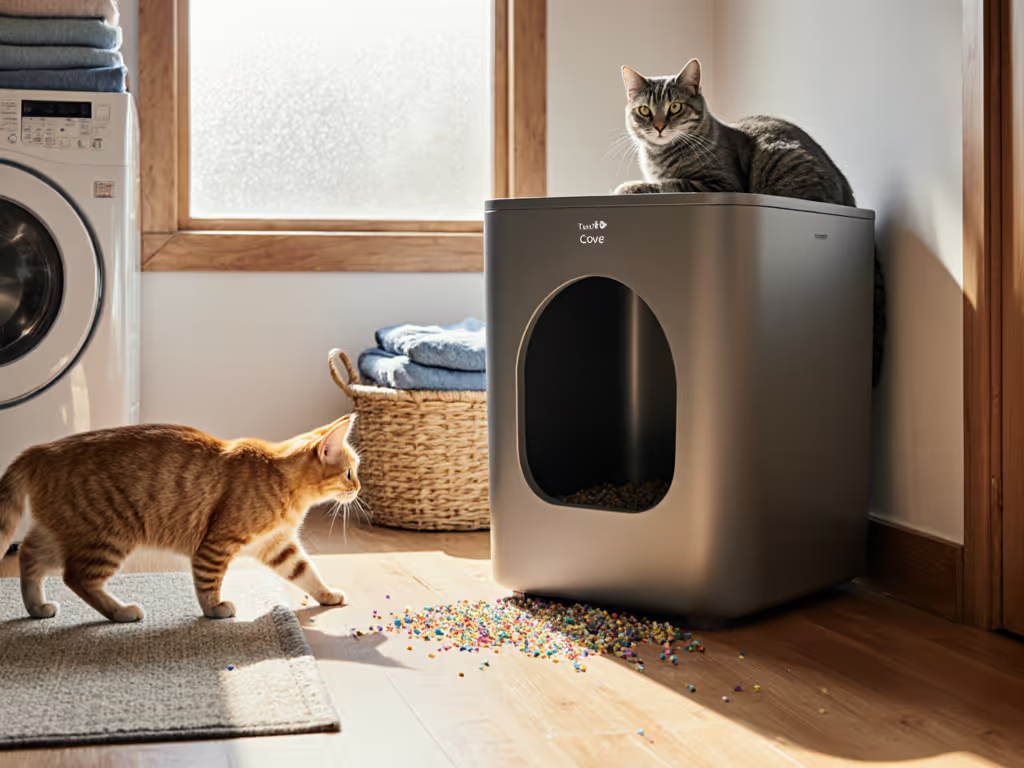
Before/after frame: A household with one Munchkin and one standard cat reported 60% less visible litter scatter after switching from a fully open tray to a high-sided model with a cut-out front corner. Clean-up time dropped from 8 minutes to under 2 minutes per session.[1]
Quick fix, long fix: Start with a basic low-entry tray this week; upgrade to a high-sided model with a removable scatter shield within a month once your Munchkin confirms entry comfort.
Low-Entry Trays with Removable Scatter Shields
For renters or those hesitant to commit to a permanent setup, removable scatter shields offer flexibility. These curved or angled covers sit atop the tray rim, guiding litter inward; a front cutout keeps the entry accessible.[1]
The advantage: you can test odor and tracking reduction without replacing the entire box. The drawback: shields add a cleaning step and can feel obstructive to some cats, potentially triggering rejection, a costly risk when you've just brought home a new Munchkin.
Accurate measurement is critical here. Ensure the cutout is at least 2.5 inches tall and 6 inches wide; shields too restrictive will cause your Munchkin to perch awkwardly or refuse entry entirely.
Step 3: Evaluate Top Performers Against Your Space and Cat
Analyzing litter boxes through a small-space, cat-behavior lens reveals which products solve real problems.
Tuft & Paw Cubby Litter Box ($69)
Entry height: 4.75 inches front, tapered design Dimensions: Approximately 20" × 16" × 10" Material: Thick matte anti-stick plastic Tracking containment: High sides on three walls
Strengths for Munchkins: The Cubby bridges premium aesthetics with practical high walls, a non-stick basin that resists clump adhesion, and excellent visibility. Its tapered entry creates a psychological "threshold" that cues cats to contain waste before leaving. The matte finish resists odor cling, a measurable benefit in apartments where air circulation is poor.
Weaknesses: The 4.75-inch entry sits slightly above the Munchkin sweet spot of 3 inches. Petite Munchkins may still feel a minor hop required, though not a dealbreaker. The price tag ($69) sits in the mid-premium tier; you're paying for durability and design.
Context: Ideal for Munchkin owners in urban rentals who want a box that doesn't scream "litter box" and who value a 2-3 year lifespan over the cheapest option.
Lucky Champ Large Litter Pan ($30)
Entry height: 4 inches, stepped molded rim Dimensions: 24" × 20" × 5.5" Material: Plastic with rubber side grips Tracking containment: Back wall only
Strengths for Munchkins: The Lucky Champ delivers genuine accessibility. Its 4-inch stepped entry is among the lowest on the market, and the molded rim creates discrete hand grips, useful for renters who move boxes frequently or for those with arthritis. The size accommodates even hesitant Munchkins. At $30, it's budget-friendly enough to trial multiple setups.
Weaknesses: Low side and front walls mean scatter isn't contained effectively. This box demands a drip-edge mat or surround to catch tracked litter; factoring in mat cost brings your total to ~$45-50. The plastic scratches easily, and some reviews cite durability concerns after 12-18 months of daily use.
Context: Best for Munchkin owners who are cost-conscious, willing to pair it with a mat, and comfortable replacing it annually if needed.
PetFusion BetterBox Non-Stick Large Litter Box ($19)
Entry height: Low, dropped entry Dimensions: Large footprint Material: Non-stick plastic Tracking containment: Moderate: higher back, moderate sides
Strengths for Munchkins: The PetFusion BetterBox lives up to its non-stick claim; smooth curved basin means no cement-trapped clumps in corners. At $19, it's the most affordable option with decent side walls, making it ideal for multi-cat households where redundancy matters. The dropped entry works well for Munchkins.
Weaknesses: Low side walls (compared to premium options) don't aggressively contain scatter. The ridged pan design mentioned in professional reviews makes thorough cleaning harder, so sediment lingers. Durability is moderate; plan for replacement every 18–24 months.
Context: Suitable for budget-focused Munchkin households or those building a multi-box network for resource-guarding scenarios.
IRIS USA Open Top Litter Tray with Removable Scatter Shield
Entry height: Ultra-low, front cutout on scatter shield Dimensions: Spacious open tray Material: Plastic Tracking containment: Removable shield with front cutout
Strengths for Munchkins: The IRIS design is one of the few explicitly tested for kittens and small cats. The removable scatter shield gives you flexibility, so use it when your Munchkin is learning, remove it if it proves frustrating. The front cutout is deliberately sized to remain accessible even to tiny cats. Open-top ensures ventilation and visibility, reducing litter-box anxiety.
Weaknesses: The removable shield is yet another cleaning task, and some cats scratch or topple it. If your Munchkin is destructive, this design may add frustration rather than solve it.
Context: Perfect for Munchkin owners who want a trial approach, or for multi-cat homes where a low-commitment setup matters.
Nature's Miracle High-Sided Corner Litter Box
Entry height: Low Dimensions: Corner fit, space-saving Material: Plastic Tracking containment: High sides on two walls (corner design)
Strengths for Munchkins: The corner shape is a layout game-changer for apartments. Tucked in a corner, it becomes nearly invisible, maximizing sight lines to the rest of the room while staying functional. High sides contain scatter effectively. Budget-friendly pricing.
Weaknesses: Corner placement limits your flexibility if you later need to reposition the box (for instance, if your Munchkin shows stress in that spot). Access to three sides is reduced, which can feel claustrophobic to some cats.
Context: Excellent for Munchkin owners in studios or 1-bedroom apartments where every square foot matters and the corner placement is non-negotiable.
Step 4: Build Your Multi-Box Layout (For Multi-Cat Homes)
If you share your space with other cats, the compact dimensions and low entry height of a Munchkin-appropriate box create a unique advantage: you can stack function without consuming square footage.
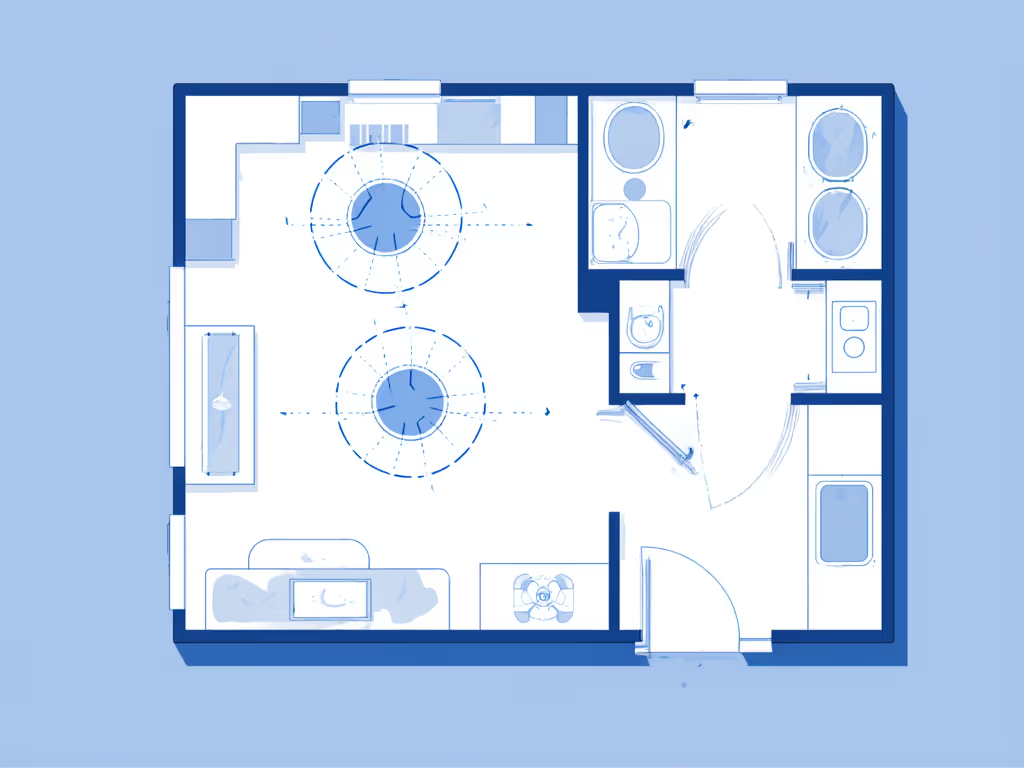
The behavioral rule: One box per cat, plus one extra. In a 500-700 sq ft apartment with two cats (one Munchkin, one standard), this typically means:
- Primary box: High-sided low-entry model in the main bathroom or laundry area (Tuft & Paw Cubby or Lucky Champ).
- Secondary box: Open-top with removable shield in a secondary location, like a corner of the bedroom hall or kitchen edge (IRIS USA or Nature's Miracle Corner).
- Resource guarding: Ensure 3-4 feet of visual separation between boxes; use furniture or a partial screen to prevent ambush scenarios.
Accurate placement prevents stress-driven territorial spraying, a costly problem in rentals.
Step 5: Transition Your Munchkin to the New Box
Even the perfect box fails if your Munchkin rejects it. Transition slowly, especially if your cat is already established with a different setup. Use our stress-free transition guide for step-by-step timelines and troubleshooting.
- Place the new box alongside the old one for 3–5 days. Don't remove the old box; cats need choice during stress.
- Monitor entry patterns: Does your Munchkin approach? Sniff? Use it? Note timings (morning, evening, after meals).
- Gradually relocate the old box 1-2 feet every 2 days in the direction of its permanent spot, or remove it if your Munchkin is actively using the new one.
- Maintain timing with cleaning: Scoop the new box immediately after use for the first week to reinforce it as "clean" and preferred.
- Watch for accidents: Any eliminat outside the new box signals rejection. Pause relocation and consult your vet for stress-related urinary issues.
Quick fix, long fix: If your Munchkin rejects a high-entry box mid-transition, pivot to an ultra-low open tray immediately; don't force weeks of frustration. The behavioral risk outweighs any tracking gains.
Step 6: Optimize Odor and Maintenance for Shared Spaces
Low-entry boxes for Munchkins sit lower to the ground, which can mean odor diffuses differently in small, sealed apartments. Mitigate this with setup:
- Airflow path: Position the box 6–12 inches from a wall or air return, not in a corner dead zone. This lets odor disperse rather than pool.
- Litter depth: 2–3 inches for Munchkins; shallower than standard. Less litter means lighter clumps and faster decomposition of ammonia. Get the science-backed 2–3 inch litter depth rationale and measuring tips.
- Drip-edge mat: Essential for boxes without high front walls. Microfiber or washable designs (not perfumed) catch scatter before it travels onto carpet or wood.
- Scooping timer: 2-3 minutes, twice daily (morning and evening). Consistency beats perfectionism; cats accept routine odor cycles.
Before/after snapshot from a shared-wall apartment: One Munchkin household reduced visitor-noticed odor from "immediately noticeable" to "undetectable beyond 8 feet" within 2 weeks by pairing a high-sided box with airflow placement and twice-daily scoop discipline.
Summary and Final Verdict
The best breed-specific litter box for your Munchkin balances three non-negotiables: low entry height (under 3 inches), containment (high sides or scatter shields), and non-stick, smooth material for effortless cleaning. In small, shared spaces, these factors stack: an accessible box reduces stress-driven accidents, high sides slash tracked litter and odor complaints, and easy cleaning means your 2-minute routine stays predictable.
Tuft & Paw Cubby emerges as the top pick for Munchkin owners who prioritize durability, design, and long-term cost-per-use efficiency, especially those in multi-cat or multi-person households where appearance and reliability matter.
Lucky Champ Large Litter Pan is the best value for budget-conscious owners willing to pair it with a mat and accept annual replacement cycles.
PetFusion BetterBox serves as the smart redundancy choice for multi-cat layouts or renters building flexibility into their setup.
IRIS USA Open Top with removable scatter shield suits trial-focused owners or those needing gradual, low-commitment transitions.
Nature's Miracle High-Sided Corner optimizes space for studio and 1-bedroom apartments where corner placement is structural.
Your Munchkin doesn't need gadgets or perfume maskers; they need ergonomic access and a box that works with their body, not against it. Once you've locked in the right low-entry setup, paired it with consistent airflow and maintenance, odor drops, accidents cease, and your shared home becomes noticeably calmer. That's the invisible win: a litter zone so functional that guests, roommates, and landlords never think about it at all.
Related Articles