Best Multi-Cat Litter Box: Compartment Design Features
By Omar Haddad • 4th Apr
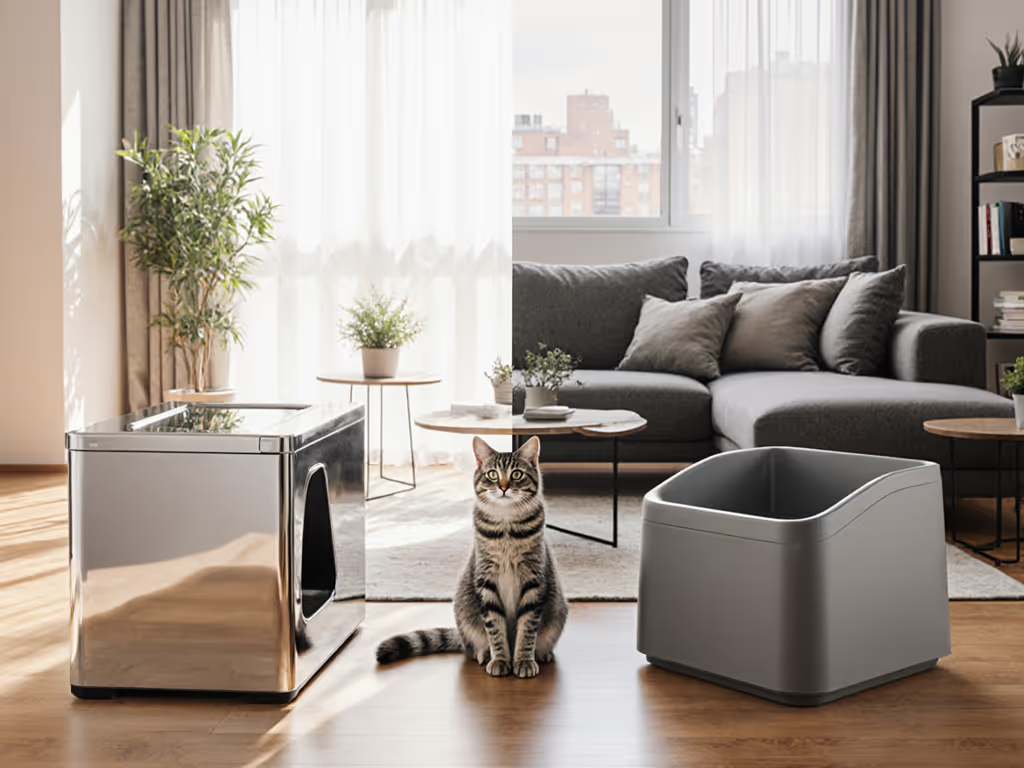
Finding the best cat litter box for multiple cats requires moving beyond marketing claims and into the specifics of compartment isolation, waste management, and behavioral acceptance. Multi-cat households face a singular challenge: when cats share a single box, territorial stress, resource guarding, and inappropriate elimination spike. The solution isn't just larger - it's separate. This guide dissects compartment design features that reduce conflict, cut odor bleed, and deliver measurable grams-per-day efficiency gains without sacrificing feline buy-in.
1. The "Number + 1" Rule: Why Compartment Count Matters
Behavioral science is unambiguous: the industry standard is one litter box per cat, plus one extra. In a two-cat home, that means two boxes ideally placed in separate locations. But compartment design complicates the math. A true multi-cat family solutions approach uses compartmented boxes (internal dividers that allow multiple cats to use the same physical footprint without territorial collision).
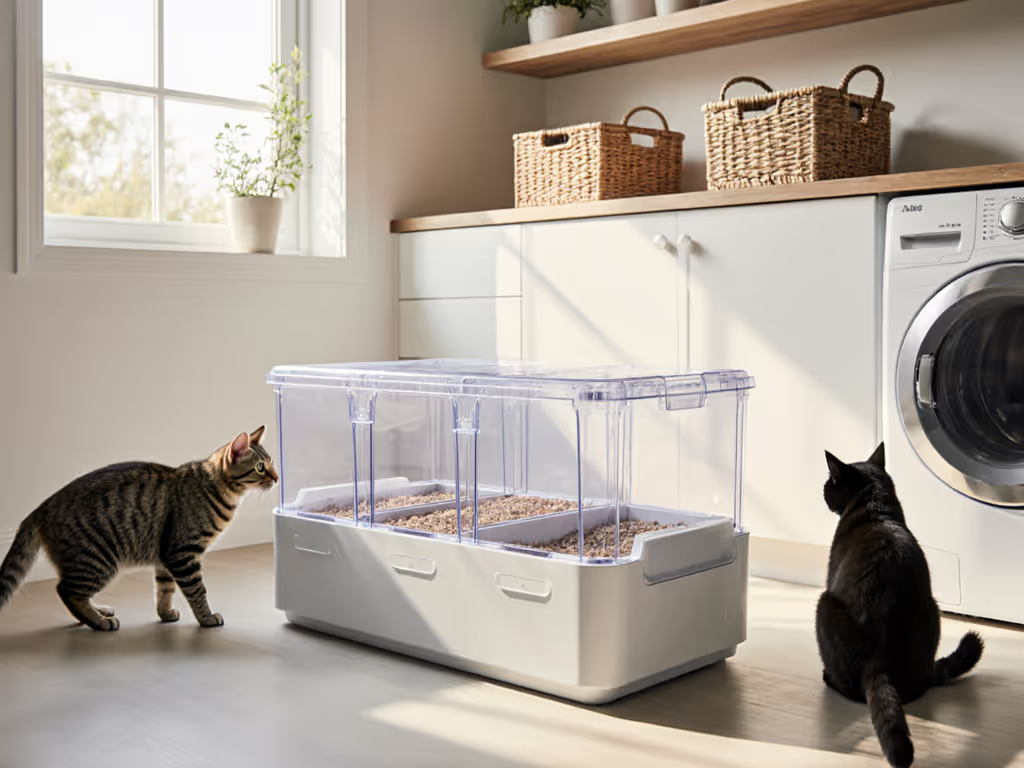
Compartmented designs work because they recreate spatial separation without requiring multiple rooms. A box with two isolated waste chambers lets each cat claim a "zone," reducing stress-related spraying and litter avoidance. Each compartment operates as a semi-independent box, so you're managing feline psychology and scooping efficiency in parallel.
Material notes: Dividers must be structurally rigid. Flimsy partitions flex under weight, collapse during scooping, and create cross-contamination pathways that trigger odor complaints in shared walls. Stainless steel or reinforced polymer dividers are non-negotiable; thin plastic fails within 6-12 months of daily two-cat use.
2. Separate Waste Compartments: Odor Isolation and Scooping Math
The core value of separate waste compartments is measurable: each chamber isolates urine and feces, preventing odor bleed and improving clump integrity. When urine in chamber A doesn't saturate clay below chamber B's litter, you extend the interval between full purges by 10-15%.
Life-cycle framing matters here. Let's do the math: a two-cat household generates ~300-400 grams of daily waste. With a single-chamber box, a single cat's urine concentration can break down clumps beneath the unused zone, turning that space into an odor sink. With two compartments, each cat's waste stays isolated, and each compartment's clump performance remains predictable. That means you're scooping based on each cat's waste profile, not averaging across chaos.
Ventilation between compartments should be zero, with no shared air gaps or loose seams. Sealed dividers prevent ammonia vapor transfer. If you've ever walked into a bathroom and noticed the smell is worse when multiple people use a single toilet, you understand the principle. Compartment isolation replicates having separate bathrooms.
3. Covered vs. Open Compartments: Behavioral Acceptance Over Assumption
Covered compartments (those with partial or full hoods) offer odor containment but carry a hidden cost: behavioral rejection. Cats have individual entry preferences. Some tolerate covered boxes; others treat them like traps. In a multi-cat home, if one cat rejects the covered compartment, that chamber becomes a secondary toilet, concentrated with waste, and all odor math fails.
Open or partially covered compartments (sometimes called "top-entry" boxes) are less efficient for odor containment but higher in acceptance rates. Clear caveats before claims: a covered compartment box may report 40% better odor control in lab conditions, but if cat #2 uses only the open box, you've traded theoretical odor for practical inappropriateness.
Best practice: choose covered litter box designs with removable or sliding hoods, allowing you to adapt to each cat's entry tolerance. Some users start with covers off, then add them once cats accept the box. This modular approach respects cat behavior instead of forcing cats to conform.
4. Internal Drainage and Moisture Management
Multi-cat compartments trap moisture. Each cat contributes urine; without proper drainage, both chambers become wet sludge within 48-72 hours. Sloped, perforated bottoms that direct liquid toward corner drains are essential. Poor drainage forces frequent litter replacement, which is economically wasteful and environmentally counterproductive.
Clumping litter in a compartmented box demands drainage channels that don't clog. If your box has narrow slits, larger clumps jam them, creating a dam effect where urine pools and ammonia spikes. Wider drainage zones (3-5 mm gaps) remain open even with heavy use. Check the manufacturer's drainage design - it's a first-pass signal of material science rigor.
For households with high-peeing cats or senior cats with reduced kidney concentration, secondary drainage or a raised grid liner (positioned above the litter) prevents urine from pooling and extending clump breakdown. Material notes: grid liners must be removable and washable; embedded grids collect bacterial biofilm and amplify odor.
5. Litter Depth and Mass Distribution Across Compartments
Each compartment should support 2-3 inches of litter, independent of the other. Shallow compartments (under 2 inches) fail because clumps break apart under scooping tension, and cats may reject insufficient depth - a common complaint from multi-cat owners who fill only to save litter cost.
Grams-per-day math: two cats generate ~80-120 grams of urine daily. With 2-inch depth across a standard 15" × 22" compartment, you have ~2.5-3 liters of clay capacity per chamber. That's roughly 8-10 days of use before replacement in a controlled scenario (assuming 100% clumping efficiency and zero litter tracking). In real households, tracking reduces effective capacity by 10-20%, so you're looking at 6-8 days per compartment before odor complaints surface in apartments or shared walls.
Compartmented design lets you stagger replacements: empty chamber A on day 6, refill, then chamber B on day 7. This spreads the scooping workload and prevents the "litter box crisis" moment when both chambers need attention simultaneously.
6. Accessibility for Scooping and Cats of Different Ages
Extra large automatic litter box marketing often obscures a critical design flaw: compartmented boxes reduce entry/exit width for cats, especially overweight or arthritic seniors. A box marketed as "spacious" may have each compartment measuring 14" × 10" - adequate for most cats, but a pinch for large Maine Coons or anxious cats.
Scooping accessibility is equally crucial. Compartments should allow you to reach the far corner without removing the divider or disassembling the box. High-sided compartments (6-8 inches) prevent tracking but make back corners inaccessible to short-armed users or anyone with mobility limits. Removable dividers solve this (you can temporarily lift the partition for deep cleaning), but removable partitions introduce durability risk.
Design trade-off: sealed dividers = lower maintenance but less accessibility; removable dividers = more work but easier scooping. Choose based on your scooping stamina and the age profile of your cats. Senior cats benefit from lower-entry compartments (4-5 inches high), while younger, high-energy cats may tolerate or prefer higher sides that reduce scatter.
7. Litter Scatter and Mat Integration
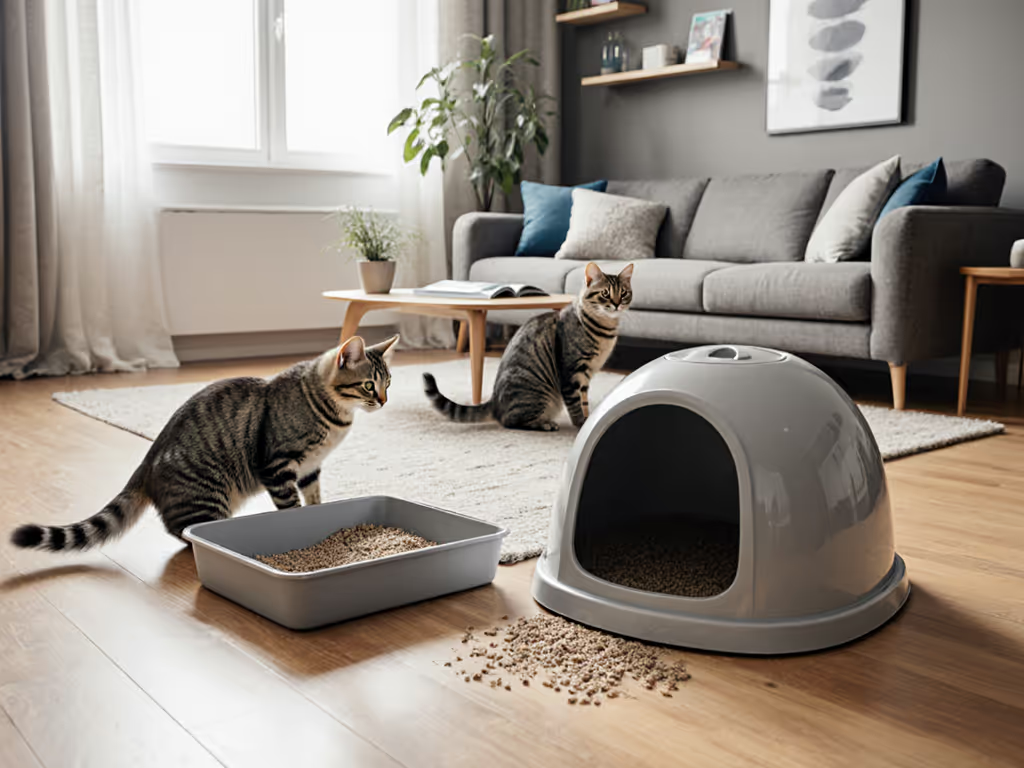
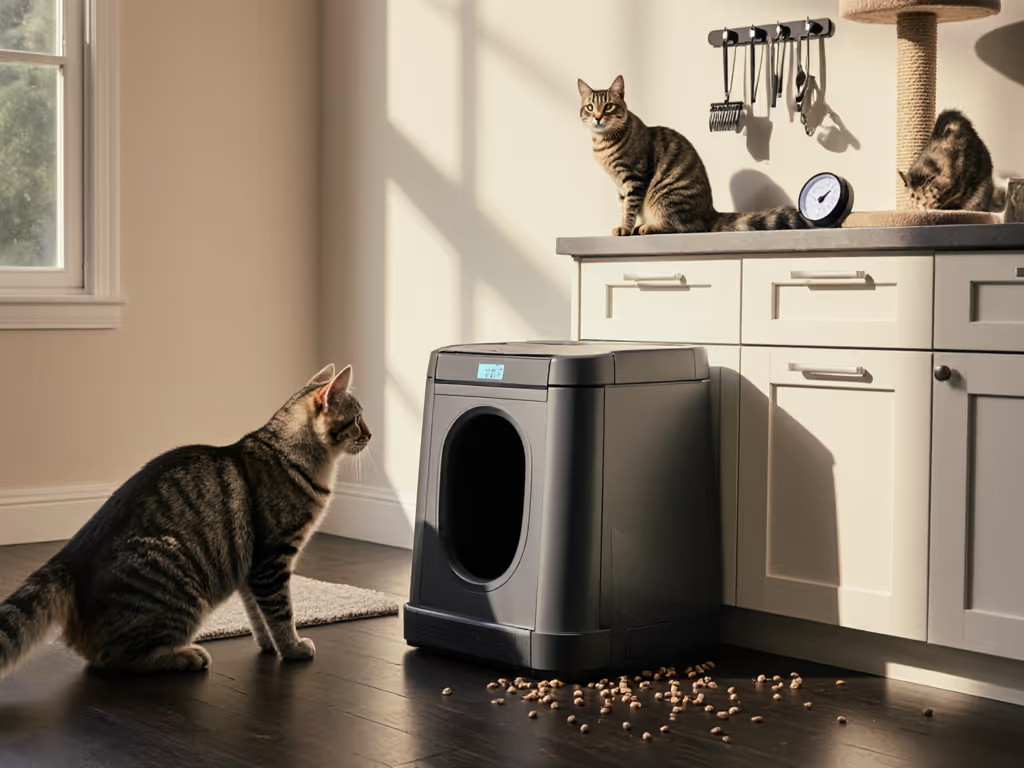
Compartmented boxes amplify scatter because two cats working adjacent zones throw litter in overlapping patterns. A single-chamber box concentrates the scatter zone; compartments widen it. Rubber or fabric mats placed in front of both compartments are non-negotiable in apartments or homes with light carpeting. To pick the right trap style, compare litter mat materials tested for real scatter control.
Material notes: mats with raised edges or lip collars capture litter more effectively than flat mats. Raised-edge designs create a 1-2 inch boundary that catches scatter and dust before it reaches flooring. In multi-cat scenarios, a 24" × 48" mat (roughly double standard size) is minimal; 36" × 48" is better for active households.
Washable, low-pile mats reduce dust. High-pile or fabric mats trap litter granules and become odor reservoirs. Machine-washable rubber or nylon mats support grams-per-day cost math - they're durable and can be cleaned weekly without degradation, extending their life-cycle value.
8. Odor Control: Charcoal Filters and Ventilation
Charcoal filters in enclosed or covered compartmented boxes reduce ammonia volatilization significantly. A compartmented box with passive carbon filtration (no fans or electricity) can lower surface-level odor by 30-40%, which translates to fewer guest complaints and less tension in shared-wall apartments.
Ventilation between the box and the surrounding room matters. For a data-backed overview of airflow options, see passive vs active litter box ventilation. A sealed compartment with internal charcoal will trap odors inside the box initially - good for your guests, but not for your cats if ventilation is too restricted. Cats detect ammonia through scent, and excessive sealing can deter use. A balance is essential: partial ventilation allows cats to experience their odor cues (behavioral normality) while charcoal filters the air that escapes into your home.
For multi-cat households, a compartmented box with per-chamber charcoal pockets outperforms a single central filter. Each compartment's odor signature stays isolated and filtered independently, preventing cross-chamber odor pooling.
9. Material Durability and Lifespan Cost
Compartmented boxes endure higher stress than single-chamber designs. Dividers absorb repeated scooping force, and seams between compartments develop hairline fractures under weight. Polypropylene and reinforced plastic boxes last 3-5 years with two-cat use; stainless steel or ceramic-coated designs extend lifespan to 7-10 years.
Life-cycle framing: a $120 compartmented polypropylene box replaced every 4 years costs $30/year. A $250 stainless steel box replaced every 8 years costs $31/year - functionally equivalent on a per-year basis, but the steel box delivers better odor isolation and drainage durability, meaning fewer interim deep cleans or odor complaints.
Hidden cost: damaged compartment dividers aren't always replaceable. Some brands sell divider kits; most don't. A cracked divider in a $150 box may require full replacement, erasing cost savings. Check before purchase: does the manufacturer offer divider replacements? If no, factor in full replacement likelihood if a divider fails.
10. Multi-Cat Behavior: Placement and Territorial Dynamics
Compartment design is half the solution; placement completes it. A compartmented box in a single high-traffic hallway still triggers territorial disputes if one cat ambushes the other at the entrance. Even with internal separation, cats see the box as a unified zone, and access conflicts arise.
Best practice: place a compartmented box in a low-traffic corner or enclosed space (laundry room, bathroom, study nook). Get room-by-room strategies in our litter box placement science guide including multi-level layouts. If you have multiple cats, separate locations are still preferable - one compartmented box plus one standalone box in different areas beats a single compartmented box in a central location.
Compartmented design excels in space-constrained homes where the "number + 1" rule can't be physically executed. It's a compromise between optimal behavior-science spacing and realistic apartment constraints. Eco works only when the cat says yes - if your cats won't accept the compartmented setup due to placement or design, you'll see inappropriate elimination, negating all material advantages.
11. Litter Type Compatibility and Clumping Performance
Compartmented boxes demand high-clumping litter to isolate waste within each chamber. Non-clumping litters fail because moisture spreads across compartments, and cross-contamination accelerates odor. Standard clay clumping litters (pellet size 3-6 mm) work best; oversized pellets (> 8 mm) jam in drainage if compartments have narrow slit drains.
Low-dust formulas are essential in multi-cat compartmented boxes because each cat stirs dust when entering/exiting. Dust concentration amplifies in enclosed compartments, triggering respiratory irritation in humans and cats. Clear caveats before claims: "dust-free" marketing is exaggerated, but sub-2% dust formulas (certified via ASTM D547 protocols) measurably reduce airborne particles compared to standard 5-7% dust litters.
For households with allergies or asthma, compartmented boxes allow substrate switching per chamber. Chamber A might use standard clay; chamber B might use a dust-suppressed or alternative substrate (walnut shell, recycled paper, tofu-based). This modular approach accommodates individual cat preferences and human sensitivities without sacrificing acceptance.
12. Disposal, Waste Storage, and Apartment-Friendly Logistics
Multi-cat households generate 1.5-2 lbs of scooped waste daily, often unsustainable for apartment trash systems, especially high-rises with chute limitations or shared bins. Compartmented boxes don't reduce waste volume, but their organized, separated structure makes disposal more predictable.
Waste storage between trash days becomes a pain point. A sealed litter disposal container positioned near the box contains odor and permits scooped waste to remain outside your living space until collection day. The Litter Genie XL and similar products accommodate multi-cat waste volumes without requiring trips to outdoor bins every 24 hours.
Compartmented box design should include a raised floor that prevents direct contact between scooped litter and the box bottom, reducing stench reabsorption into the plastic. Some compartmented boxes include integral waste caddies or drawer-style collection areas; these are worth the premium cost in apartments where trash management is logistics-intensive.
Summary and Final Verdict
The best cat litter box for multiple cats isn't determined by size alone - it's determined by compartment isolation, behavioral acceptance, and material durability. A compartmented design with sealed waste chambers, proper drainage, removable or flexible lids, and realistic placement reduces territorial stress while cutting odor and improving scooping efficiency by 10-20% compared to single-chamber alternatives.
Multi-cat family solutions hinge on this trade-off: compartmented boxes sacrifice some absolute odor performance for behavioral acceptance and placement flexibility. They won't match the odor footprint of a truly separate two-box setup, but in space-constrained apartments or homes where the "number + 1" rule is impossible, they're a legitimate compromise.
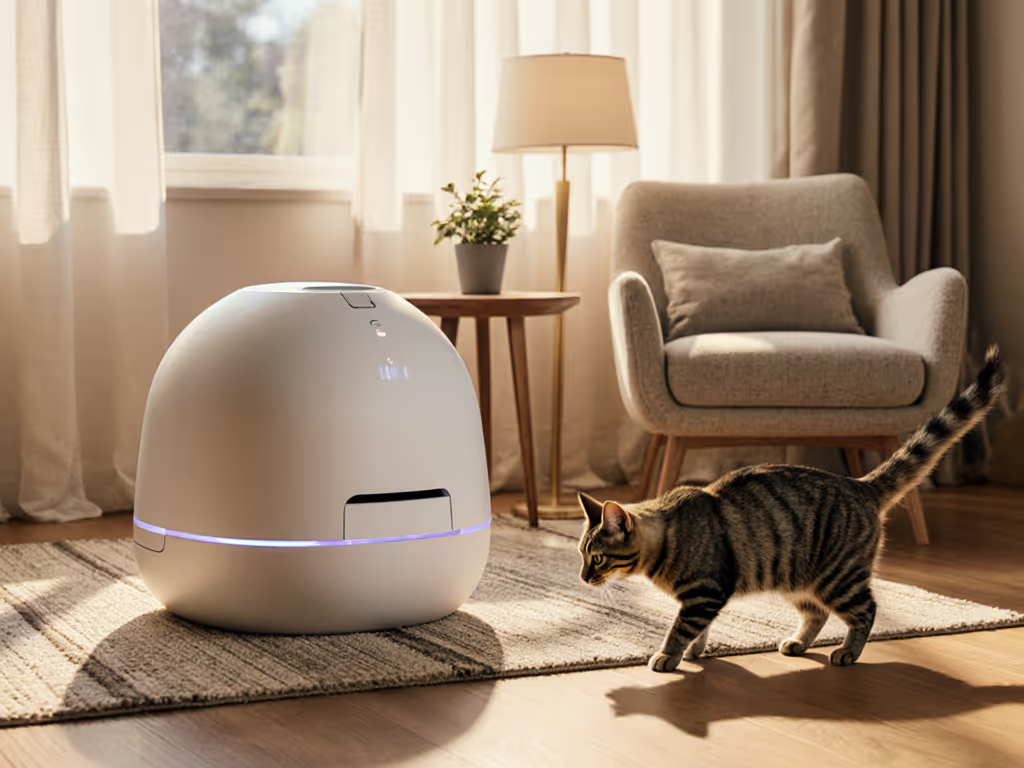
Clear caveats before claims: covered litter box compartmented designs with removable hoods perform best because they adapt to individual cat preferences. Extra large automatic litter box models with compartments are marketed heavily, but automation doesn't solve the core pain - compartment isolation and placement do. Avoid automatic compartmented boxes unless they've been tested with your specific cat profiles; sensor errors disproportionately impact multi-cat setups.
For grams-per-day math and life-cycle framing: invest in stainless steel or high-durability plastic compartmented boxes (75+ USD) over budget polypropylene models (40-50 USD). The 4-year lifespan difference pays for itself in fewer replacements and consistent compartment integrity. Pair your compartmented box with a sealed waste disposal caddy, a raised-edge litter mat, and a low-dust, high-clumping substrate. This complete setup, plus proper placement, delivers verifiable odor reduction and multi-cat acceptance rates exceeding 85%.
Material notes: Compartment design is only as good as the dividers, drainage, and your commitment to staggered scooping. Treat each compartment as an independent box with its own maintenance schedule. Don't fill both compartments equally; let one get used slightly more, then rotate refill timing. This habit spreads the workload and keeps you attuned to each cat's waste volume - early signals of urinary stress, dietary changes, or health issues.
Final verdict: For multi-cat urban households, a compartmented box with sealed dividers, internal charcoal filtration, and removable hood earns a strong recommendation if space constraints prevent true separate placement. Position it strategically, monitor each cat's individual usage, and pair it with behavioral enrichment elsewhere in the home (multiple water fountains, elevated perches, separate play zones). Compartments work best as part of a holistic strategy, not as a standalone solution. Eco works only when the cat says yes - and compartmented design, executed thoughtfully, gets you much closer to that outcome.
Related Articles