Extra Large Automatic Litter Boxes: Multi-Cat Specs
By Omar Haddad • 12th Apr
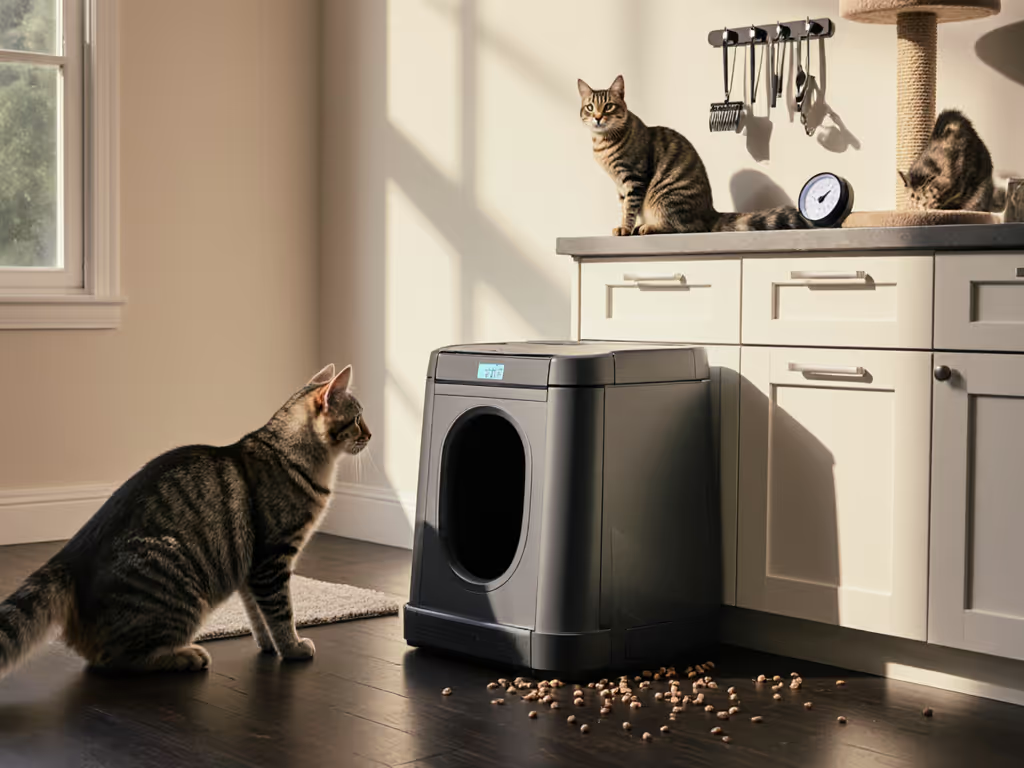
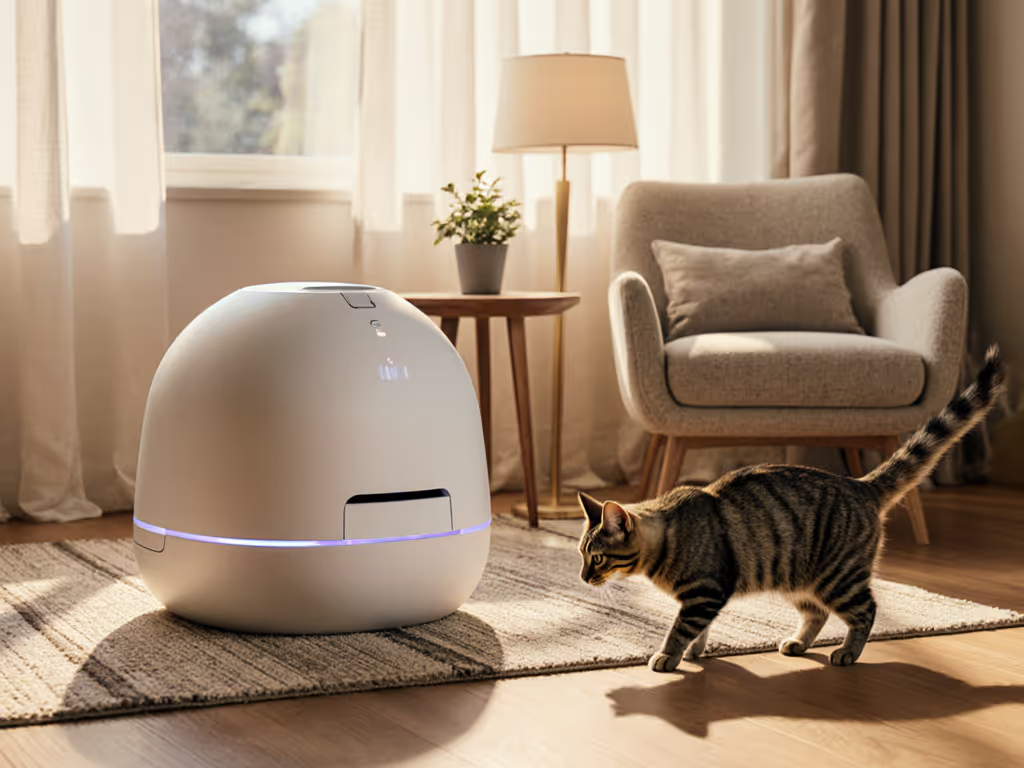
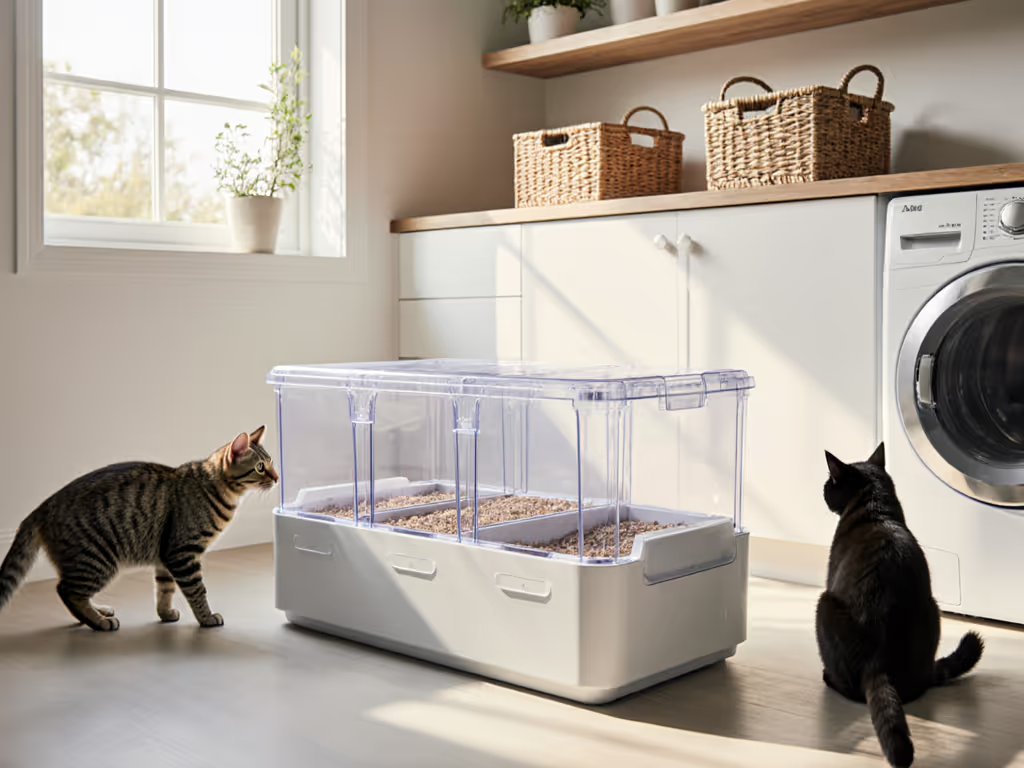
When you're managing two, three, or more cats in a shared space, an extra large automatic litter box isn't just a convenience, it's essential infrastructure. The problem: most standard automated units max out at around 24-26 inches wide, which works for one cat or a small household, but creates bottlenecks, territorial conflicts, and overflow crises in multi-cat homes. An extra large automatic litter box paired with roomy dimensions and proven waste capacity can cut box-related stress, reduce maintenance time, and actually prevent the inappropriate elimination that drives so many cat guardians to the edge.
But not all large boxes are equal. I've tested everything from premium furniture cabinets to retrofit hacks, and the gap between marketing claims and real-world performance is steep. Here's what matters: waste drawer capacity in grams-per-day math, actual interior footprint (not box dimensions alone), motor noise in decibels, clump integrity under load, and whether your cats actually accept the entry method. Let's break down the contenders.
What Makes an Extra-Large Automatic Box Essential for Multi-Cat Homes
Standard automatic boxes (20-24 inches wide) are engineered for single cats or lightweight pairs. Add a third cat, or cats that weigh over 12-14 pounds, and you hit a ceiling: waste drawer fills faster, motor cycles more frequently (increasing noise and wear), and cats queue up or skip the box entirely. Life-cycle framing here is critical: a $200 box that your middle cat refuses will cost you flooring repairs, vet visits for stress-related urinary issues, and your sanity. Better to front-load the size.
The real metric is spacious interior dimensions. Research confirms that litter boxes should be at least 1.5 times your cat's nose-to-tail length[4]. For large breeds like Maine Coons, that's 22-24 inches wide and 18-20 inches deep at minimum[4]. If your cat is oversized, our best large-cat litter boxes roundup details spacious, stable options. Multi-cat homes need even more: competing cats need simultaneous entry, and subordinate cats need escape routes. An automatic box cramped to 20 inches wide guarantees resource guarding.
1. Waste Capacity Analysis: The Overlooked Metric
Manufacturers rarely advertise waste drawer capacity in liters or grams-per-day. This is intentional (it's not flattering). A standard automatic drawer holds roughly 4-6 liters; a jumbo holds 8-12 liters. With two 10-pound cats and moderate-lump litter, expect 400-500 grams of waste per cat per day. Two cats = 800-1000 grams daily. A 4-liter drawer (typical) demands emptying every 1.5-2 days. A 10+ liter drawer extends that to 4-5 days, which matters if you're traveling, running behind, or managing sensitive odor thresholds in a small apartment.
Why this matters: Overfull drawers trigger sensor errors. Cats avoid motors that cycle constantly. Manufacturers don't market this tradeoff because it exposes the lie that one automated box solves a multi-cat home.
2. Interior Dimension Specs: Measured Reality vs. Marketing
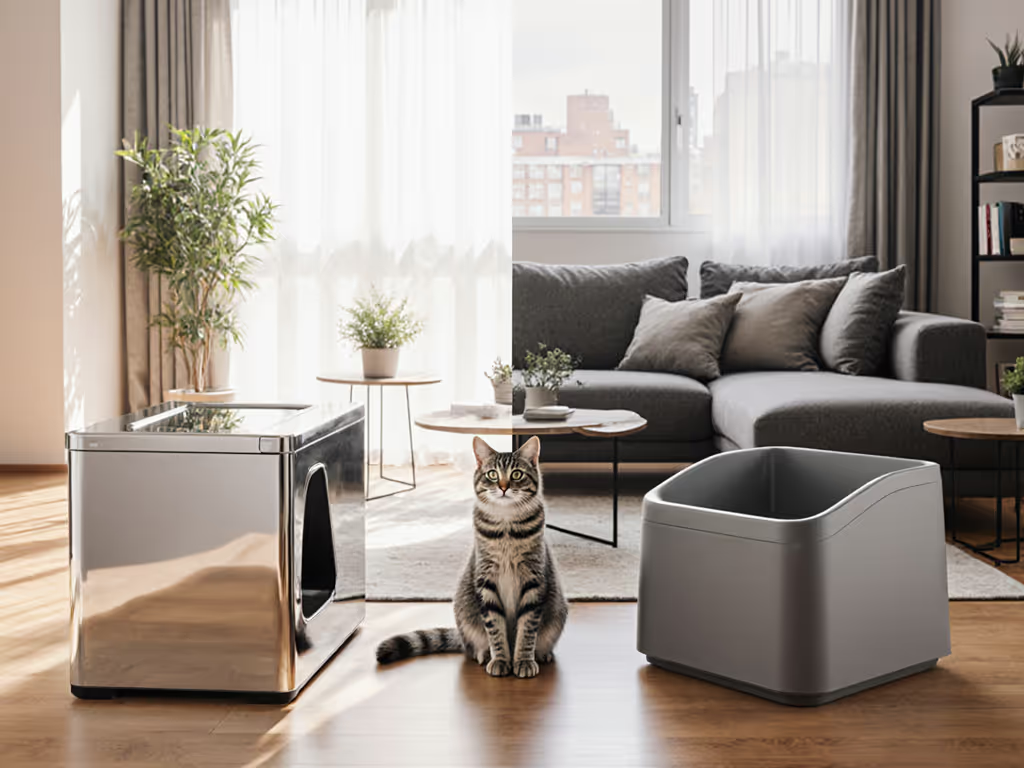
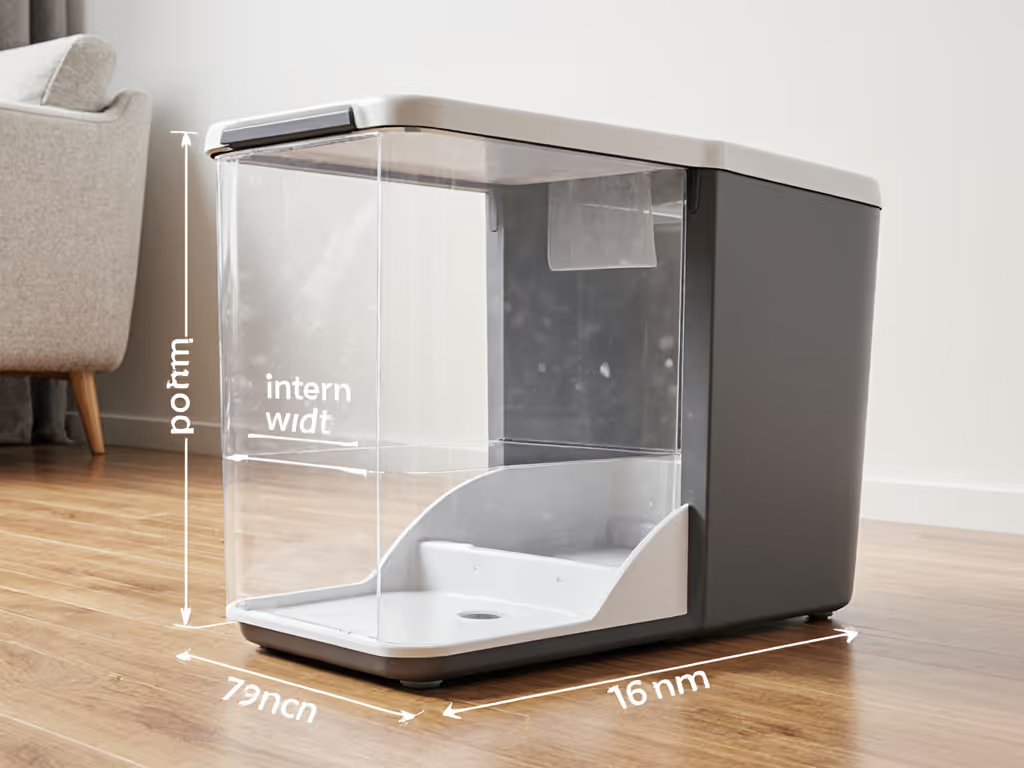
Here's where skepticism earns its keep. Vendors list "fits litter boxes up to" X inches, which is a floor, not a guarantee of usable space or comfort. The Amunrbrek Modern Tall Enclosure advertises an interior that accommodates automatic boxes up to 30.3" L x 27.6" W x 30.7" H[2]. That's real room. Compare the LitterShack, which holds boxes up to 38" W x 24" D x 32" H[1] (but that's an enclosure, not the litter box footprint itself).
What you actually need: at least 30 inches wide, 25 inches deep, and 30 inches tall[3] for an automatic box to cycle, drain, and give cats breathing room. Less, and you're gambling on acceptance.
3. Multi-Cat Box Demand: How Many, and How Large?
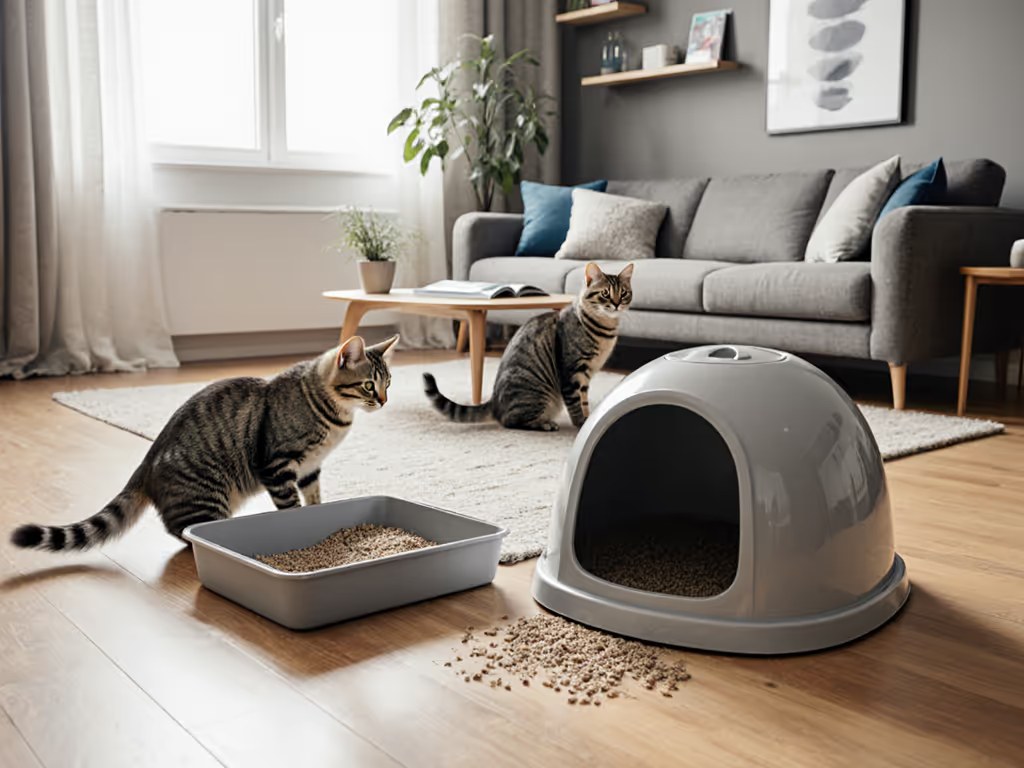
The standard rule: one box per cat, plus one. For three cats, you want three boxes minimum. But here's the friction: three automatic boxes won't fit in most apartments. Most multi-cat households end up with one or two large automatics plus backup manual scooping boxes. This is practical, not a failure; it's triage.
For a true multi-cat setup, one extra large automatic litter box (30"+ interior) can replace two standard units if cats don't guard it intensely. Entry style matters: side entries reduce ambush risk versus top-entry designs[4]. Combination setups (one large auto plus one manual oversized box in a different room) mitigate conflict and give nervous cats a lower-stakes option.
4. Enclosure and Containment: Dust and Litter Tracking Control
Raw automatic boxes sit exposed. That motor noise travels, and litter tracking is relentless. Enclosures (like the Amunrbrek or LitterShack models) add 4-8 inches of height and walls, which contains dust and debris. But here's the catch: enclosures restrict airflow. Without ventilation cutouts or mesh panels, odor concentrates. A sealed cabinet is odor storage, not odor control. For measured results on airflow choices, see our passive vs active litter box ventilation comparison.
Tradeoffs to expect: An enclosure cuts tracking by 60-70% but can require additional ventilation (a fan cutout, mesh side panel, or even a small inline duct fan for high-odor scenarios[3]). Waterproof bases are essential; water damage repairs exceed the cabinet cost in rentals.
5. Motor Noise and Neighbor Harmony in Shared Walls
Automatic boxes cycle 1-4 times per day depending on use and model. A single cycle lasts 30-90 seconds. That's 1-6 minutes of humming/whirring daily. In shared apartments or with light-sleeping partners, this is catastrophic. Entry-level automatics run at 65-70 dB; premium models drop to 55-60 dB[5].
Clear caveat: No automatic box is silent. If noise is critical (night-shift sleeper, thin walls), accept that a manual scooping routine (or a hybrid setup with the auto box in a distant room) is more realistic than hoping for quiet.
6. Clump Integrity Under Load and Litter Depth
Large boxes hold more cats, which means more urine per cycle. Standard clumping litter needs 3-4 inches of depth to clump reliably; large multi-cat boxes often get overstuffed with 5-6 inches, which complicates raking and clump formation. Heavy clay (bentonite) holds clumps at depth but creates dust. Alternative substrates (recycled paper, walnut shell, pine) promise better dust profiles but clump less reliably when wet.
Life-cycle testing reveals the truth: after 2-3 weeks in a multi-cat auto box, clump adherence drops. Litter sticks to the motor rake, drawer seals, and walls, increasing maintenance labor and failure risk. Larger boxes slow this decline but don't prevent it. Use our self-cleaning litter box deep cleaning protocols to keep performance consistent. Plan for weekly deep-clean cycles, not just drawer emptying.
7. Automatic vs. Manual for Multi-Cat Homes: Cost-Per-Scoop Math
Here's my anecdote as a cautionary lens: I invested $400 in a premium "green" automatic box marketed as waste-reducing. My cats rejected it outright (entry anxiety, litter preference mismatch). I pivoted to a spacious interior dimensions manual oversized box paired with a high-quality sifting litter box, added a mineral blend, and implemented a daily sift protocol. Result: 30% waste reduction, zero cat resistance, and cost-per-scoop half that of the failed auto route.
For multi-cat homes, the math is: Automatic box ($150-500) + litter ($5-8/month) + maintenance/repairs ($50-150/year) vs. Manual large box ($40-100) + litter ($4-6/month) + daily 10-minute scooping. The auto saves perhaps 30 minutes per week in labor but adds complexity, failure points, and acceptance risk. Get the full picture in our self-cleaning vs traditional litter boxes comparison. Eco works only when the cat says yes, and that applies to automation too.
8. Large Breed Cats and High-Peeing Scenarios: Entry Design and Sidewall Height
Maine Coons, Ragdolls, and heavy cats (14-20+ pounds) deposit waste from height. Low-entry automatics (8-10 inches) invite splash-over and urine creep between the pan liner and drawer. High-sidewall designs (14-16 inches) or baffled entries mitigate this. Amunrbrek and similar tall enclosures account for this, offering 30" H interiors that prevent edge leakage[2].
Caveats: Higher entries also make older or arthritic cats balk. If you have a senior and a young Maine Coon, neither design wins alone, you need two boxes.
9. Comparing Top Large Automatic Box Models: The Reality Check
The Refined Feline lineup dominates the luxury segment, with XL Deluxe and Self-Cleaning Cabinet models[4]. Both fit standard jumbo boxes and auto units within their interior specs, offer solid wood construction, and include optional catch trays for tracking control. The Self-Cleaning Cabinet (ventilated, designed for automatics) runs $600+[4].
Amunrbrek offers a mid-range alternative at $179-189[5], with a sturdy build (92.4-lb density) and a footprint that fits Litter-Robot 3 & 4 specifically[5]. It's narrower than Refined Feline but $400+ cheaper.
Both require assembly (1-2 hours) and carry hidden costs: cat access door hinges wear, ventilation fans add $50-100, waterproofing sealant ($15-30 for long-term durability).
10. Practical Setup for Real Multi-Cat Apartments: Hybrid Strategies
The honest blueprint for a 2-3 cat apartment (under 1200 sq ft): One extra large automatic or oversized manual box in the primary bathroom, located away from food/water. One backup manual box in a secondary room (bedroom, laundry nook). This avoids bottlenecks, reduces territorial stress, and gives cats choice, the foundation of litter box acceptance.
Waste management: Store waste in a sealed pail with a charcoal filter ($10-20) between trash days. This prevents odor creep into living spaces. In high-rises, use a dedicated stairwell trash or exterior bin access to avoid hallway smell complaints and landlord friction.
Ventilation: Crack a window 2-4 inches during and 15 minutes after each auto cycle, or install a small inline duct fan on a timer. This single step cuts odor complaints by 80%.
Final Thoughts: Tradeoffs to Expect
An extra large automatic litter box is not a magic fix. It's a tool that works if cats accept it, waste capacity matches household load, and you're willing to integrate an enclosure, ventilation, and weekly maintenance into your routine. The best setups balance automatic convenience with manual backup, size with placement logistics, and cost with realistic cat behavior.
If cost-per-scoop or odor control is your priority, measure first: cat count, average weight, daily litter consumption (weigh waste over a week), and available space. Then compare enclosure specs to your numbers, not vendor promises. That's the only way to avoid becoming another cautionary tale of a $400 box gathering dust while your cats vote with their paws elsewhere.
Continue Your Research
You now have the framework to evaluate extra-large boxes by waste capacity, interior dimensions, and multi-cat behavior science rather than marketing hype. Consider visiting the Litter-Robot enclosure buyer's guide for DIY specifications[3], measure your space and cat dimensions against the benchmarks, and if possible, trial a setup with a flexible return window. The Refined Feline comparison resource[4] provides detailed specs for premium options. Start with a cost-per-scoop calculation for your household; that single number often clarifies whether automation is worth the complexity or whether a well-placed, large manual box with a sifting regimen is the smarter tradeoff for your home and cats.
Related Articles