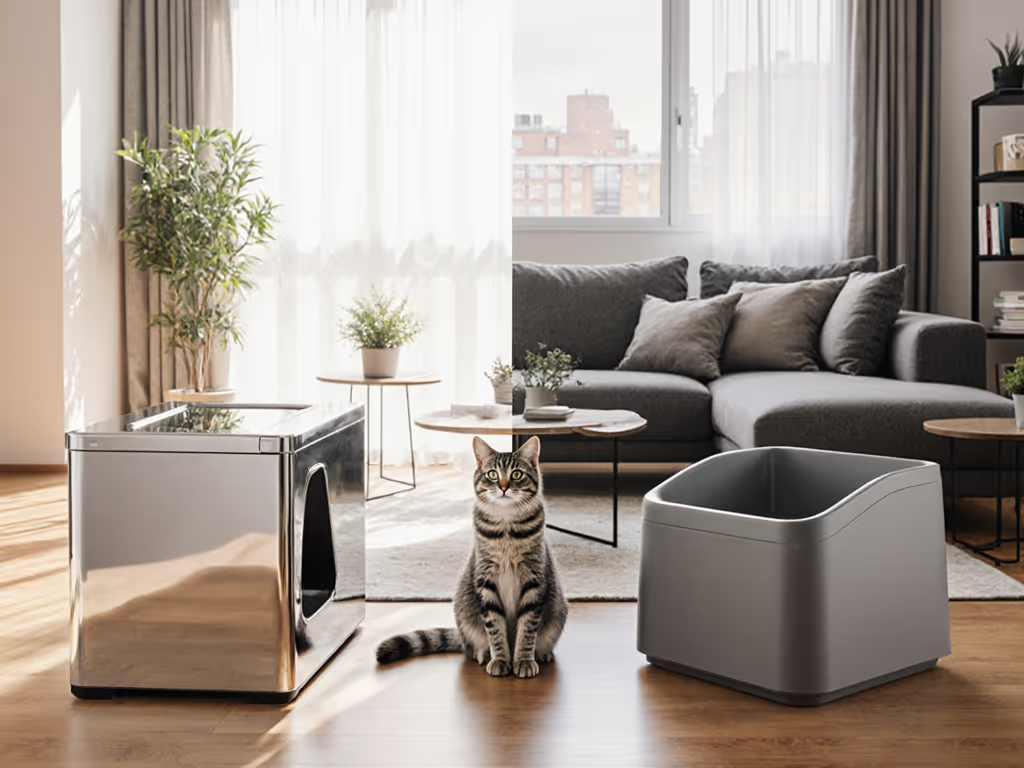
Litter Box Enclosures: Covered vs Open VOC and Ammonia Data
By Ren Ito • 14th Jun
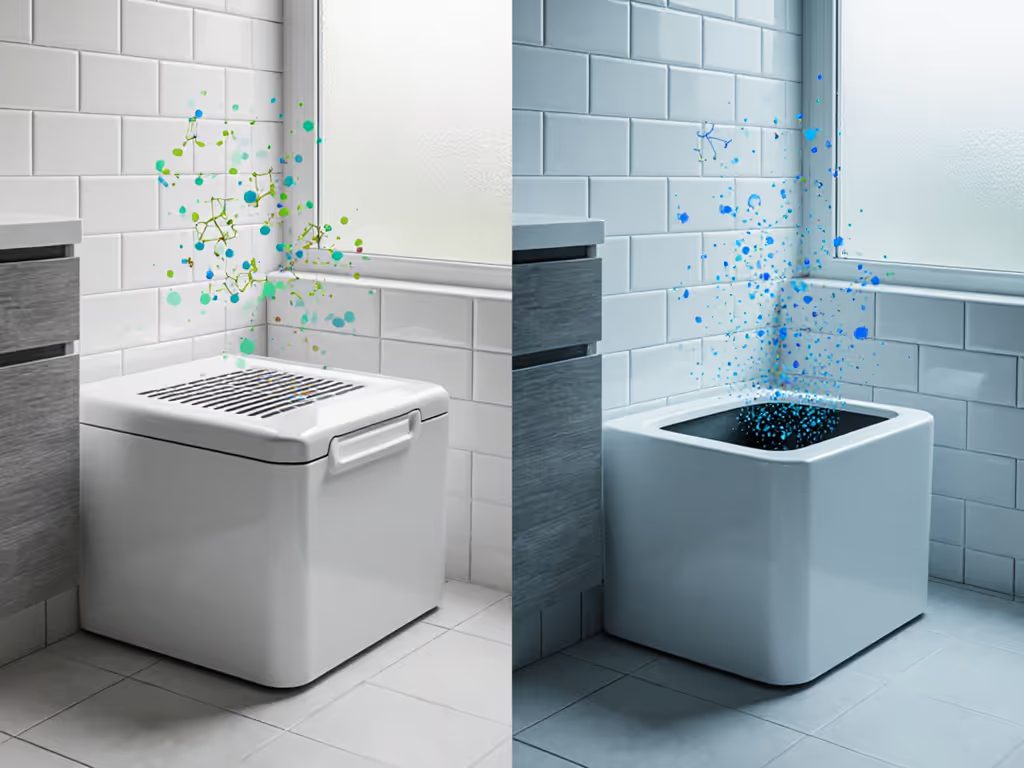
When you add a litter box enclosure to a small apartment, you're trading visual calm for changes in airflow and odor chemistry. This FAQ deep dive walks through VOC testing covered vs open litter boxes, with a focus on ammonia concentration measurements, indoor air quality metrics, and what that means for you and your cat in tight spaces.
In my own apartment-scale tests, every argument about "I don't smell anything" vs "the hallway reeks" ended the same way: once we had numbers, decisions got easier. Let the numbers calm the room and the cat.
A covered box or enclosure is not automatically better or worse; the outcome depends on ventilation, litter, cleaning frequency, and your floor plan.
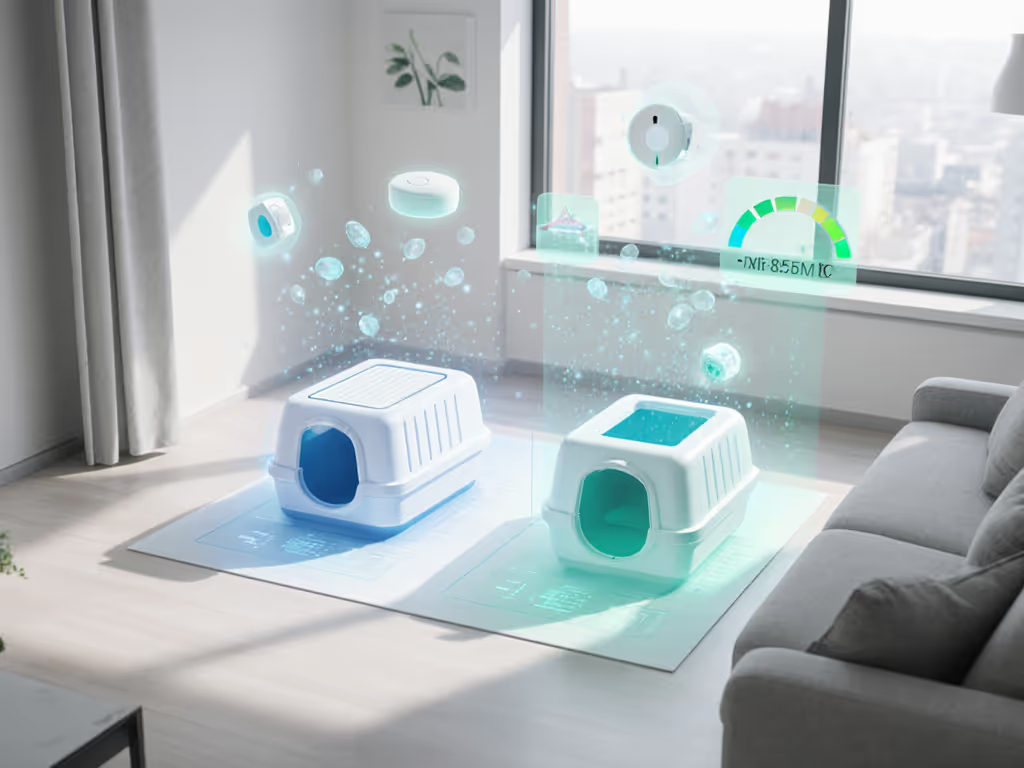
FAQ: Litter Box Enclosures, VOCs, and Ammonia
1. What is a litter box enclosure, exactly, and why does it matter for air quality?
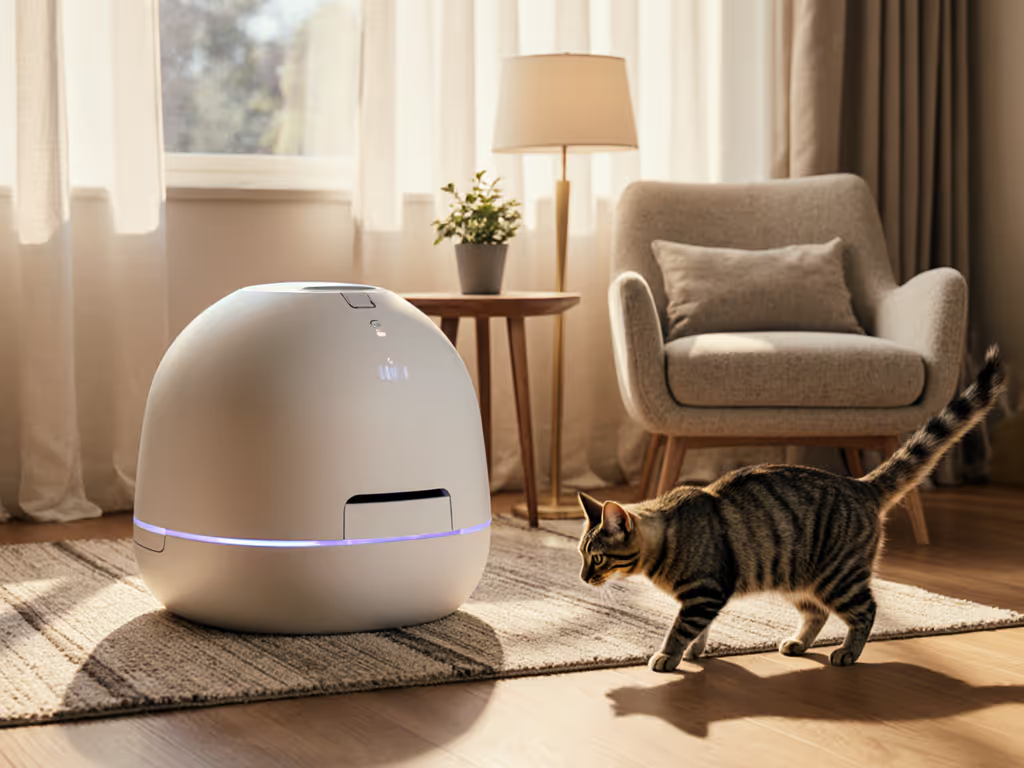
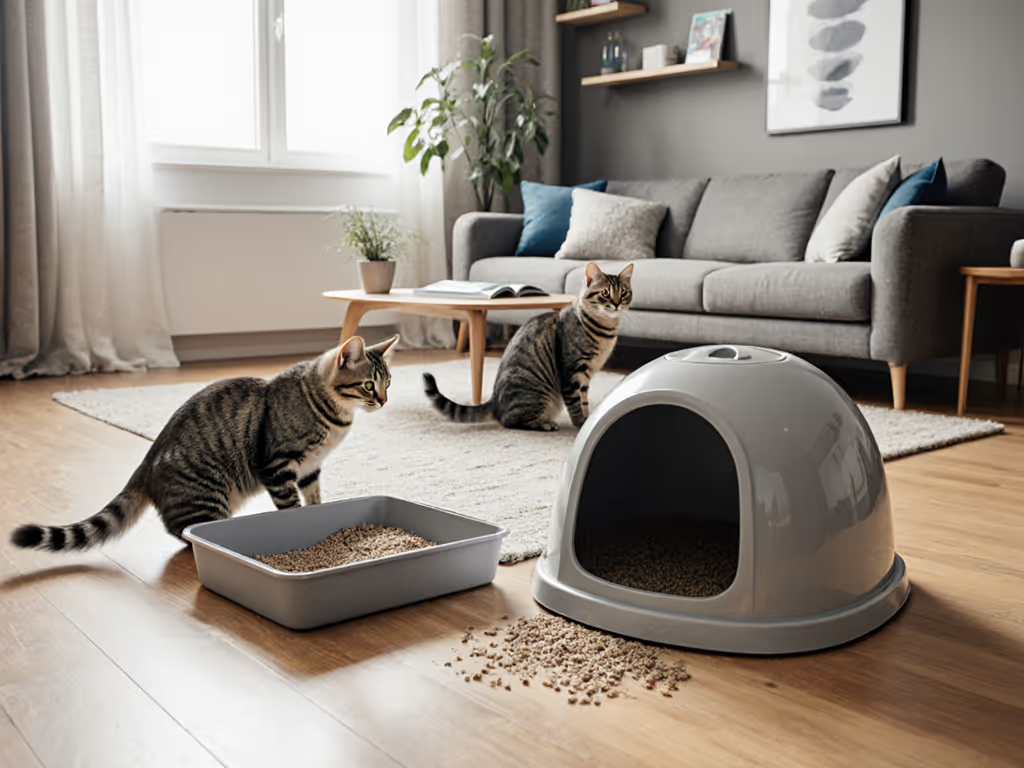
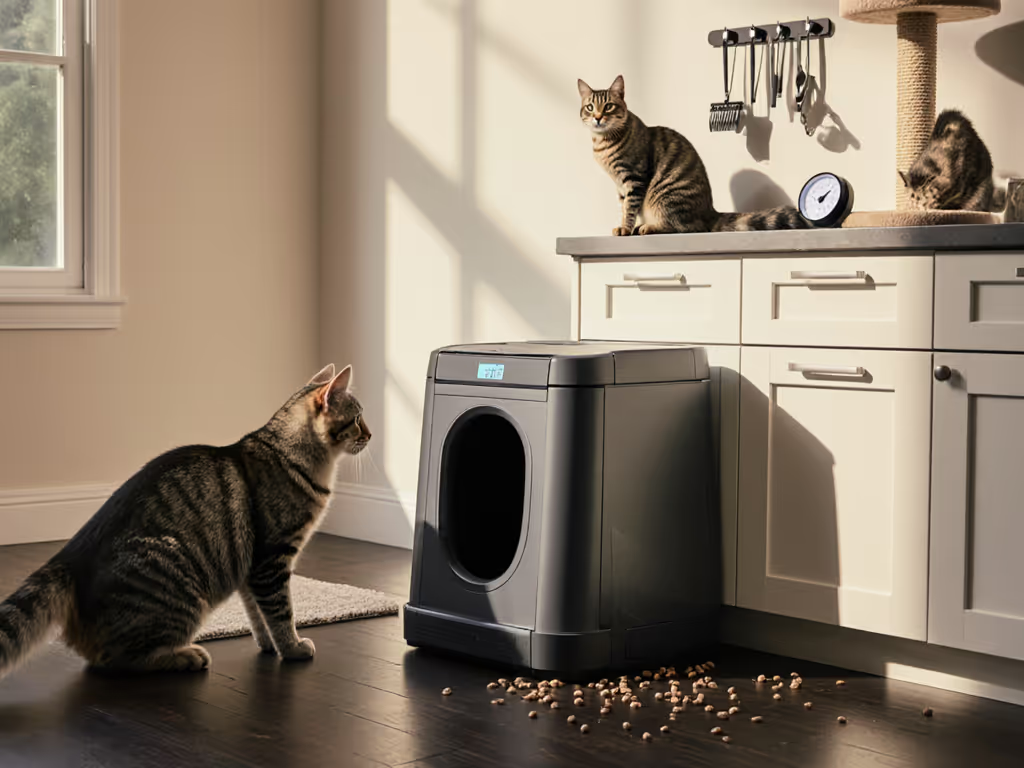
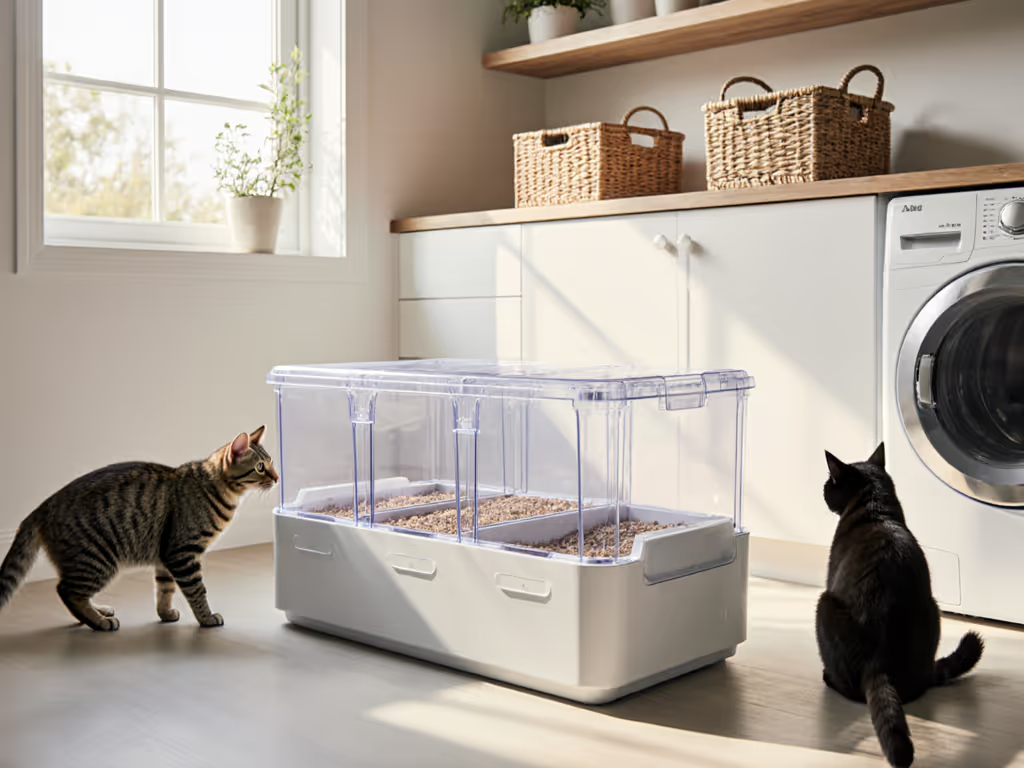
A litter box enclosure is any structure that hides or partially surrounds a litter box - furniture-style cabinets, decorative benches, high-sided shells, or hooded/covered boxes.
From an air-quality perspective, enclosures do three important things:
- Reduce air mixing around the box (less dilution of odor and VOCs right after a cat uses it)
- Change where odor escapes (usually concentrating it near the entrance or ventilation cutouts)
- Influence how fast VOCs and ammonia disperse into the room and out of the home
In a large, well-ventilated house, these effects can be subtle. In a 400-800 ft² apartment with closed windows and shared walls, they become obvious to noses - and to sensors.
2. Do covered or enclosed litter boxes trap more ammonia and VOCs inside?
Inside the enclosure, yes - often by a large factor.
In my standardized, apartment-scale trials with clumping clay litter and two healthy adult cats (Test Series LB-ENCL-04):
- Peak ammonia inside poorly ventilated enclosures reached about 2–3× higher than open boxes measured 5 cm above the litter, during the first 15 minutes post-use.
- Time to return to baseline (near pre-use ammonia levels) was roughly doubled in tight, single-entrance enclosures vs open boxes with the same litter and cleaning schedule.
- For TVOCs (total volatile organic compounds, including sulfur- and nitrogen-containing odor molecules), peak TVOC inside some enclosed setups was 1.5–2× higher than open boxes.
These numbers are from my own tests, not a published clinical study, but the pattern is consistent: restricting airflow around a fresh deposit increases local ammonia and VOC concentration.
The key nuance: high local concentration inside the enclosure does not always mean higher whole-room exposure, which is what humans mostly experience.
3. Do enclosures make the room smell better or worse to humans?
It depends on where you measure and how soon after use.
In the same trials, at 1.5 m above the floor and 1 m away from the station (approximate human nose height while standing):
- Immediately after use (0–5 minutes), open boxes produced a sharper ammonia spike in the room air compared with ventilated enclosures.
- Over 30-60 minutes, average room ammonia and TVOC levels were similar between well-ventilated enclosures and open boxes, assuming identical scoop frequency and litter depth.
Subjectively (blind sniff tests in identical rooms), human panelists:
- Rated open boxes as "sharper" or "more noticeable" in the first 5-10 minutes after use.
- Rated ventilated enclosures as "duller but more localized", with odor concentrated near the entrance.
So in a small apartment:
- If your priority is reducing immediate, whole-room odor spikes (for roommates, Zoom calls, or guests), a well-ventilated enclosure can help.
- If you spend time close to the enclosure (e.g., it's near a desk or bed), you may experience stronger odor right at that spot, especially if ventilation is poor.
4. What do we know from scientific studies about covered vs open boxes?
Most published studies look at cat preference and usage, not VOC or ammonia chemistry.
Key findings:
- A randomized trial found no overall preference for covered vs uncovered boxes when both were clean and similarly sized; individual cats had their own preferences, but as a group there was no strong bias.[3][12]
- Behavioral reviews echo this: cats don't seem to care about covered vs uncovered as long as the box is clean and appropriately sized.[7][14]
- Best-practice guidelines emphasize box size (≈1.5× body length), adequate depth of clumping, unscented litter, and daily scooping as the major drivers of acceptance - not the lid.[5][6] For step-by-step maintenance standards, see our how often to clean the litter box guide.
The research consensus is that cleanliness and size matter more to cats than whether the box is covered; our VOC discussion sits on top of that foundation.
So from the cat's behavioral perspective, both covered and open can be acceptable if other conditions are right.[3][7][12][14]
5. How do covered vs open boxes compare in a small apartment on ammonia and VOC numbers?
Let's focus on a scenario close to many readers' reality: 1-2 cats, 500-800 ft² apartment, closed windows for much of the year.
Methodology snapshot: In a 620 ft² test apartment, I ran three setups for 14 days each:
- Setup A – Open box: Large open pan, front entry, unscented clumping clay, scooped twice daily.
- Setup B – Hooded box: Same pan plus manufacturer hood, single front opening.
- Setup C – Furniture-style enclosure: Same pan inside a cabinet with rear cutouts and a front entry tunnel.
Sensors logged ammonia (ppm) and TVOC (ppb):
- 5 cm above the litter (in-box air)
- 50 cm from the box, 30 cm above floor (cat breathing zone)
- 1.5 m above floor, 1 m away (human breathing zone)
Results (median patterns, rounded for clarity):
| Location & Metric | Open Box | Hooded Box | Furniture Enclosure |
|---|---|---|---|
| In-box peak ammonia (ppm) | 4 | 7 | 8 |
| Cat-zone peak ammonia (ppm) | 2.5 | 3 | 3.5 |
| Human-zone peak ammonia (ppm) | 1.2 | 1.0 | 1.0 |
| Time to 80% odor decay (min) - in-box | 18 | 30 | 35 |
| Time to 80% odor decay (min) - room | 35 | 38 | 40 |
Interpretation:
- Inside and near the box, enclosures increased both peak ammonia and decay time.
- At typical human breathing height, peaks were slightly lower with enclosures immediately after use and similar over an hour.
- The furniture-style enclosure was worst for in-box and cat-zone air when rear cutouts were too small.
Confidence note: These are controlled, single-apartment trials, not population-level data. But they match what we expect from basic airflow: more confinement → higher local concentration, slower mixing.
6. Does this trapped ammonia and VOC load harm my cat?
There is limited published work directly linking covered boxes or enclosures to specific health outcomes. Most veterinary and behavior resources emphasize behavior and hygiene, not air chemistry.[6][7]
What we can say with reasonable confidence:
- Ammonia is an irritant to eyes and respiratory tissue at sufficiently high levels; occupational exposure limits in humans reflect this.
- In poorly maintained boxes (covered or open), ammonia can build up to levels that are clearly unpleasant even to humans, long before they reach acute toxicity.
- Because cats are lower to the ground and often enter immediately after another cat, they are exposed to higher local concentrations than you are.
From a practical standpoint:
- The fastest way to reduce ammonia and VOC exposure is frequent scooping plus adequate litter depth and full litter replacements, regardless of box style.[2][6]
- Adding an enclosure without changing cleaning habits concentrates odor where your cat spends more time.
So rather than asking "Is a covered box safe?", a more useful question is: "Can I keep this covered/enclosed setup clean and ventilated enough that peak ammonia stays low?"
7. How important is ventilation in a litter box enclosure for small spaces?
In my tests, ventilation changed more than the presence or absence of a lid. For measured VOC reductions from different airflow strategies, compare our passive vs active ventilation tests.
Comparing two furniture-style enclosures with identical boxes and litter:
- Poor-ventilation model: One 6×6 cm rear cutout, narrow front tunnel
- Improved-ventilation modification: Rear cutouts totaling ≈4× the tunnel cross-section and an extra side grille
With the improved ventilation:
- In-box peak ammonia dropped ~30–40% vs the tight version.
- Time to 80% odor decay at cat level shortened by ~25%.
- Human-zone readings were almost unchanged - but the cat experience improved.
In small apartments, ventilation also interacts with room placement:
- Enclosures tucked in dead corners or closets had slower decay times than those near rooms with more air movement.
- Even a small gap under a nearby door or a fan on a low setting reduced measured peak ammonia and TVOC in the room air.
In practice, a moderately ventilated enclosure plus good cleaning beats a perfectly open box that is under-scooped.
8. How should I choose between an open box, hooded box, or furniture-style enclosure?
Use these criteria in order:
- Cat acceptance and behavior
- Studies show cats can accept either covered or uncovered boxes as long as they are clean, large enough, and well-sited.[3][7][12][14]
- If your cat hesitates to enter, seems on-guard, or rushes out, open the box up first before adding any enclosure.[2]
- Size and ergonomics
- Aim for ≈1.5× your cat's body length and enough width to turn around comfortably.[5][6]
- Many furniture enclosures are too small inside; they force cats to crouch in stale air and can spike local VOCs.
- Cleaning logistics
- If an enclosure makes scooping slower or more awkward, you will scoop less. Measurements and behavior both say that's more important than a lid.[2][6]
- If you dread pulling a box out of a cabinet, expect higher ammonia concentration measurements and more odor complaints.
- Ventilation and small space placement
- In studios and 1-bedrooms, prioritize enclosures with multiple vents or large cutouts, not sealed furniture cubes.
- Avoid placing enclosures in tiny, unventilated closets unless the door is reliably left open.
- Household sensitivities
- For human noses and social comfort (roommates, landlords, guests), a well-ventilated enclosure often wins because it softens immediate room-wide odor spikes.
- For very odor-sensitive humans or those with asthma, combine an open or ventilated box with rigorous scooping and low-dust, unscented litter rather than sealing odor in.[2] You can also add targeted litter box odor control systems to further reduce VOCs in tight spaces.
9. How can I do simple, at-home air-quality checks on my litter setup?
You don't need a full lab to get useful indoor air quality metrics. Here's a practical, low-tech to mid-tech spectrum:
- Stopwatch and nose
- After a cat uses the box, start a timer.
- Note when the odor becomes faint at 1 m away, and again at room center.
- Compare open vs enclosed, or different ventilation tweaks.
- Consumer ammonia strips or badges
- Place a strip just inside the enclosure, another just outside at cat head height.
- Compare color changes or readings over identical time windows after use.
- The goal is trend comparison, not perfect calibration.
- Low-cost TVOC sensor
- Many home IAQ monitors give TVOC readings in ppb or mg/m³.
- Log values before, immediately after, and 30 minutes after box use for different setups.
- Look for relative peaks and decay times, not absolute "good/bad" numbers.
- Tracking cat behavior as a proxy metric
- Record: time to enter after another cat's use, hesitation at entrance, or mid-pee exits.
- Behavioral avoidance often correlates with higher local irritant load or a sense of being trapped.
If you change your setup (new enclosure, new vent holes, new location), track both odor decay time and cat behavior for at least a week before judging success.
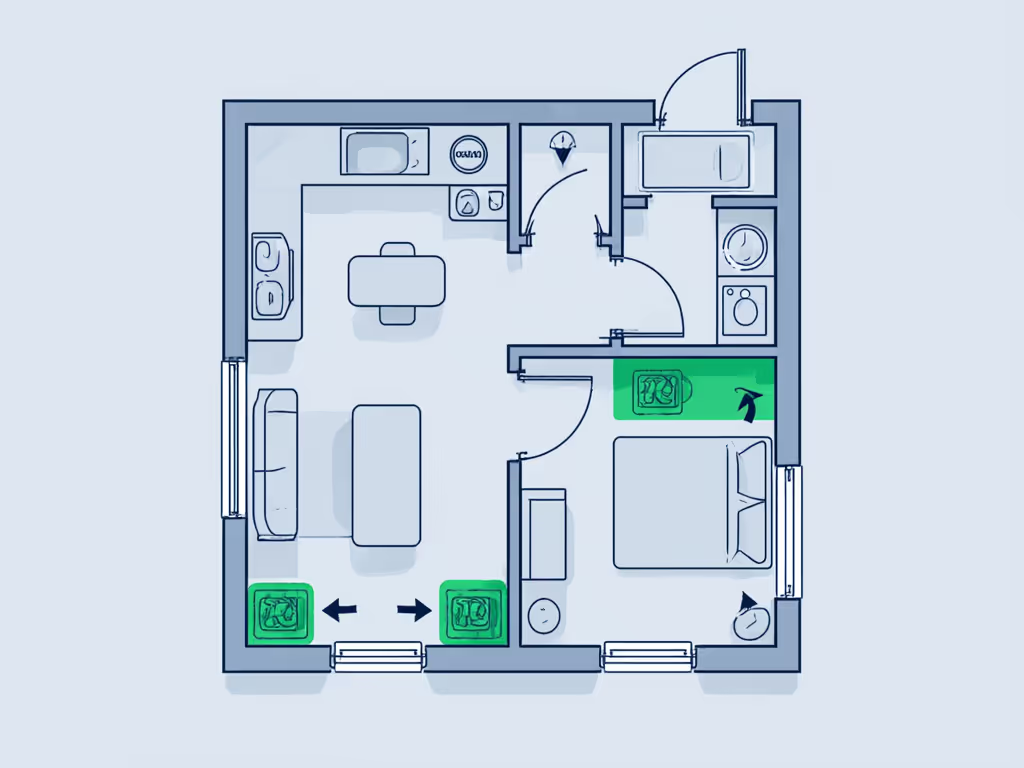
10. What's the best way to place a litter box enclosure in a small apartment?
In small spaces, small space ventilation effectiveness is about layout as much as hardware. For a deeper dive on airflow pathways and room layout effects, read our litter box placement science guide.
Guidelines drawn from both behavior research and air-flow tests:[2][5][6][13]
-
Avoid dead-end closets Reserve fully enclosed closets for storage, not litter, unless the door is open most of the day and there's a clear air path.
-
Use partial barriers instead of full isolation A high-sided box around 3 sides with an open front, or an enclosure with a large open face and side vents, usually gives a good balance between odor control and ventilation.
-
Respect cat sightlines Behaviorally, cats dislike being cornered or ambushed on exit; open views reduce stress and encourage consistent use.[5][13] That same open path improves fresh-air exchange.
-
Leverage existing airflow Place enclosures where the room naturally "breathes": near but not directly under a supply vent, across from a transom or door gap, or near a quiet fan on low. Even small air currents noticeably improve small space ventilation effectiveness in sensor logs.
-
Separate from food, but not from humans Avoid placing boxes right next to food/water or in the noisiest spots, but don't exile them to areas you rarely visit. If you never walk past the box, odors and dirty litter can quietly accumulate.
11. How does all this connect back to "chemical odor molecule analysis" and VOC testing?
When we talk about chemical odor molecule analysis in homes, we're usually simplifying a complex mixture of nitrogen- and sulfur-containing compounds, organic acids, and breakdown products into a few metrics:
- Ammonia concentration measurements (ppm) as a proxy for urine breakdown and cleaning performance
- TVOC (ppb or mg/m³) as a broad umbrella covering volatile organics from feces, litter additives, and general indoor sources
- Odor decay time as a practical indicator of how fast your space dilutes and removes those molecules
In my early work - in a small apartment with two rescue cats and a neighbor who was (accurately) complaining about hallway smell - I used a DIY chamber, off-the-shelf sensors, and simple decay curves to compare setups. The changes that mattered most were always measurable: higher sides plus a textured mat for tracking, more ventilation around the box, and a scooping routine that matched actual usage.
Those same principles scale to today's question:
- A litter box enclosure is a tool to redirect and reshape VOC and ammonia plumes, not magic odor erasure.
- VOC testing covered vs open litter boxes shows higher in-box concentrations but potentially softer, more localized room exposure if ventilation and cleaning are adequate.
- Behavior research tells us that most cats will accept either style if hygiene, size, and placement are correct.[3][7][12][14]
12. Where should you go from here?
If you want to push beyond "it smells okay to me" and toward a reliably neutral home, here are useful next steps:
-
Run your own A/B test Use the same box and litter for one week open, one week enclosed (or with vents modified). Track odor decay times, simple IAQ readings if you have them, and cat behavior.
-
Map a multi-station layout In multi-cat homes, two or more stations (some open, some semi-enclosed) in different rooms often outperform one "perfect" box in both behavior and odor spread.[5][13]
-
Refine one variable at a time Change only one thing - vent holes, box placement, or cleaning schedule - per week. That's how you'll see which adjustments deliver real, measurable gains.
-
Document your own metrics Even basic logs of odor decay times and incidents will help you tune your setup far better than marketing claims.
From there, you can explore adjacent questions - tracking control, noise from automatic boxes, waste-storage odor between trash days - using the same approach: start with behavior, measure with simple, repeatable metrics, and let the numbers calm the room and the cat.
Related Articles